Aloe
The genus Aloe (Asphodelaceae) contains roughly 600 species from southern and eastern Africa, Madagascar, the Arabian peninsula and several Indian Ocean islands. They all share the same blueprint: a rosette of succulent leaves, usually toothed or tubercled along the margin, and a tall spike of tubular red, orange or yellow flowers. Size ranges from a few centimetres to tree aloes several metres high, which is exactly what makes the genus worth collecting.
5 plants in Aloe
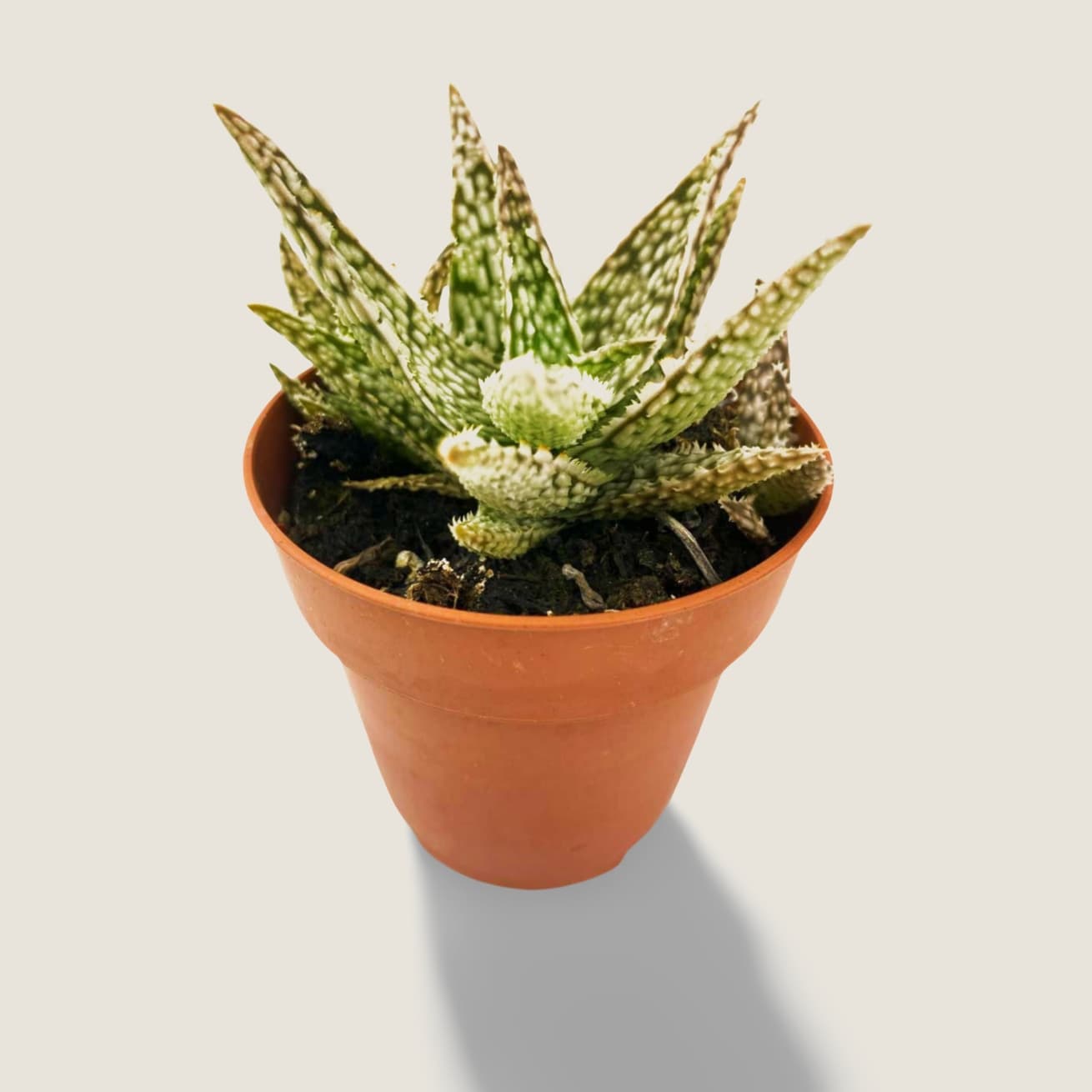
One clarification first. Aloe vera, the plant grown commercially on a field scale, is a specific species with large, pale green, strongly toothed leaves. We make no claims about its uses or properties, and we do not discuss them here. The aloes on this page are ornamental: they are grown for rosette shape, leaf patterning and flowering, and they are decorative plants, nothing more.
Telling ours apart
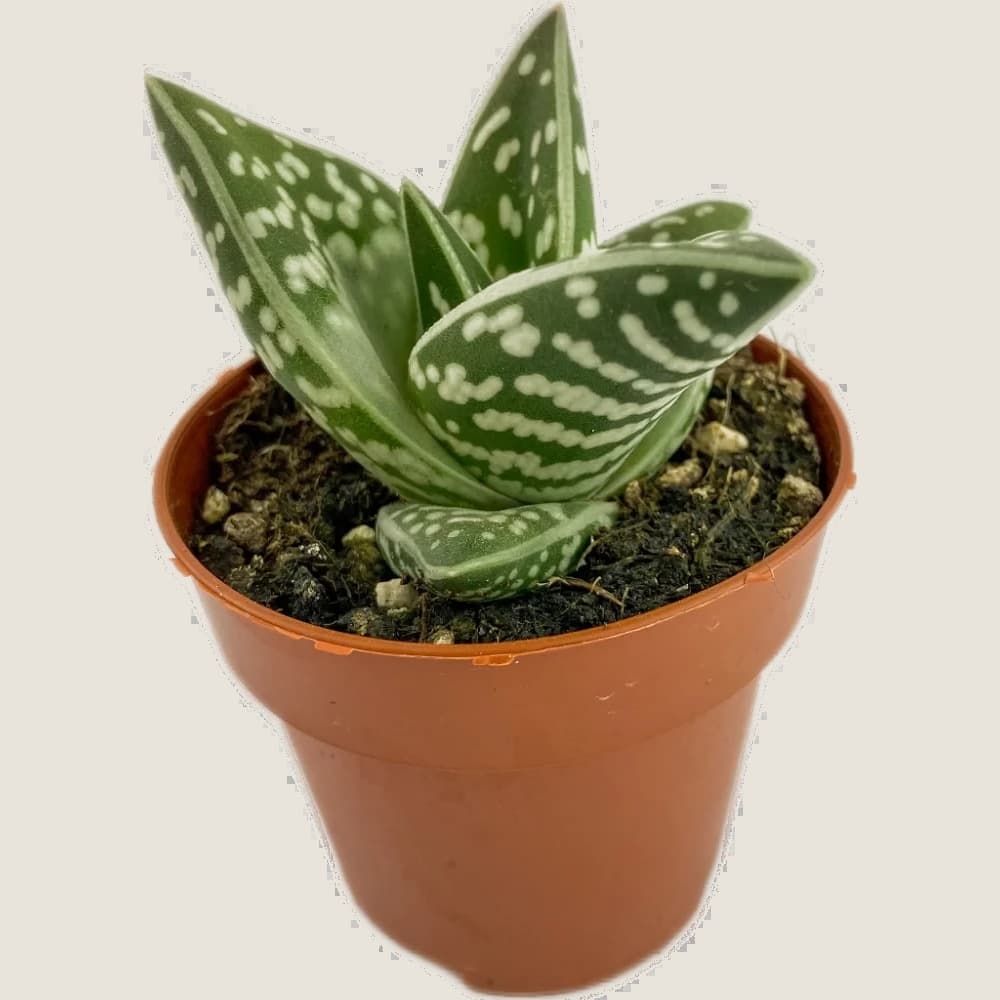
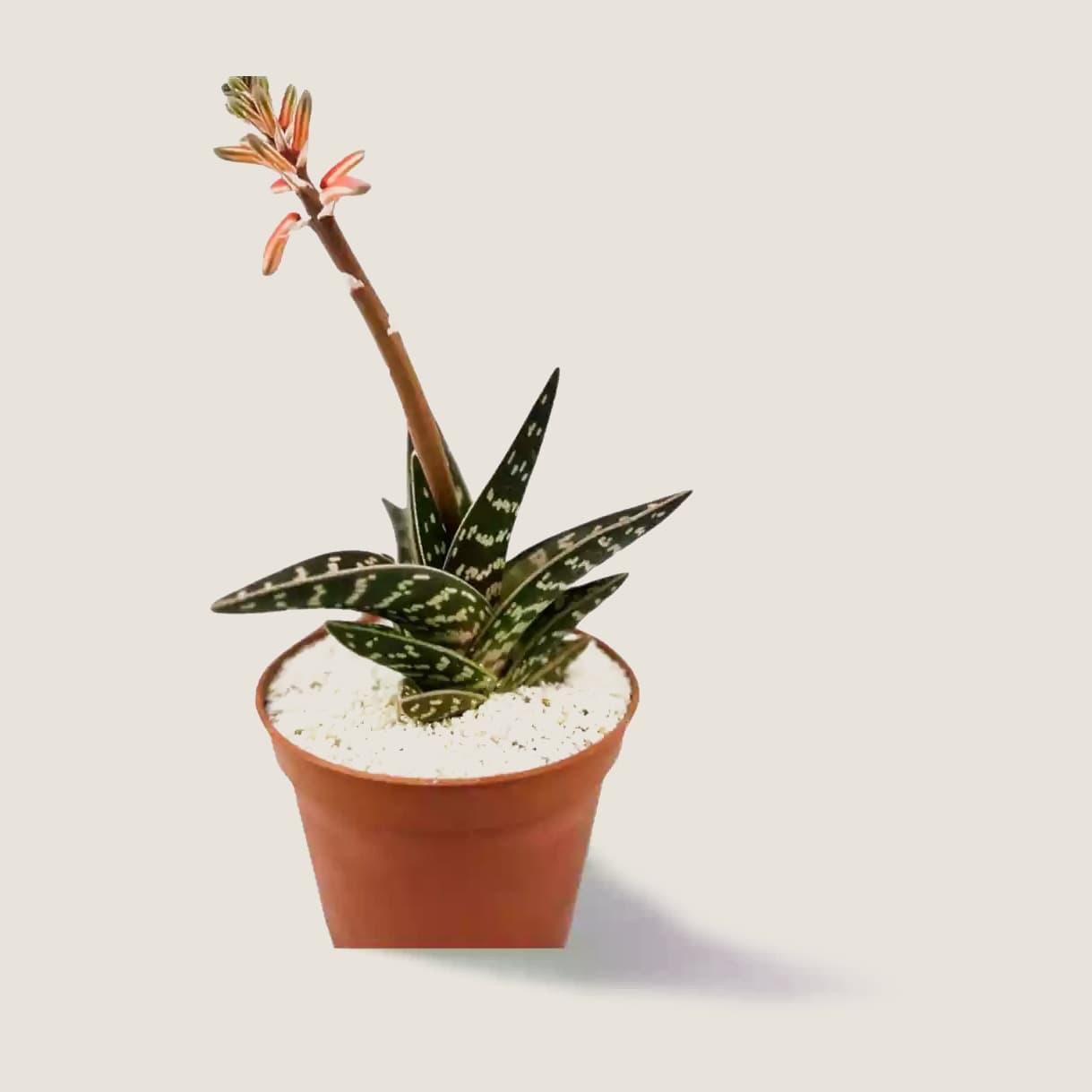
The only true botanical species in this section is Aloe variegata, now reclassified as Gonialoe variegata, though the old name is still what the trade uses. It is unmistakable: a three-ranked rosette of keeled, triangular, very dark green leaves crossed by white bands — hence the common names partridge breast and tiger aloe. We also list it in an XXL grade, mature and fully shaped plants.
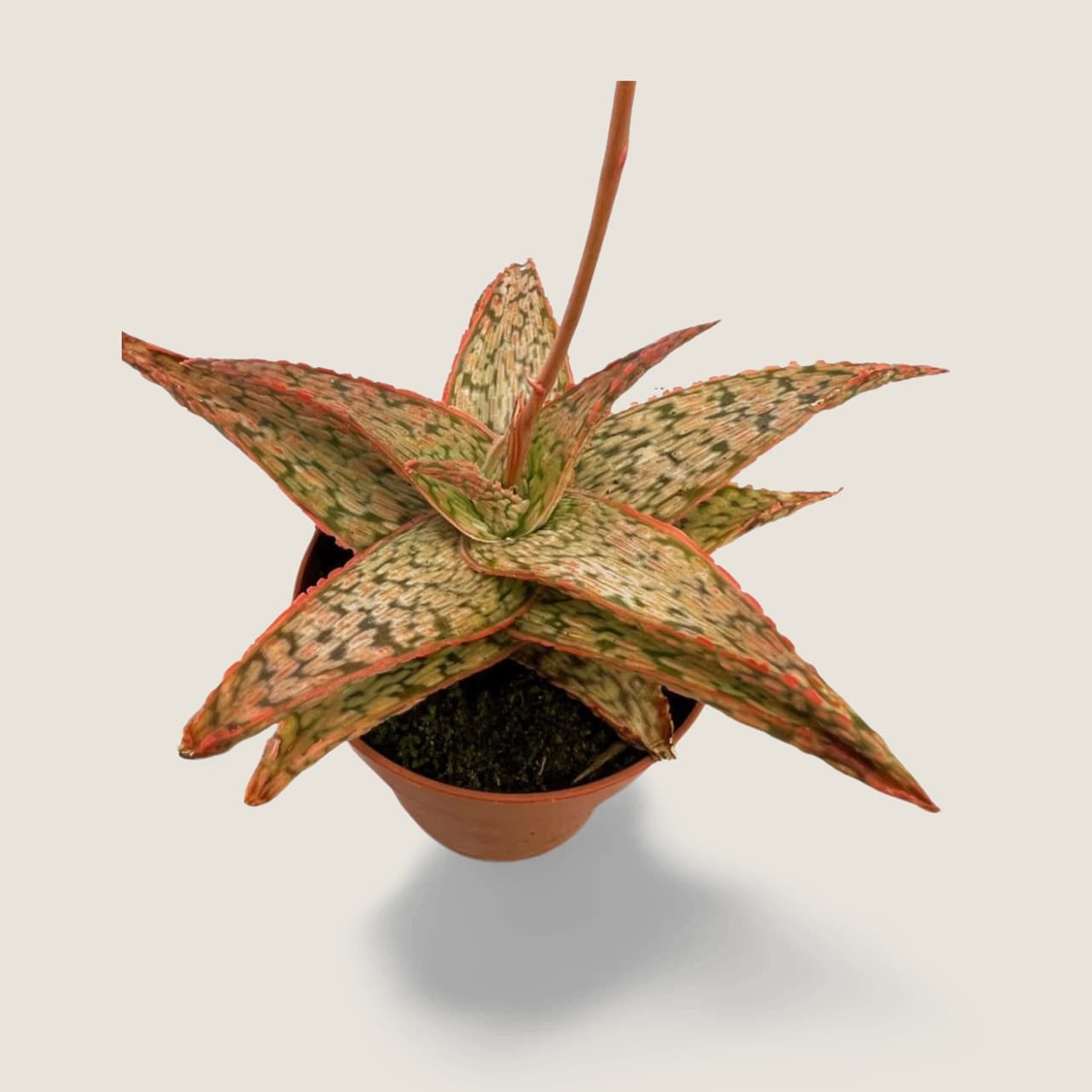
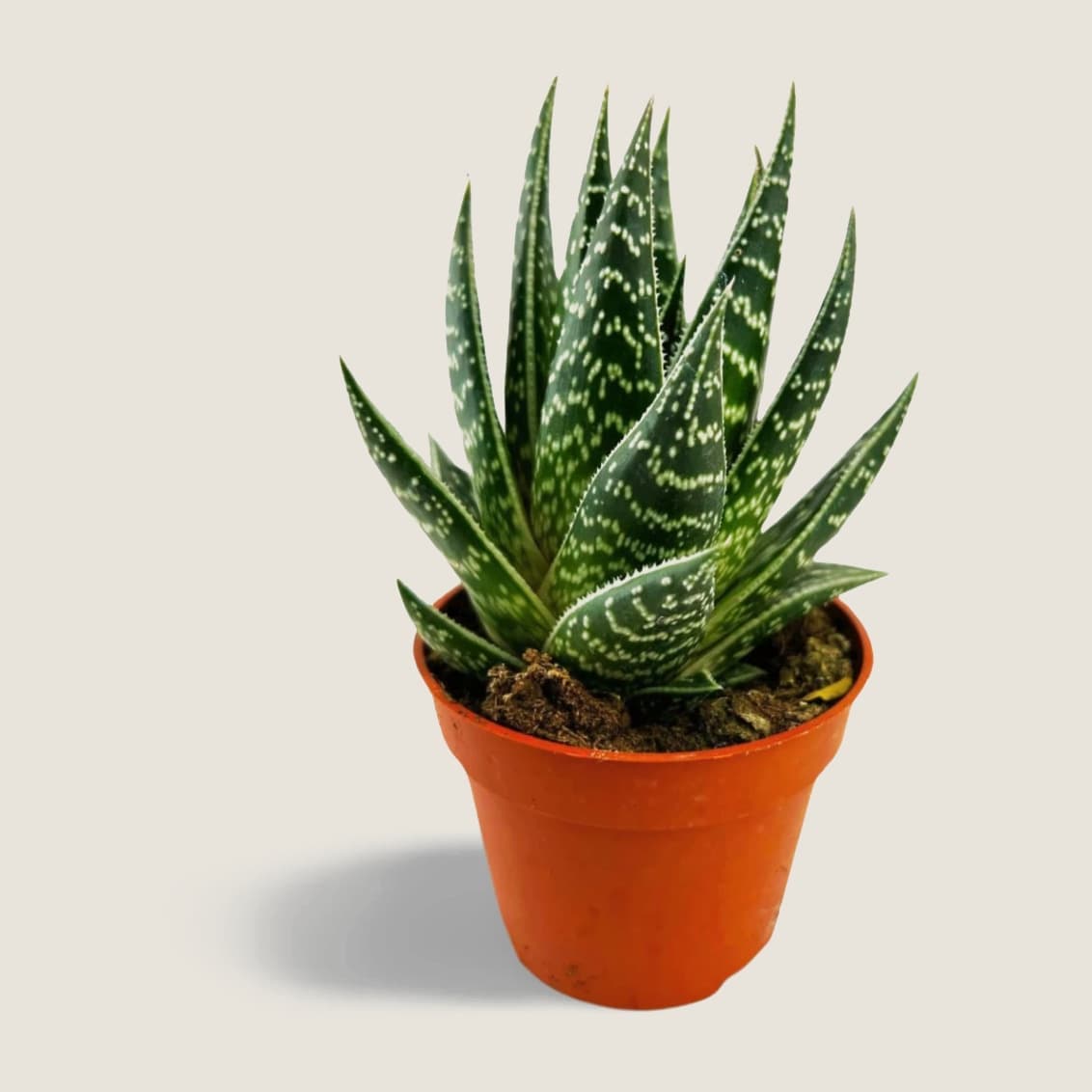
The rest are modern ornamental hybrids, bred and selected for pot culture: compact, slow-growing, with leaves covered in tubercles or strong markings. Aloe “Pink Blush” develops pink and coral tones that deepen in strong light. Aloe “White Lightning” plays on white flecks and streaks against green. Aloe “Tiki Tahi” is the most sculptural, with pronounced teeth and tubercles. None of them reaches the size of a landscape aloe; they stay medium pot plants for life.
How to grow them
- Light: direct sun or the brightest position you have. In low light the rosette flattens, opens out and loses colour — the pink and red tones only appear under strong light.
- Water: sparingly, letting the compost dry out completely between waterings. Always water at the pot rim; water sitting in the crown rots the plant from the middle.
- Compost: a gritty cactus and succulent mix with plenty of drainage. Never straight peat.
- Cold: keep above 5 °C. Outdoors in summer is fine and does them good, but they come in for the winter, into a bright and above all dry spot — a cold greenhouse, porch or unheated room.
Where people go wrong
The commonest mistake is watering from overhead and leaving water in the central funnel: that alone accounts for most aloe losses in pots. The second is treating them like agaves. Aloe leaves are soft and juicy, agave leaves fibrous and rigid; an agave flowers once and dies, an aloe flowers year after year. The third is overfeeding, which gives big, soft leaves with washed-out markings. The fourth is failing to check the leaf bases, where mealybug hides between rosette and compost and is usually spotted far too late. Note too that many aloes in this group slow right down in high summer — a plant that looks static in August does not need more water.
The aloes we stock
- Aloe variegata — partridge breast aloe, three-ranked rosette with white banding.
- Aloe variegata XXL — the same species as a mature specimen.
- Aloe “Pink Blush” — compact hybrid that flushes pink in full sun.
- Aloe “White Lightning” — high-contrast white markings on green.
- Aloe “Tiki Tahi” — sculptural hybrid with strong teeth and tubercles.
Every plant is chosen by hand and shipped from Almería with the rootball protected, ready to pot on arrival.