Rare succulents
Variegated and crested specimens: plants that cannot be mass-produced because they come from a mutation. Each one differs from the next, and none of them look like what you find in a garden centre.
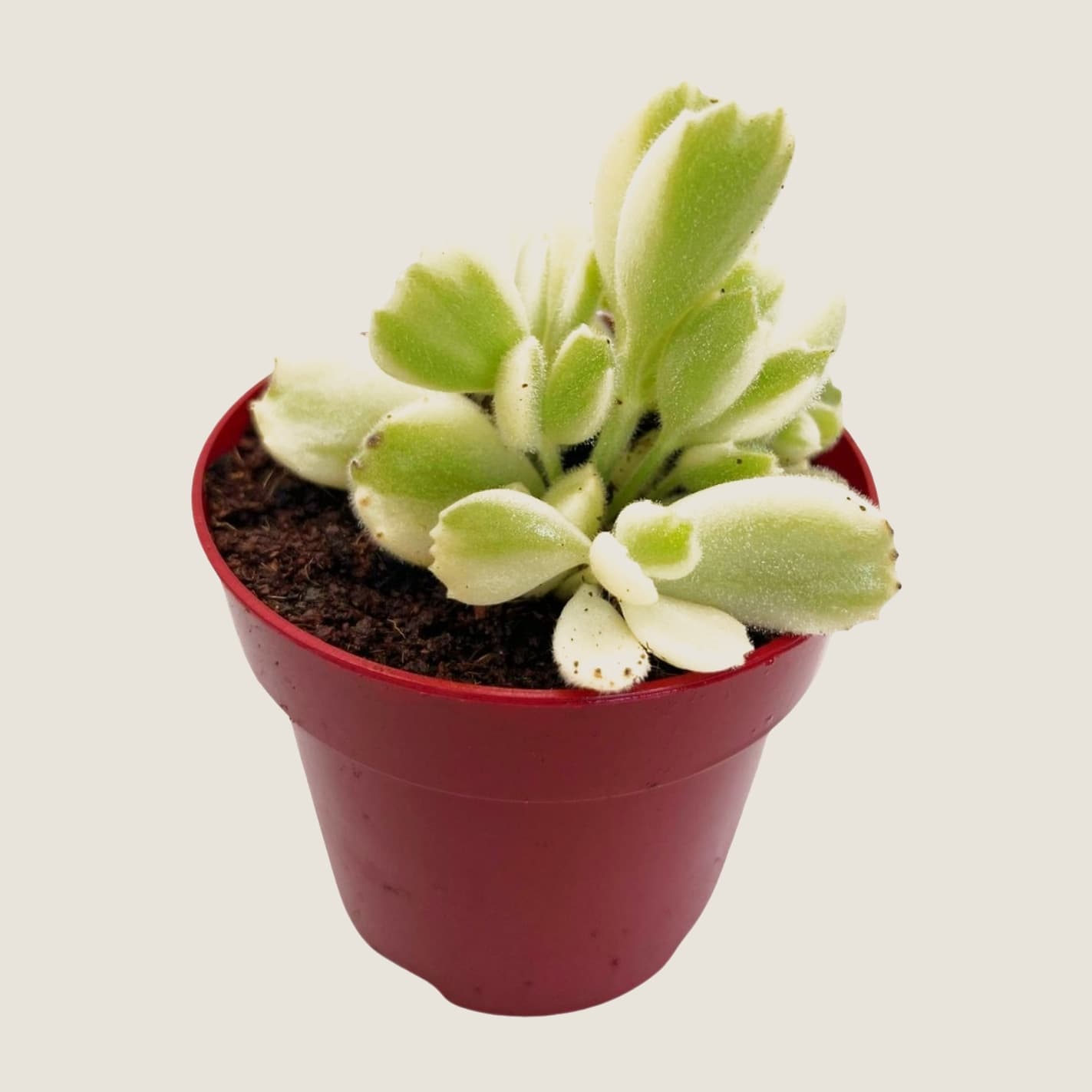
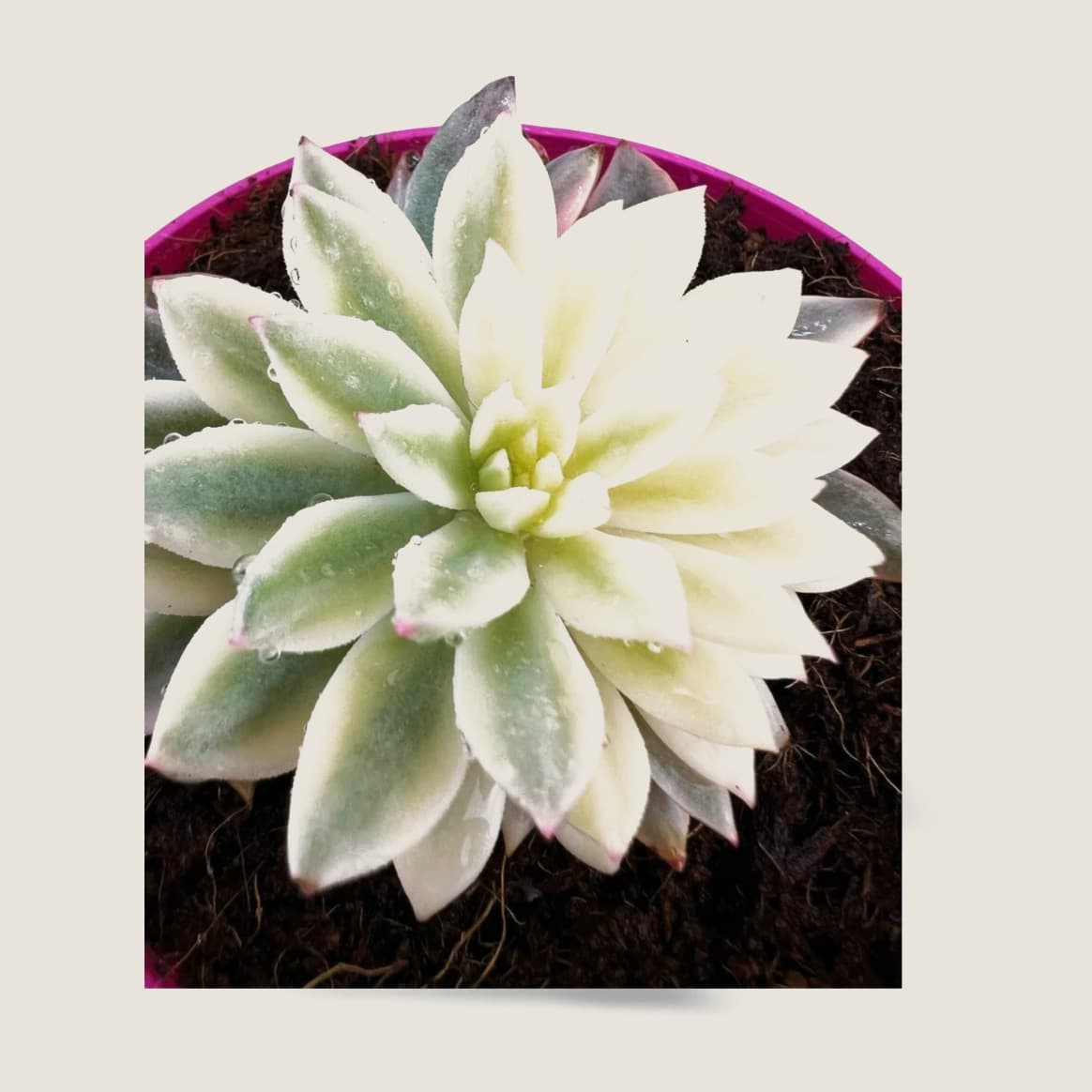
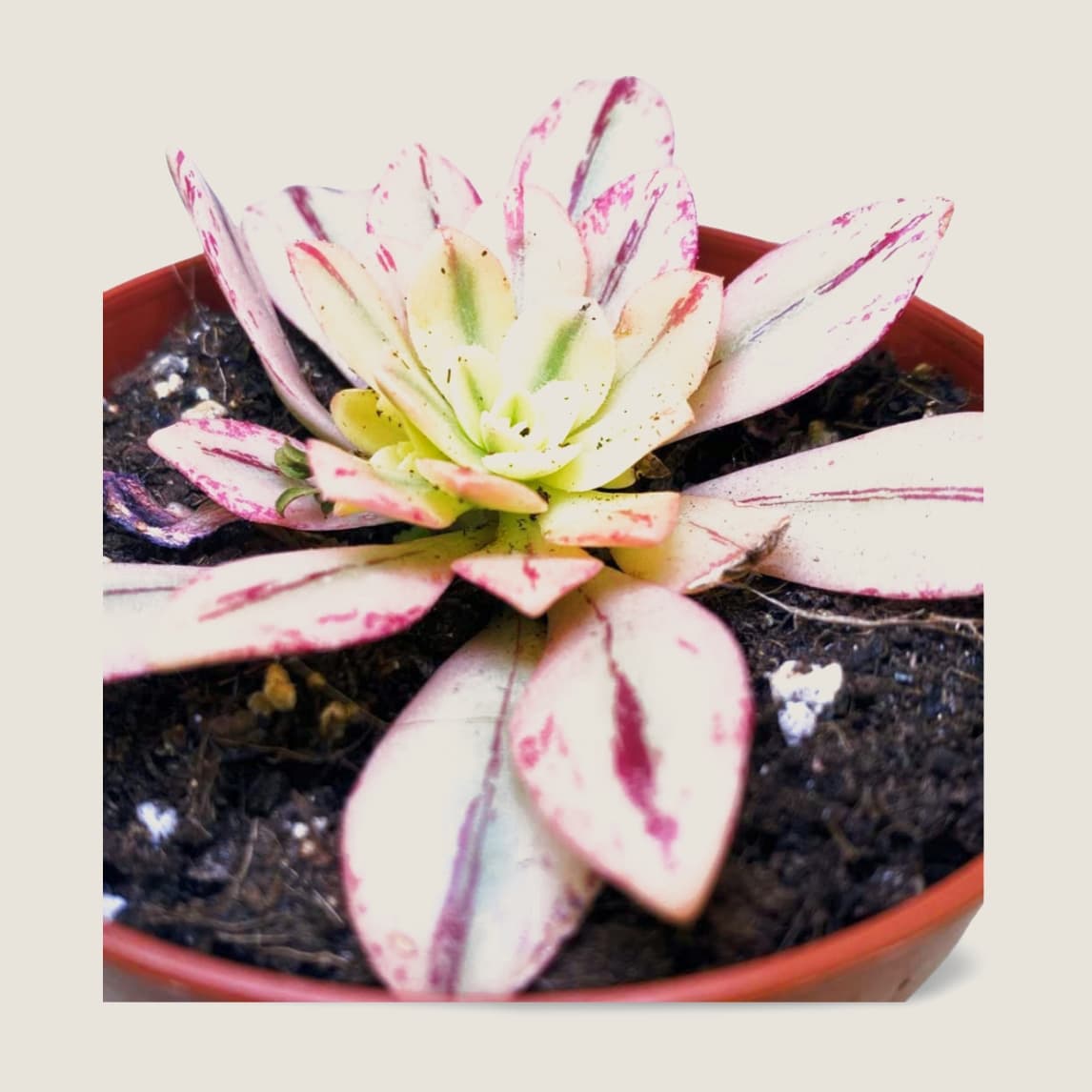
Variegated succulents
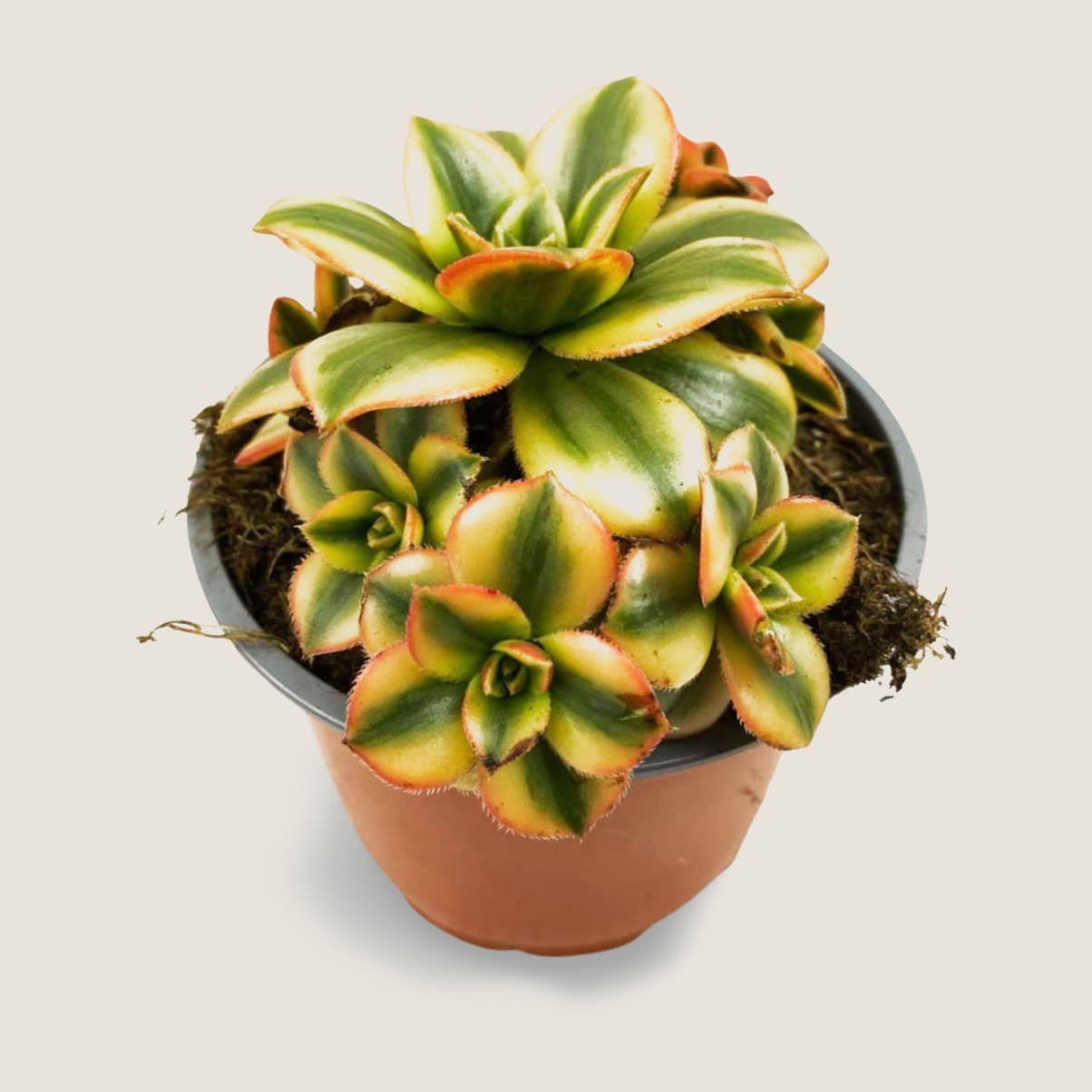
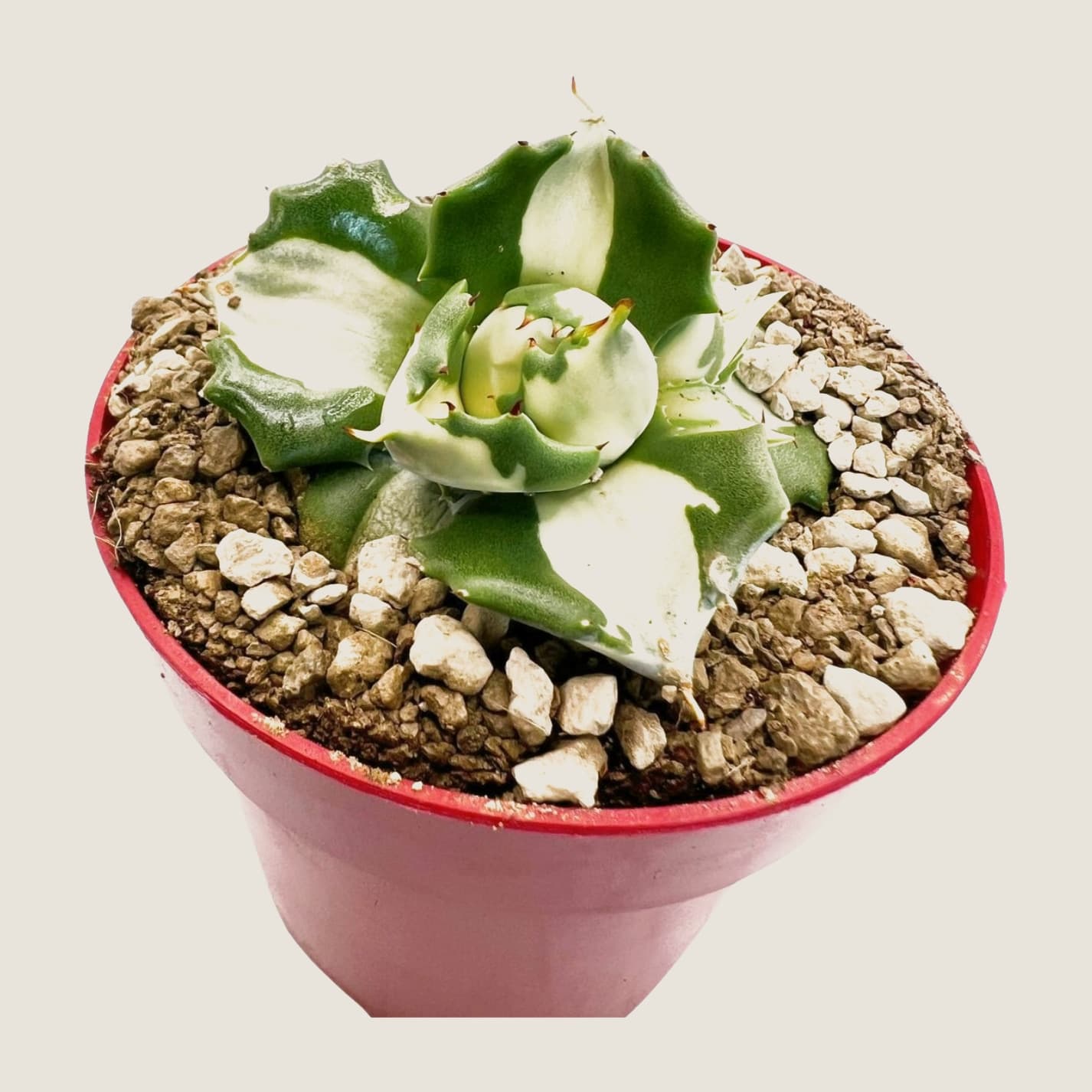
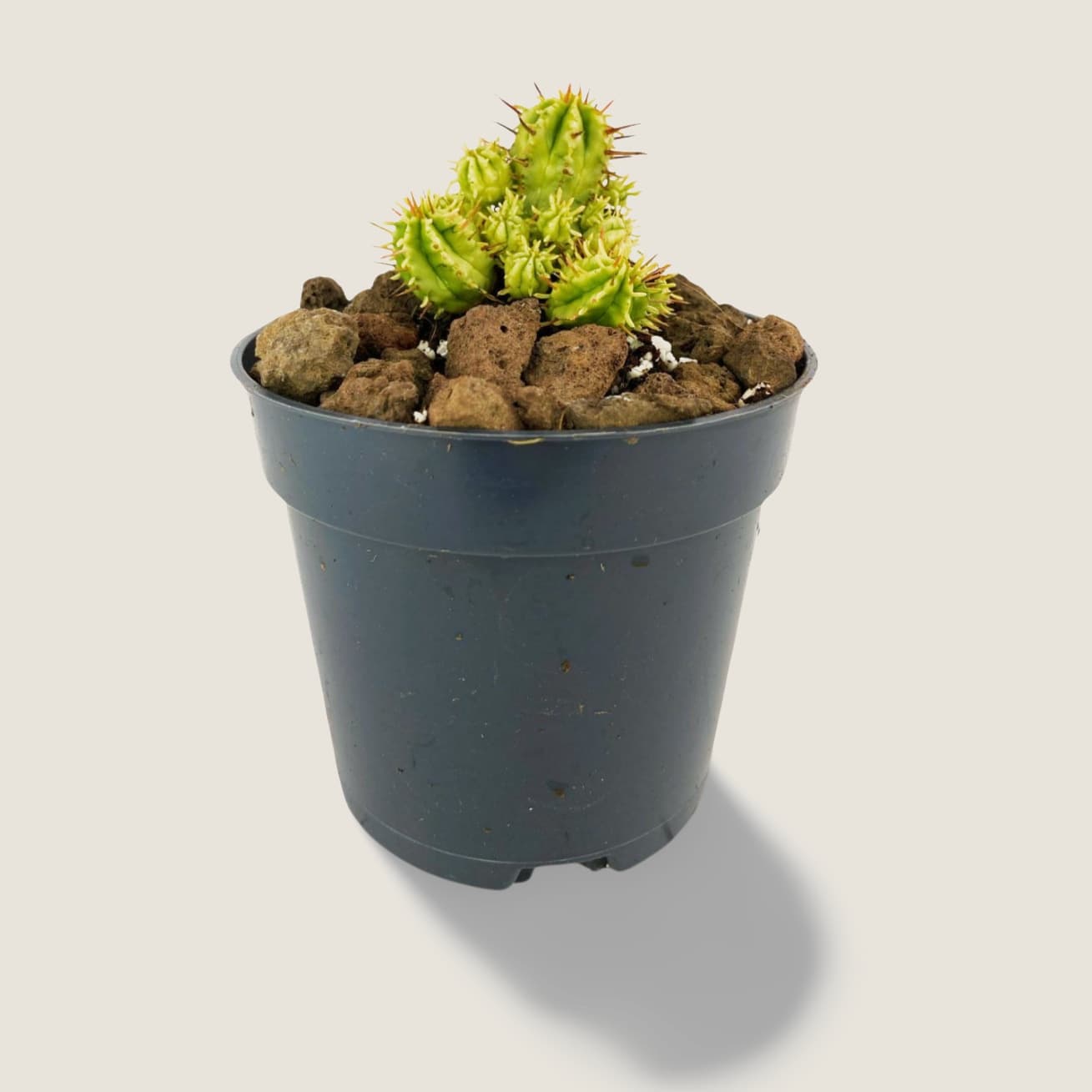
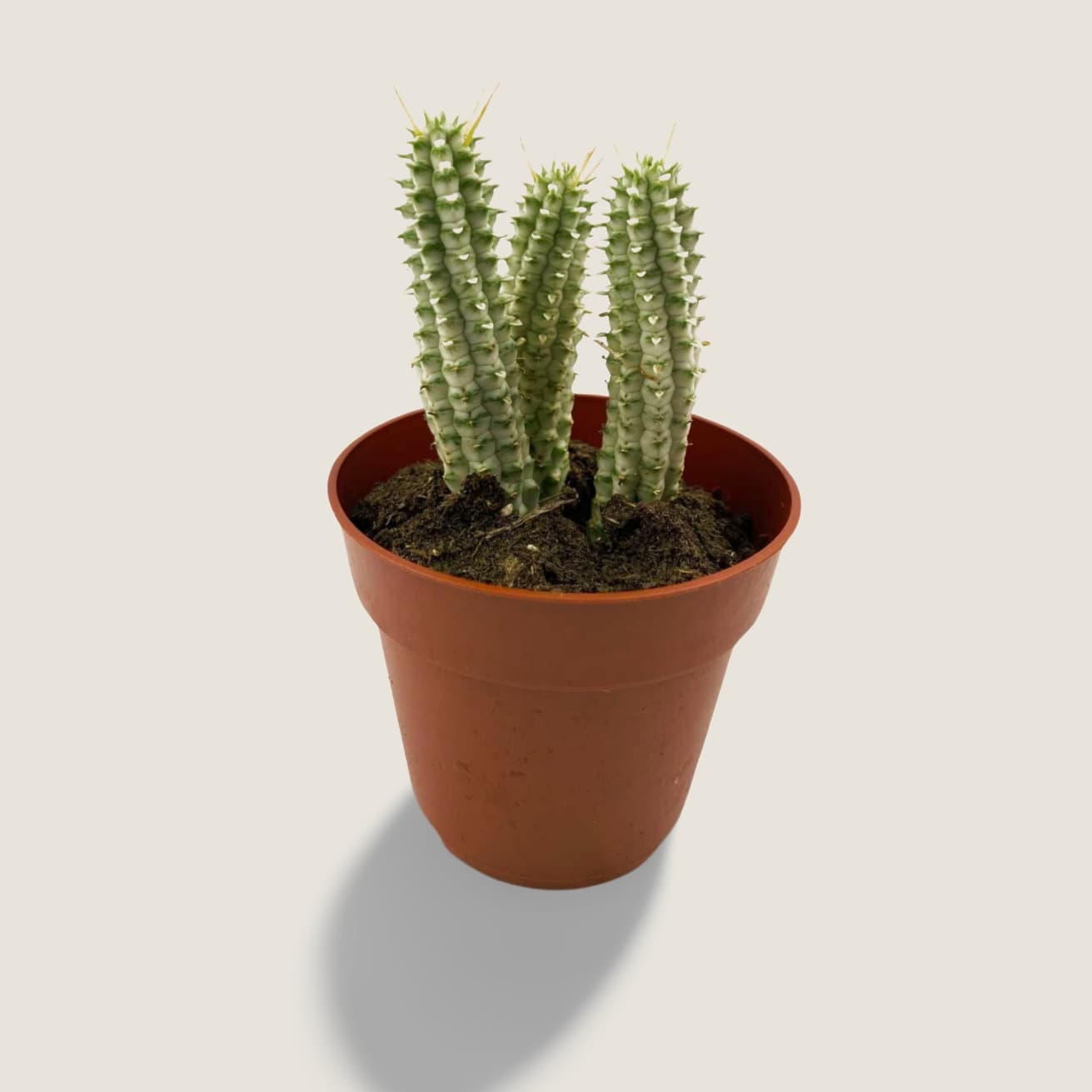
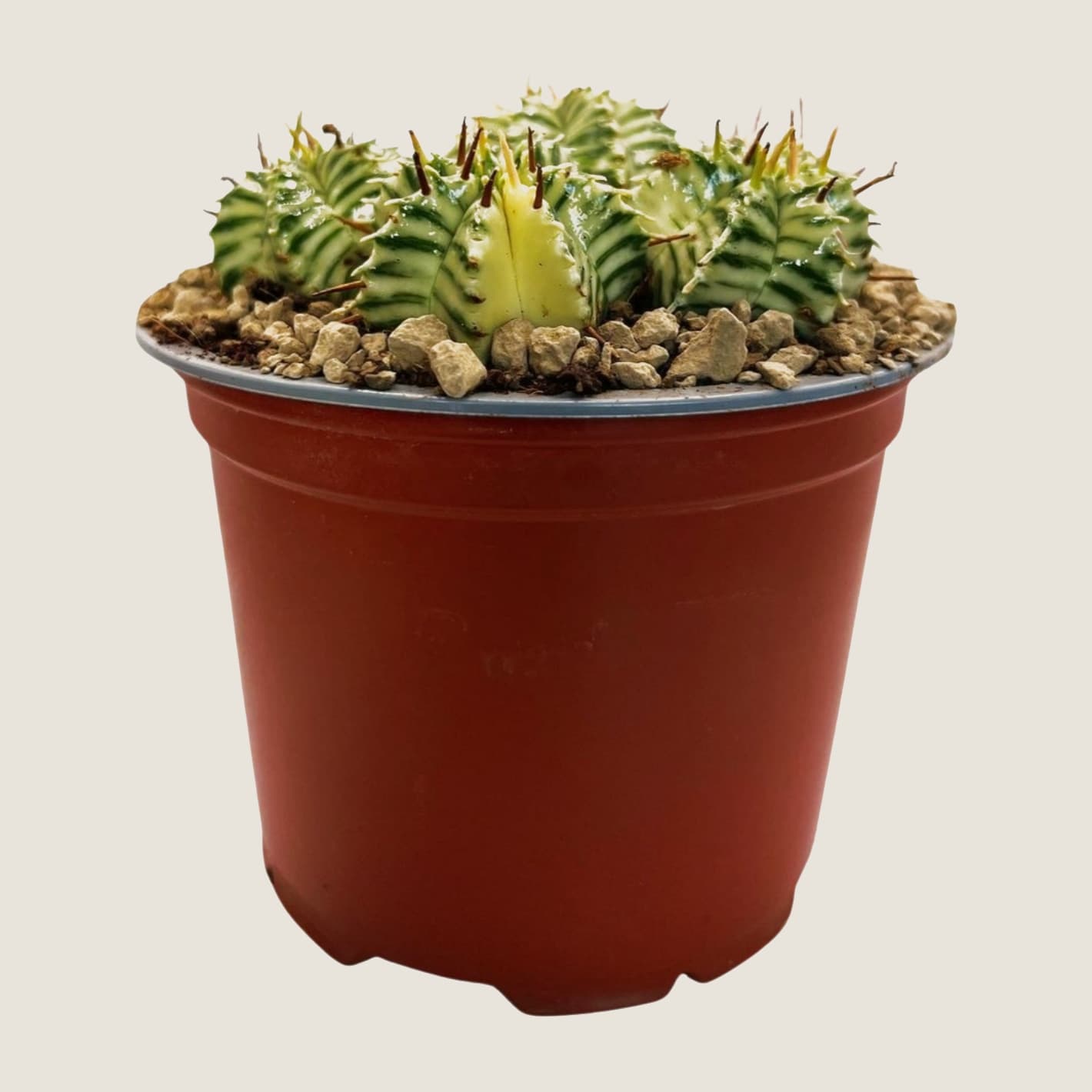
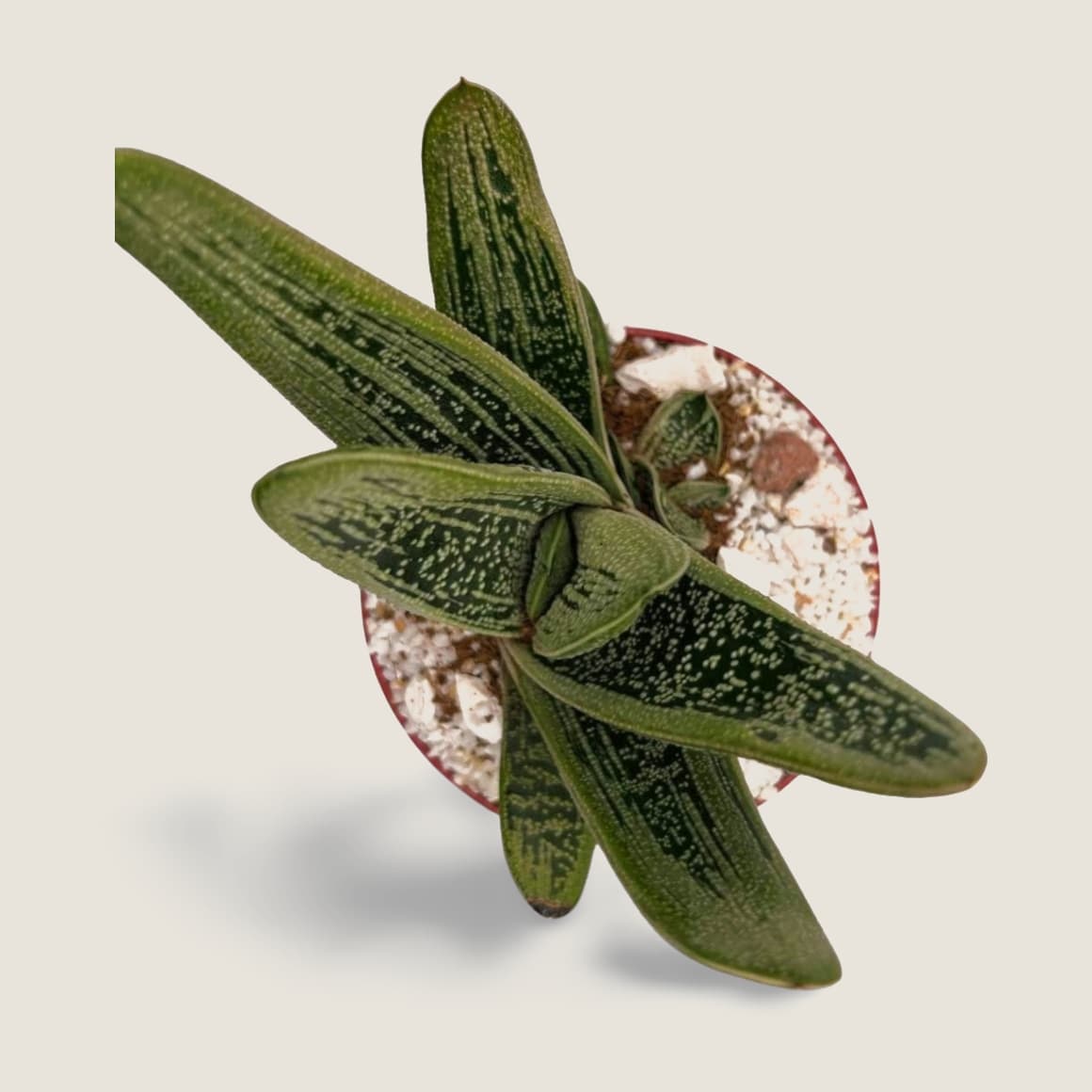
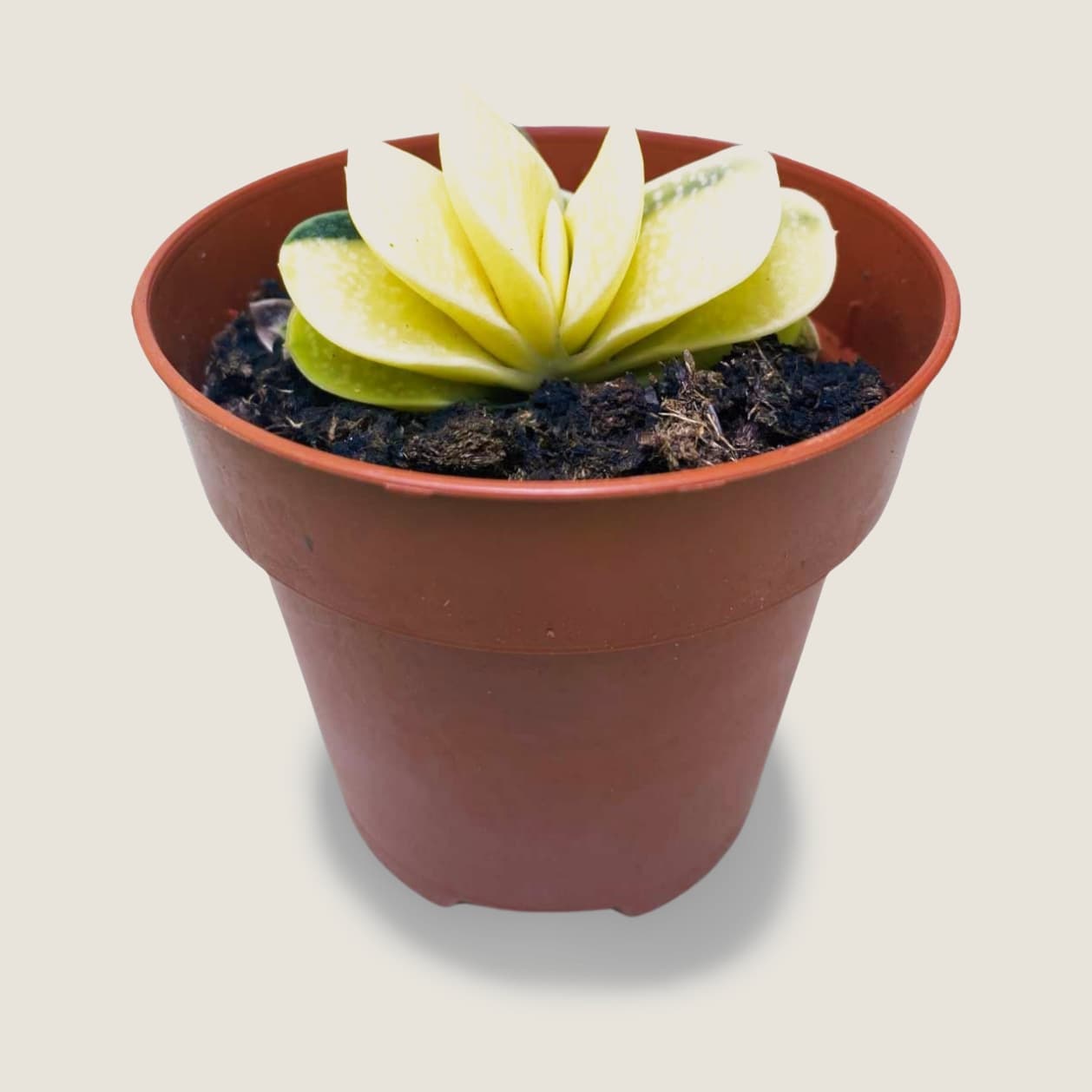
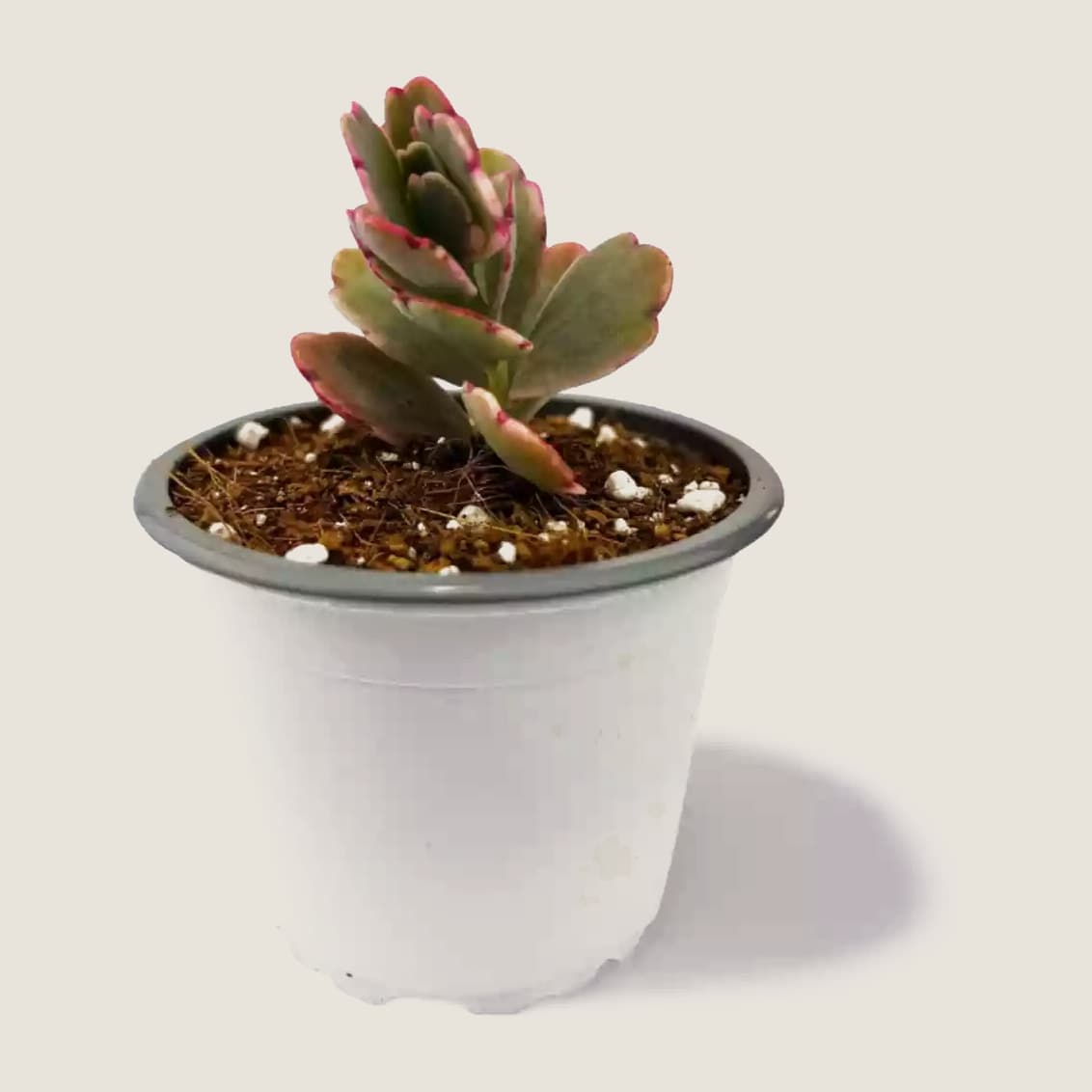
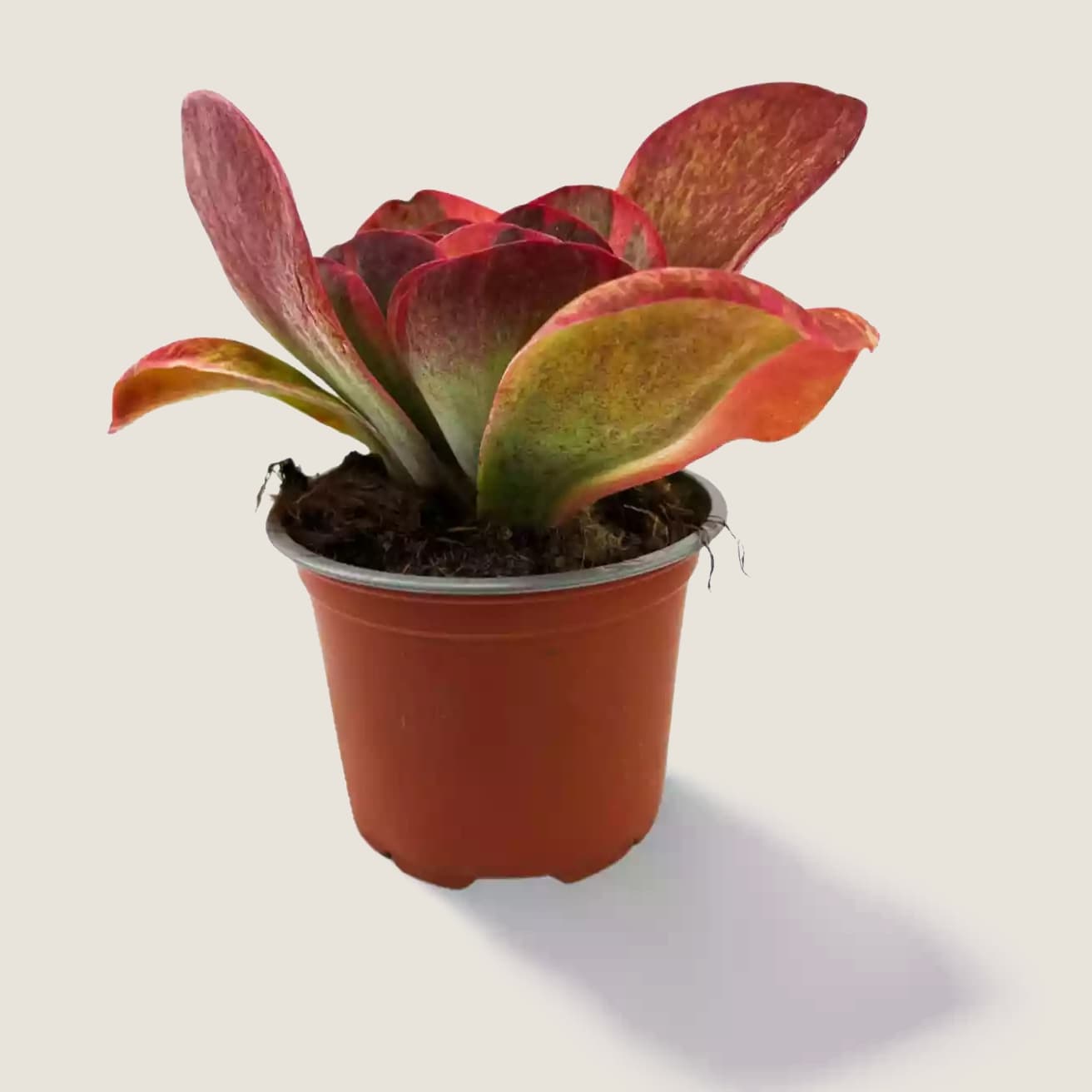
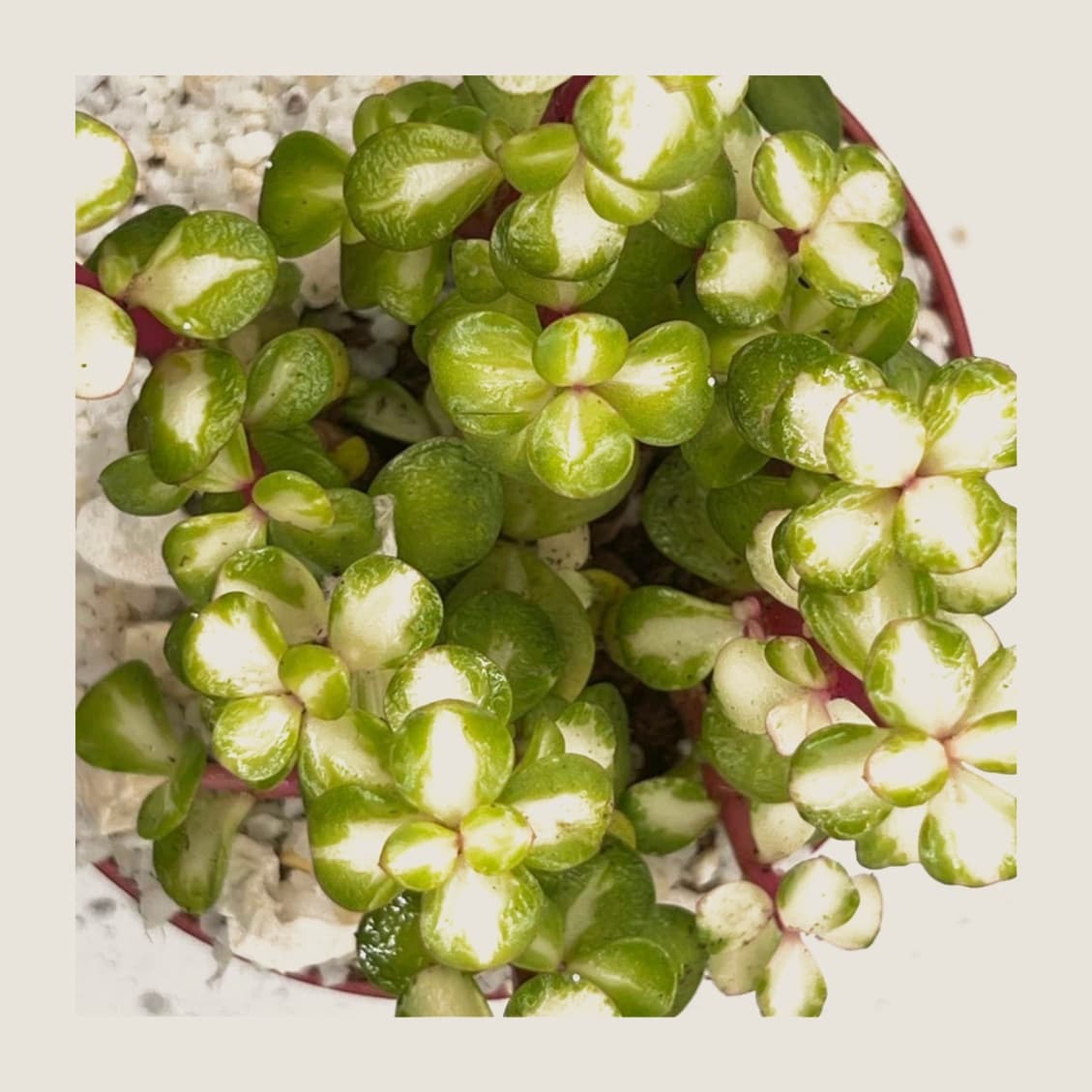
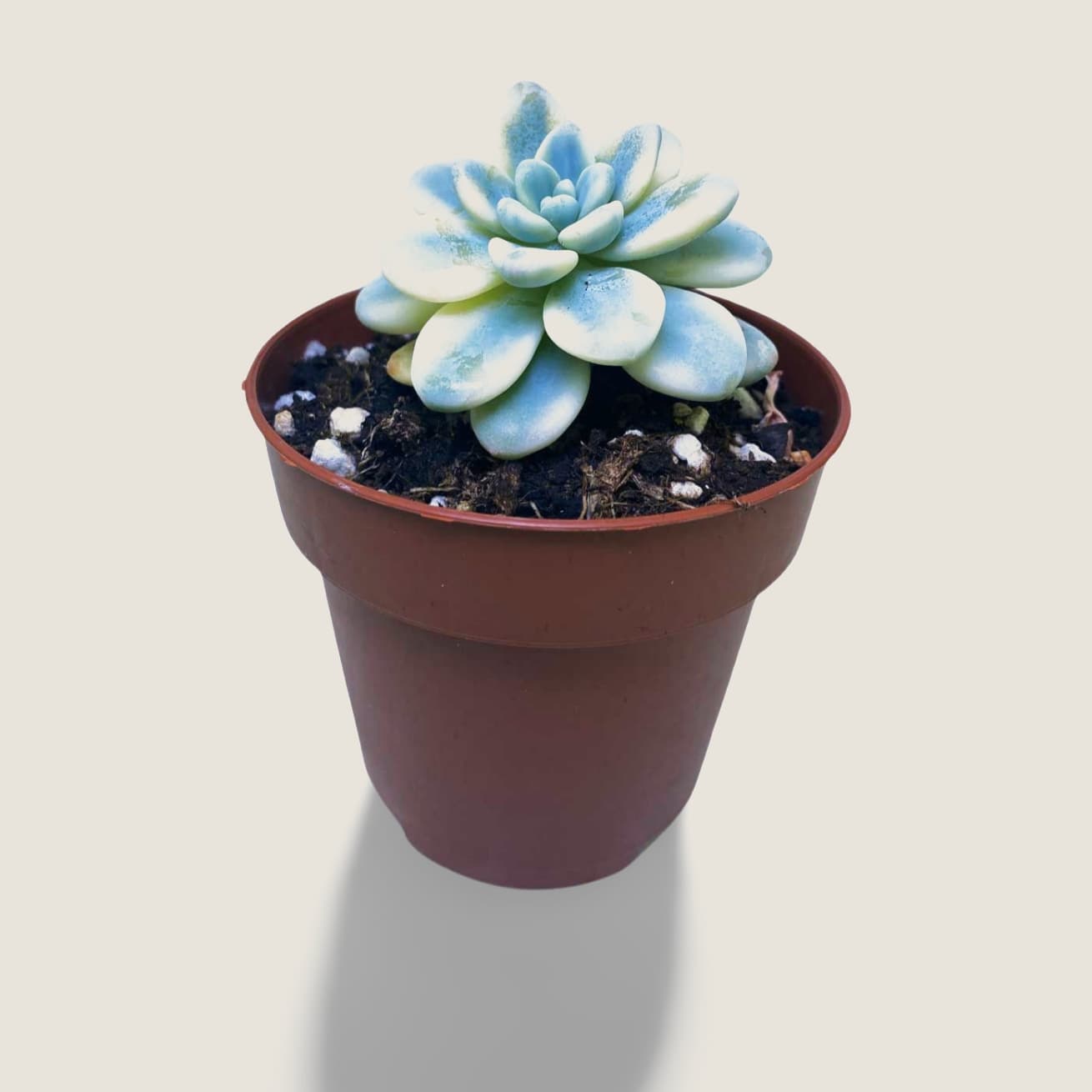
A variegated plant has sections of tissue without chlorophyll. That is the whole secret of its looks — the whites, creams, pinks and yellows across its leaves — and of its rarity too.
Chlorophyll is what lets a plant make its own food. A variegated specimen has less surface to do it with, so it grows more slowly, is more delicate and needs more light than its green counterpart. There is no way to speed it up: a good-sized variegated Euphorbia takes years.
Nor can it be reproduced at will. Variegation appears by spontaneous mutation and is not always inherited: from one batch of cuttings, some come out variegated and others revert to green. That is why no industrial nursery mass-produces them.

Crested cacti and succulents
In a crested — or cristate — plant the growing point stops being a point and becomes a line. Instead of growing upward as a column, the stem fans out, ripples and forms a crest.
It happens through an alteration of the meristem, the tissue where the plant generates new cells. It cannot be induced or planned: it is discovered. A grower checks thousands of specimens and finds one that has started to crest.
Every crest grows its own way, so no two are alike. A Polaskia chichipe cristata is literally a one-off: the plant you buy cannot be repeated.
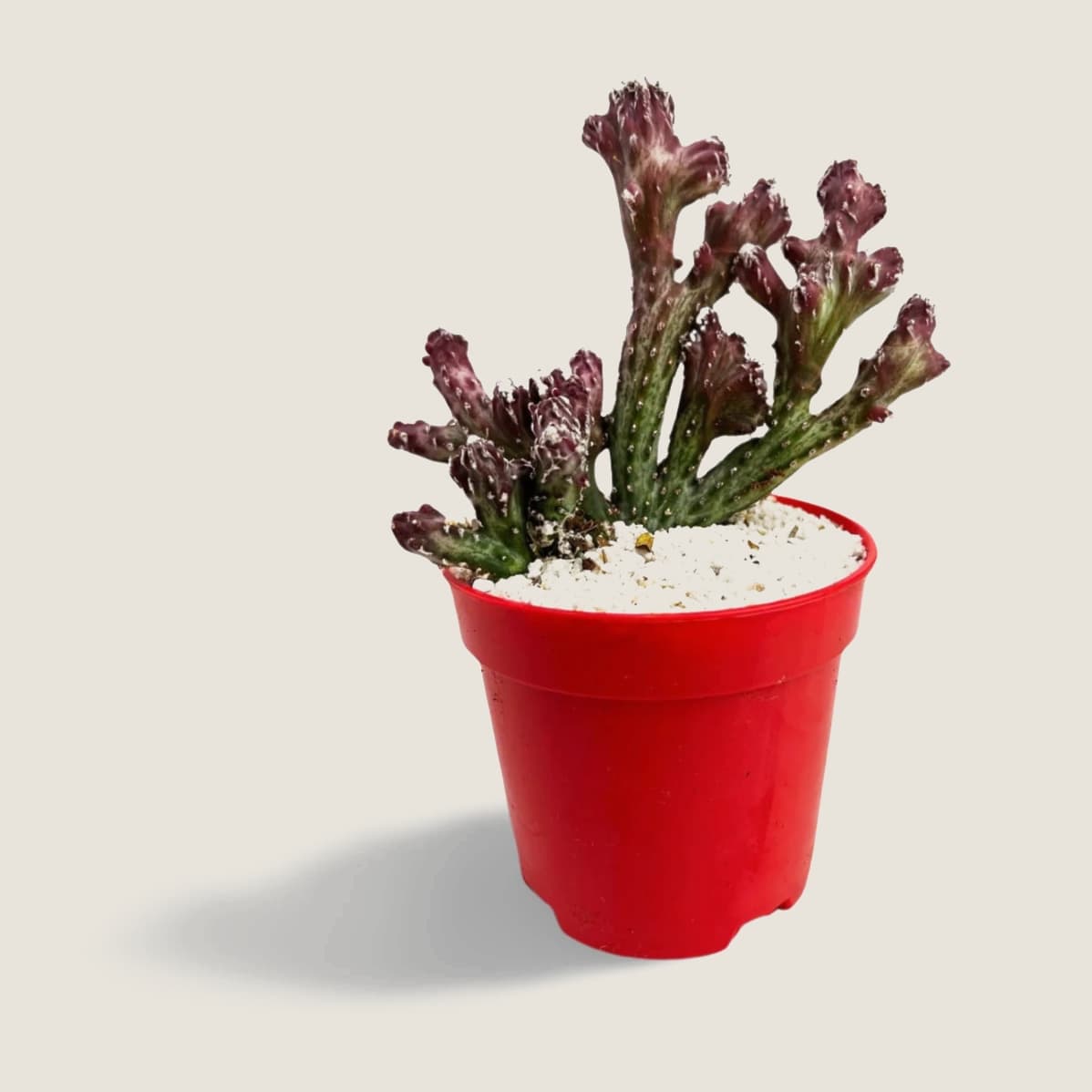
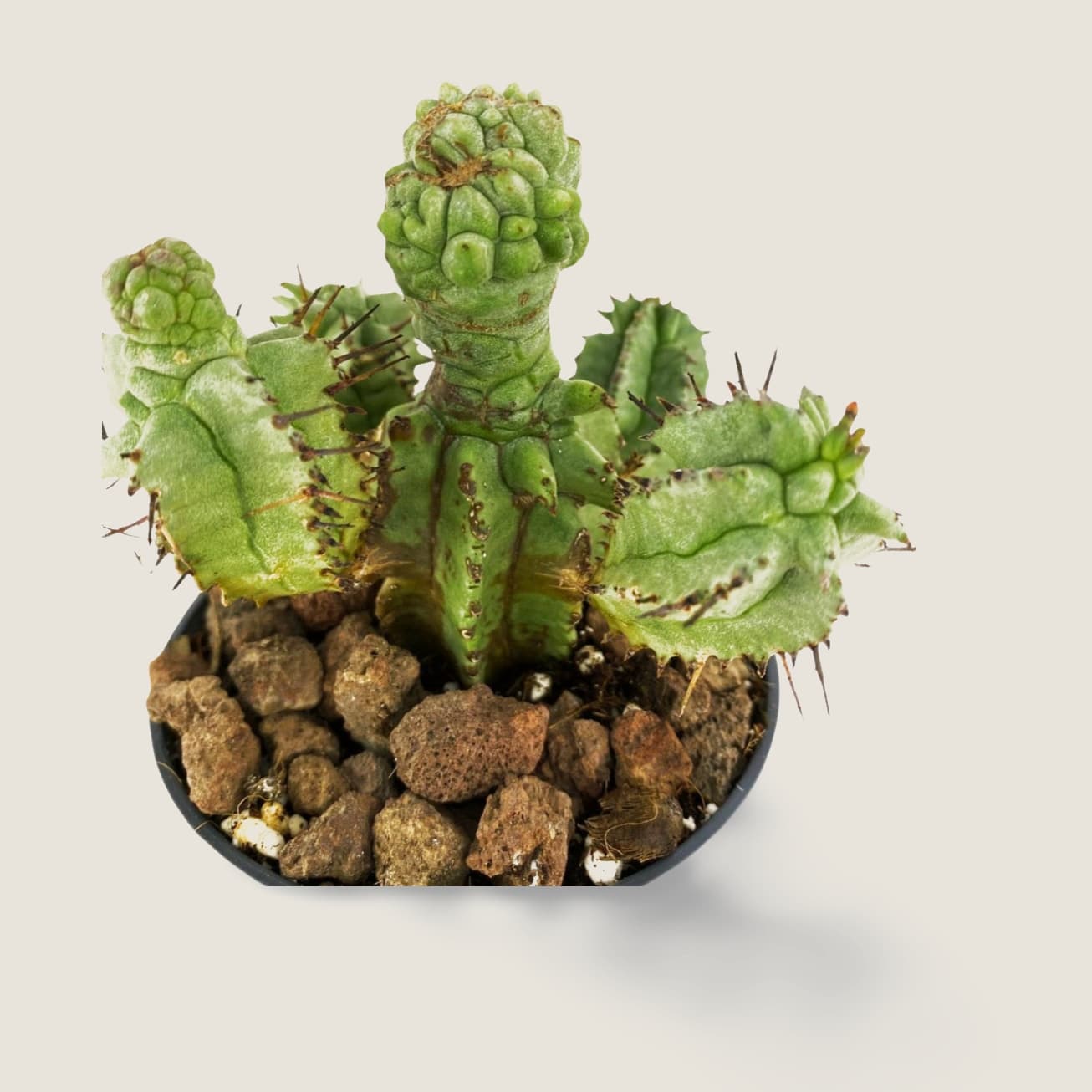
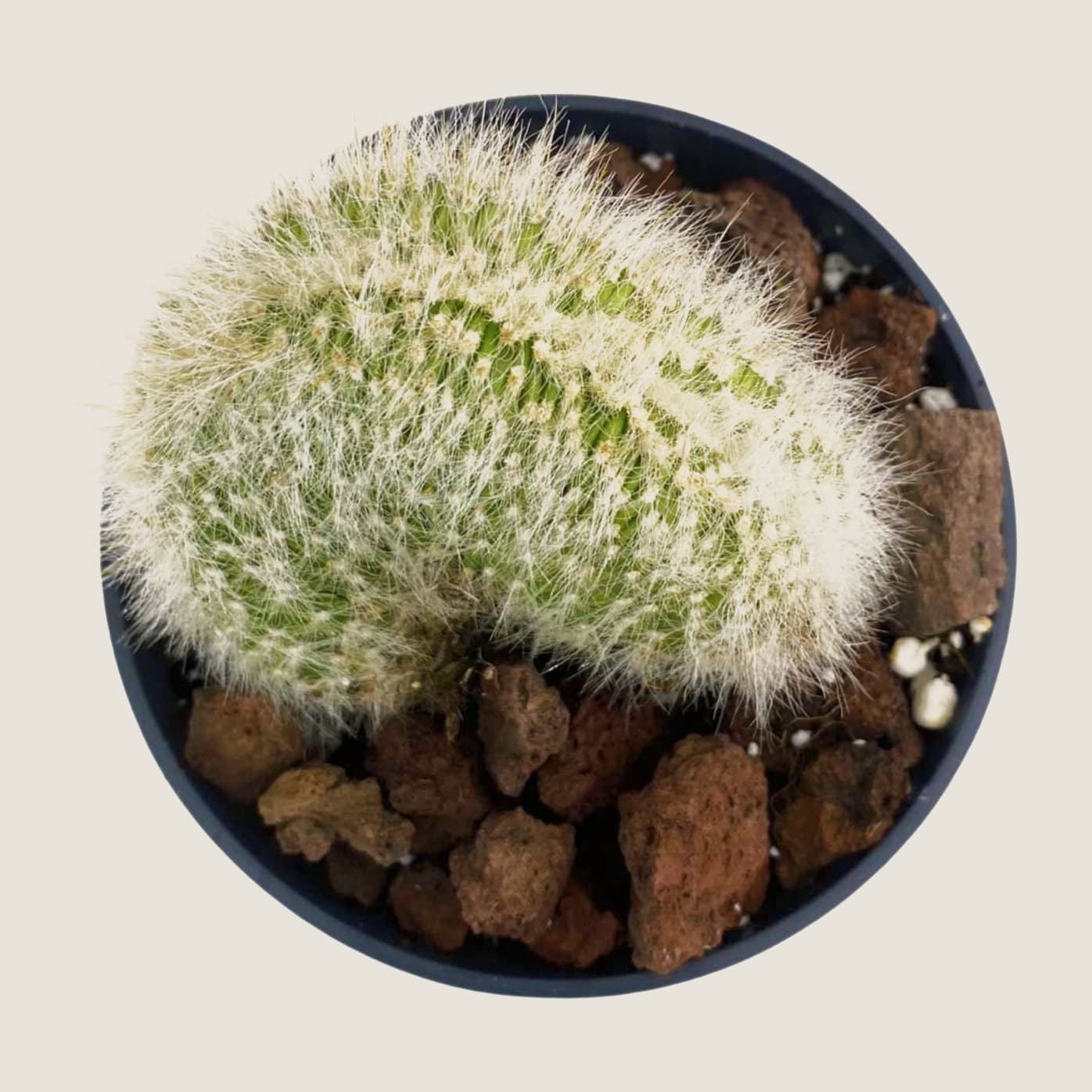
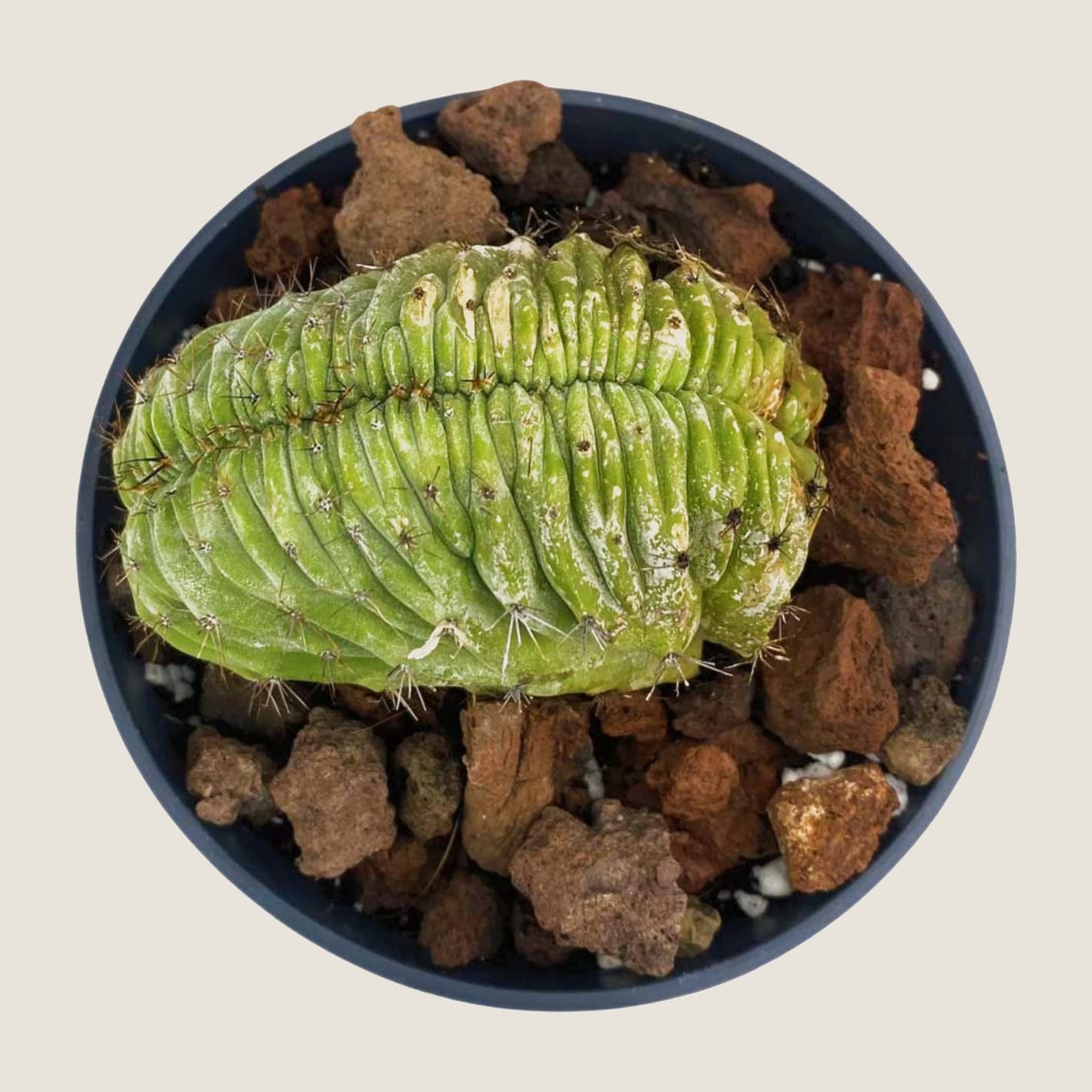
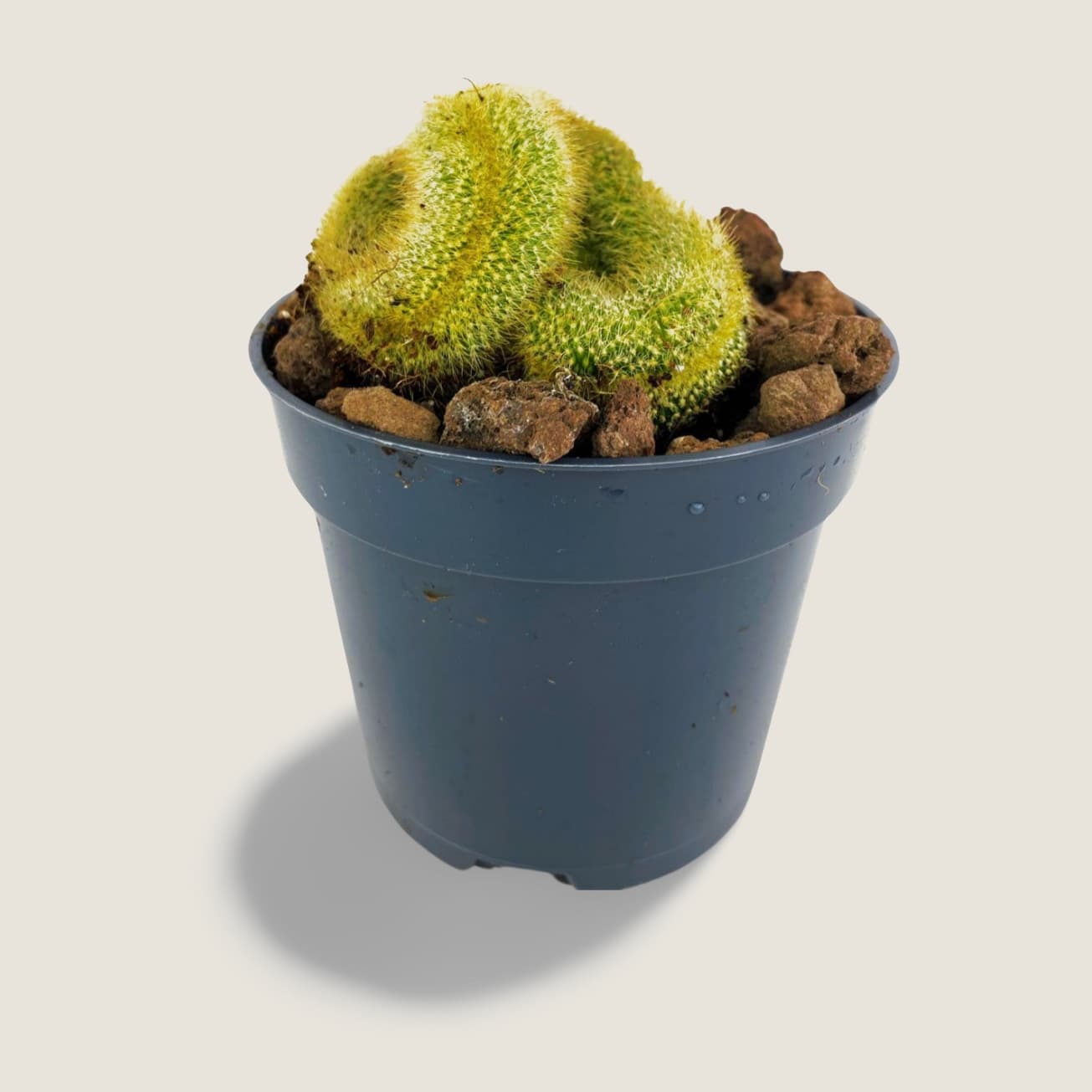
Everything here is grown by us in the Almería desert. These are counted specimens, not restocks: once one is gone, it may be a long time before there is another like it.
See the full catalogue →