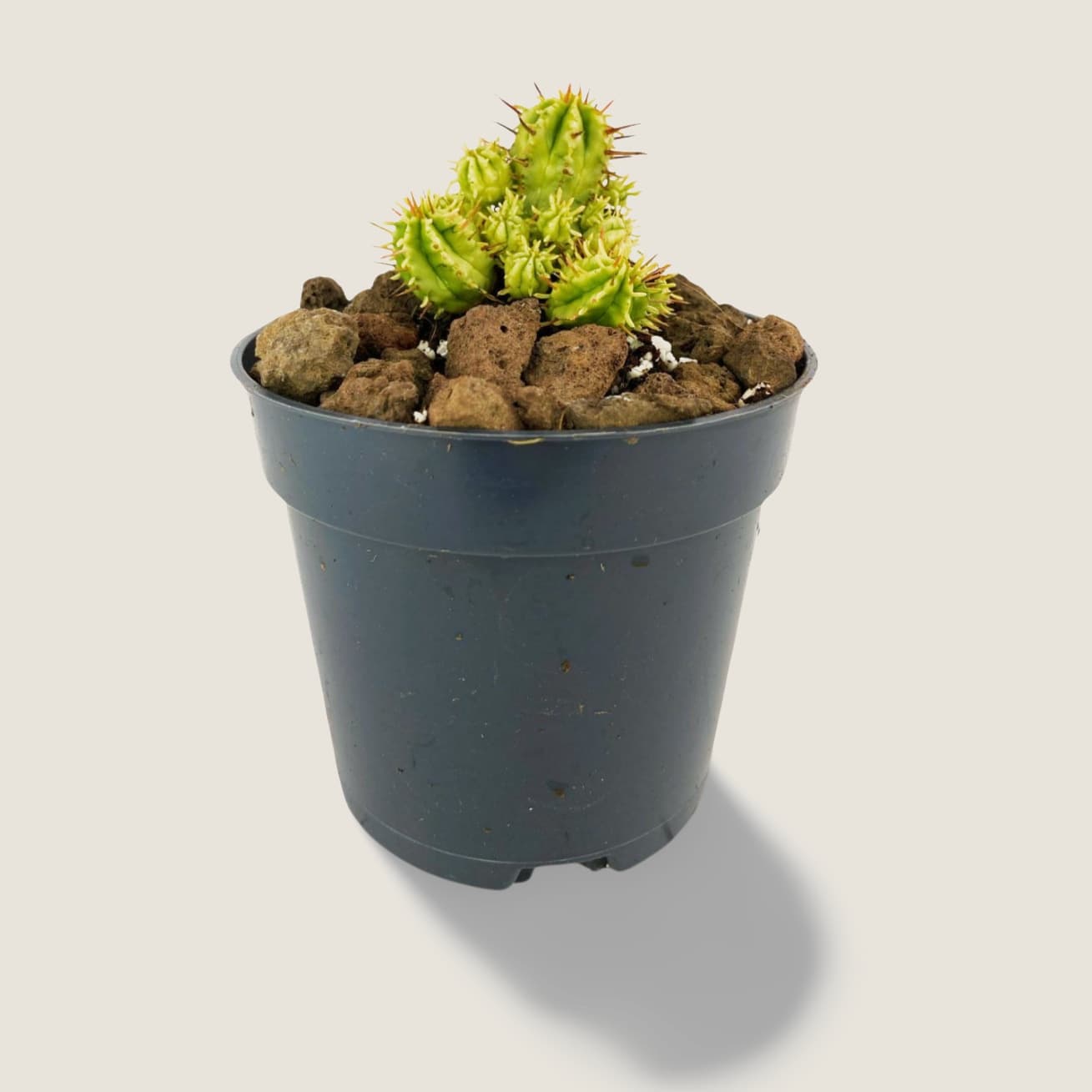
Euphorbia aggregata variegata
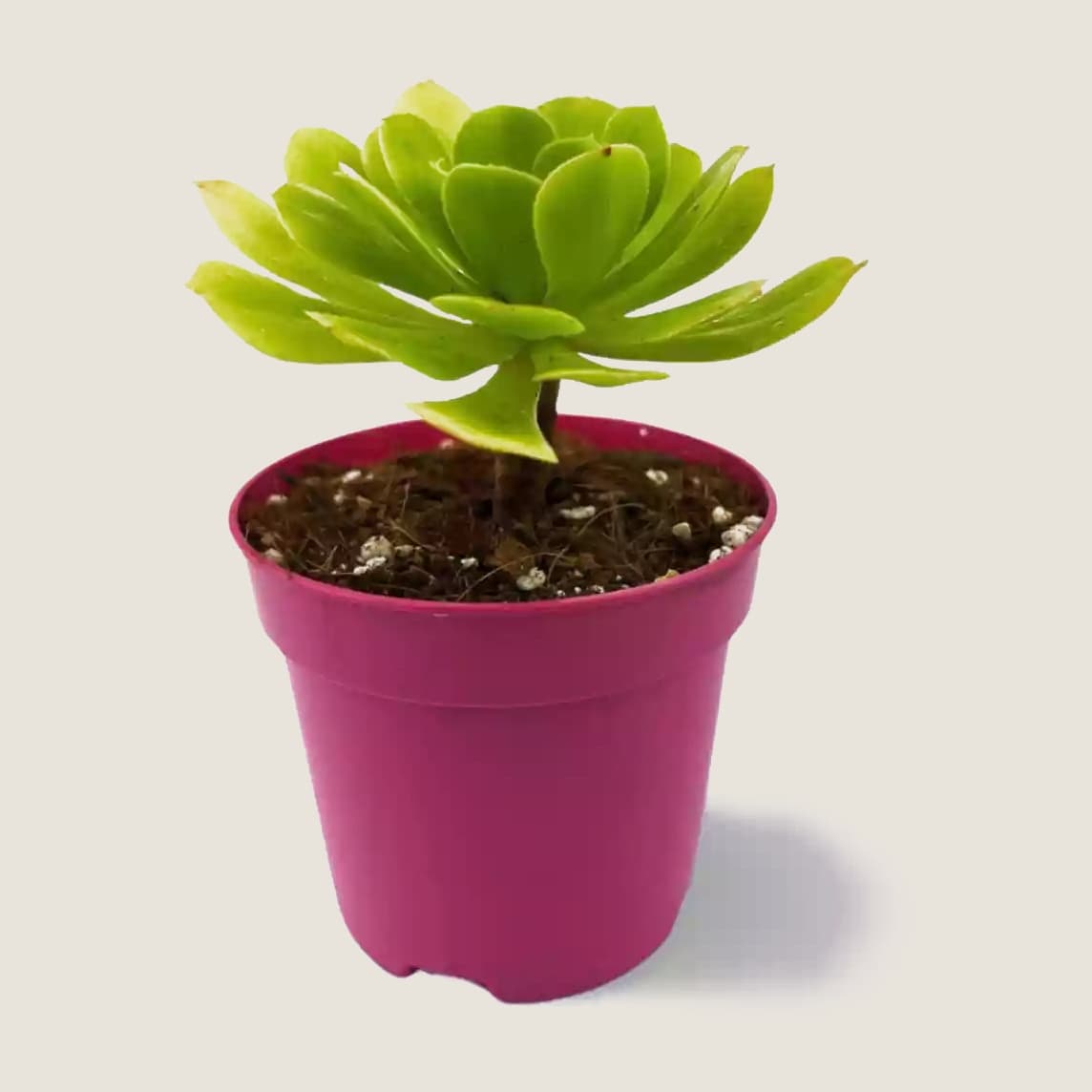
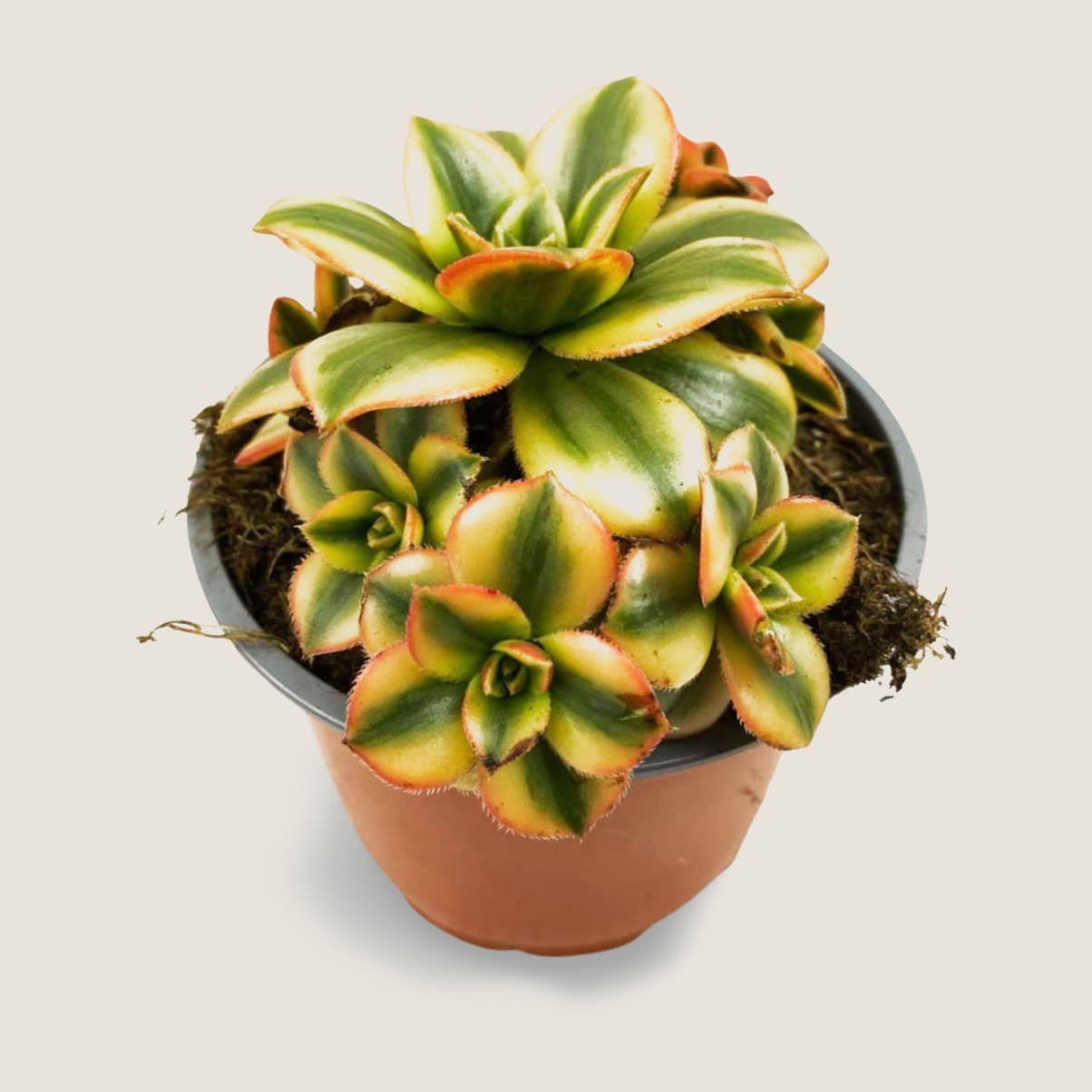
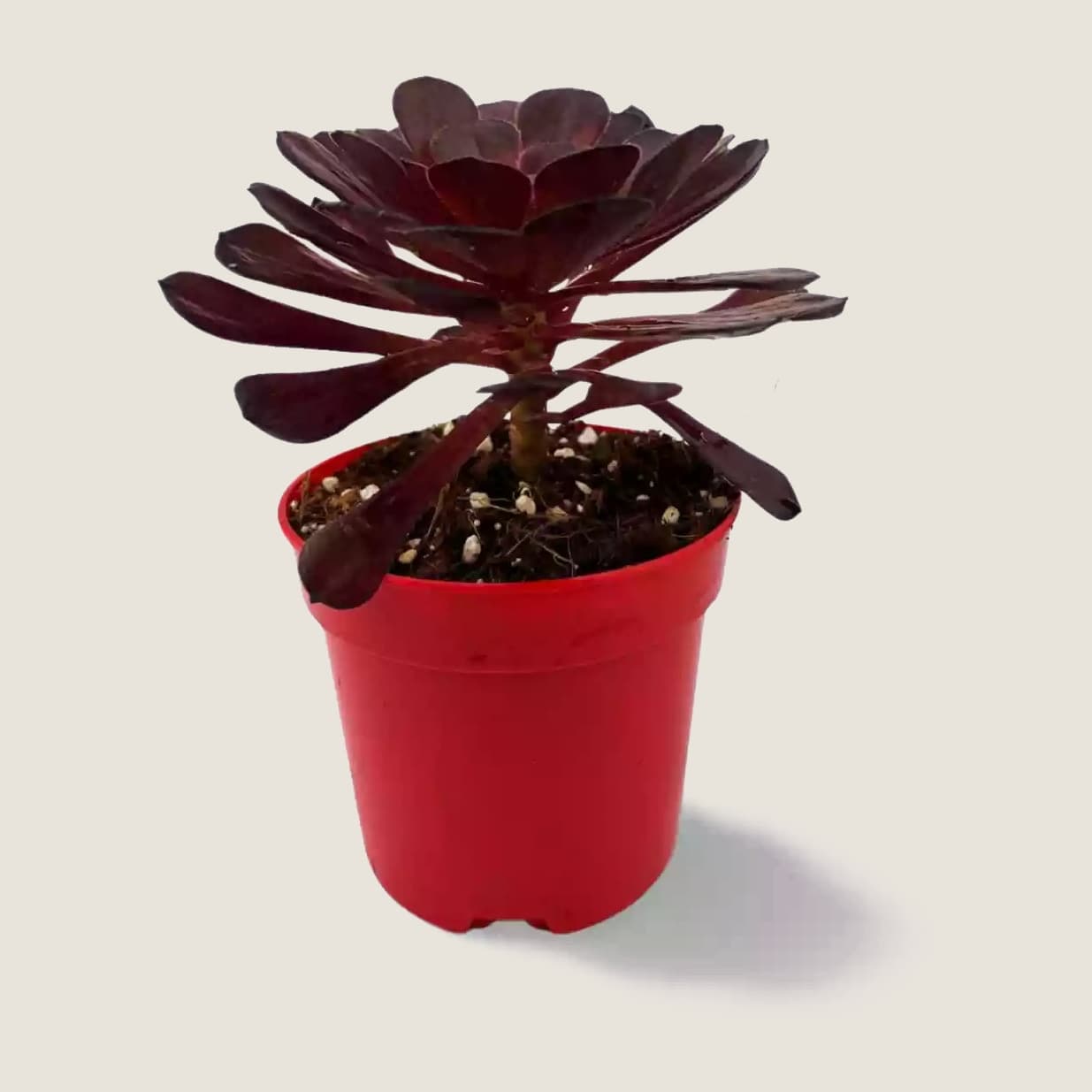
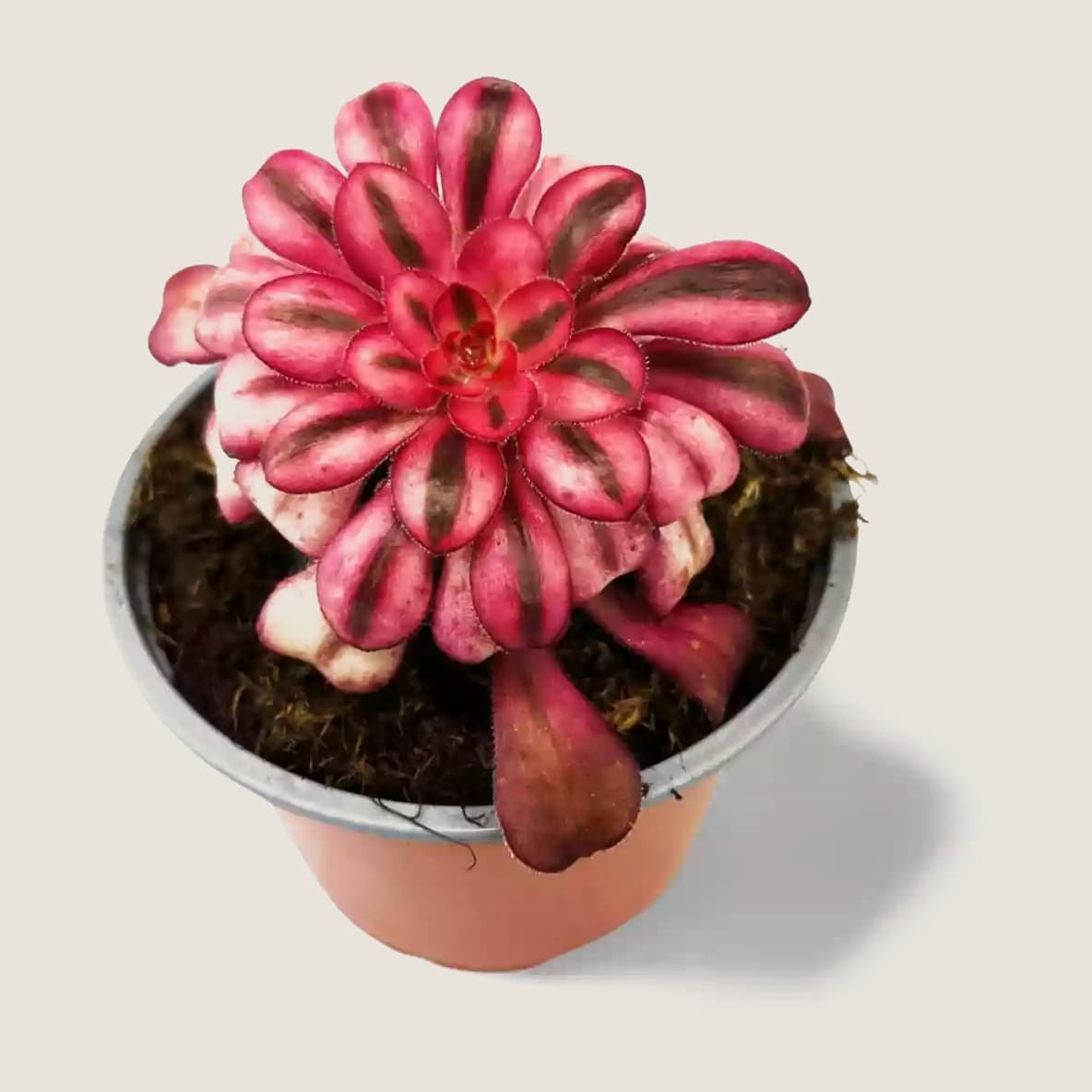
EuphorbiaceaeEuphorbia aggregata variegata · the variegated form of Euphorbia aggregata: a dense clump of short, spiny stems marbled in cream, different on every plant. Slower and more sun-sensitive than the green form. Grown in Almería — the specimen in the photo is the one you receive.
About Euphorbia aggregata variegata
Over the years Euphorbia aggregata builds a dense clump of short, spiny stems, packed so tightly against one another that it ends up looking like a bristling cushion — hence the epithet aggregata. This is its variegated form: the stems carry cream and yellow marbling scattered irregularly, and no two plants carry the same pattern.
The variegation is not decoration. The pale areas have no chlorophyll, so the plant produces considerably less energy than a green one, and the two things worth knowing about it follow from that: it grows much more slowly — which is why it costs more than the ordinary form, not because it is scarce on the market — and it scorches more easily.
We grow it in Almería, where the strong sun is what sets the contrast between the green and the cream. Every specimen has its own pattern: the one in the photo is exactly the one that reaches you.
Botanical fact sheet
| Scientific name | Euphorbia aggregata, variegated form | |
| Family | Euphorbiaceae | |
| Origin | Eastern Cape, South Africa | |
| Natural habitat | dry Karoo scrub | |
| Adult size | clumps 15-30 cm across | |
| Flowering | small yellowish cyathia | |
| Propagation | cutting from a variegated stem — it is not inherited from seed | |
| Toxicity | irritant white latex |
Care
Plenty of light, but filtered during the middle hours of summer. Areas without chlorophyll do not protect themselves from the sun the way green tissue does, and they mark as soon as they get too much. Watering, even more restrained than for the green form: growing less, it uses less water.
If it starts throwing completely green shoots, remove them. They have full chlorophyll, grow far faster than the rest, and within a couple of seasons they take the plant over: you would end up with an ordinary aggregata. Entirely white shoots are no use either, since they cannot feed themselves.
Did you know?
Its variegation is a chimera: two genetically distinct cell lines live side by side in the same body, one with chlorophyll and one without. That is why the pattern is not inherited through seed and survives only through cuttings, and why no two specimens are alike.
Luz
Direct sun or very bright light
Riego
Sparse: let the substrate dry out between waterings; reduce in winter
Sustrato
Very free-draining mineral substrate, specific for cacti and succulents
Temperatura
Protect below 8-10 °C (cold-sensitive)