Euphorbia
Euphorbia is one of the largest genera in the entire plant kingdom, with roughly 2,000 species ranging from roadside weeds to full-sized trees. Several hundred of them are succulent, concentrated in mainland Africa, Madagascar, the Arabian peninsula and the Canary Islands. Many look so much like cacti that they are mistaken for them every day, yet the two groups are not related at all: it is a textbook case of convergent evolution, two unrelated lineages arriving at the same solution because they live in the same kind of place.
14 plants in Euphorbia
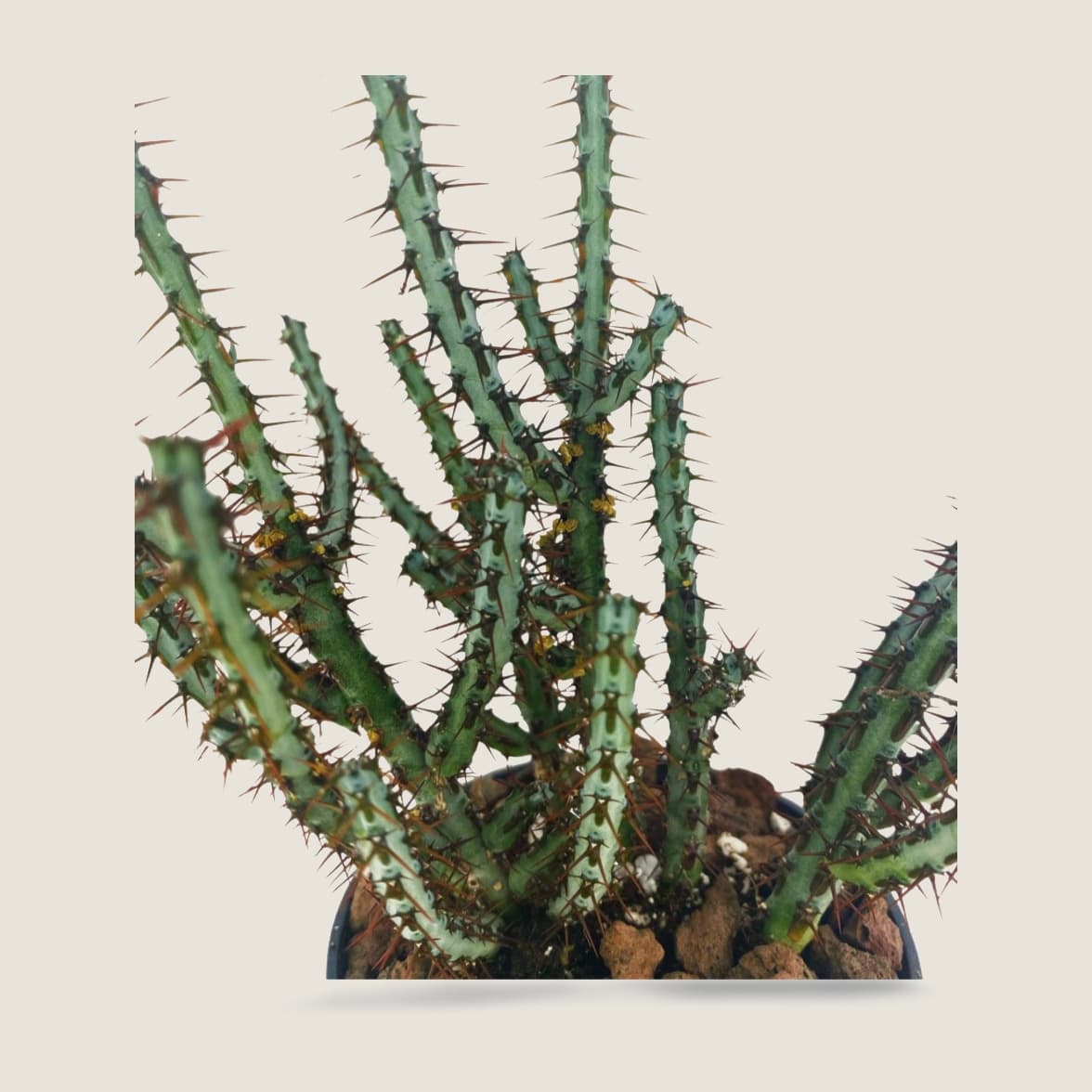
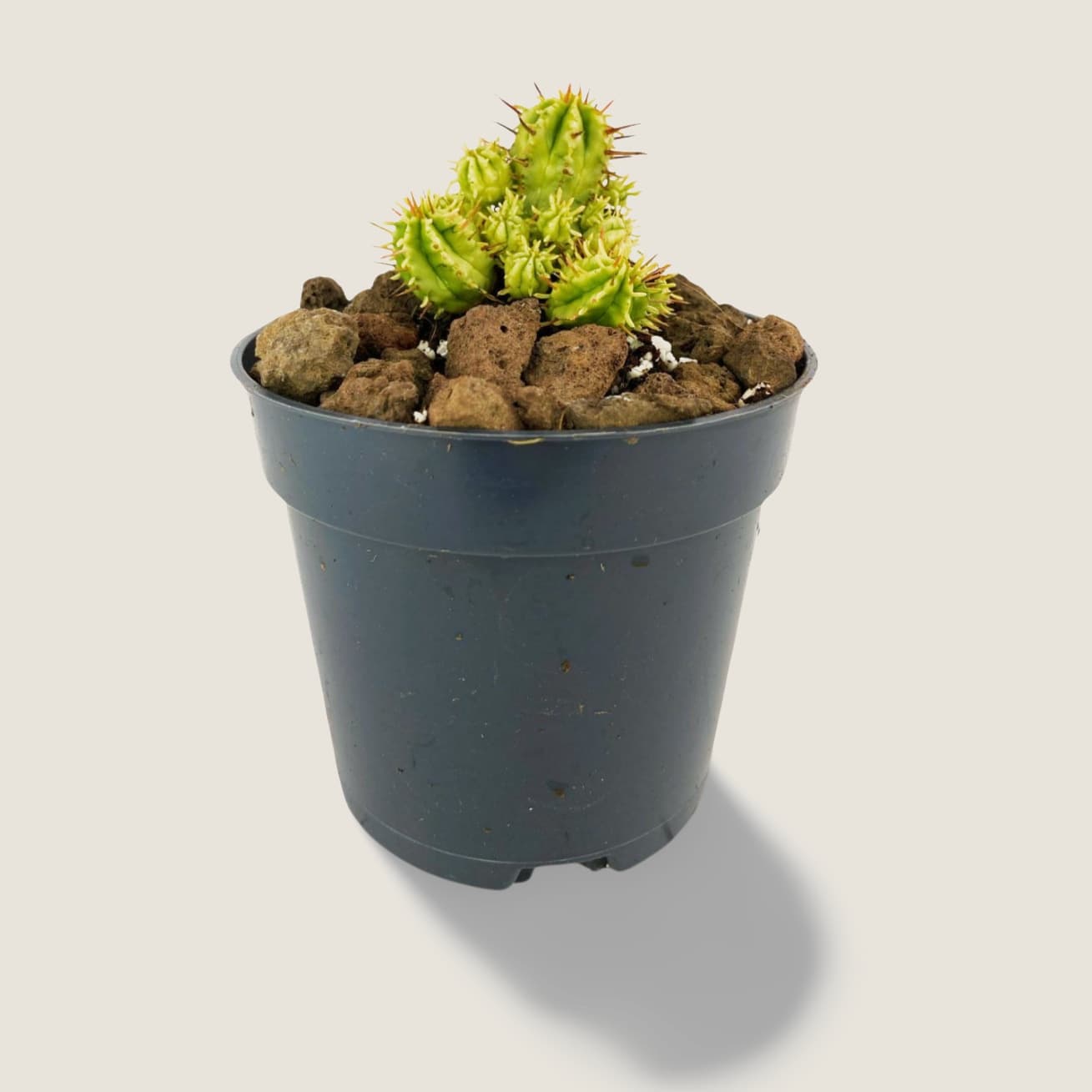
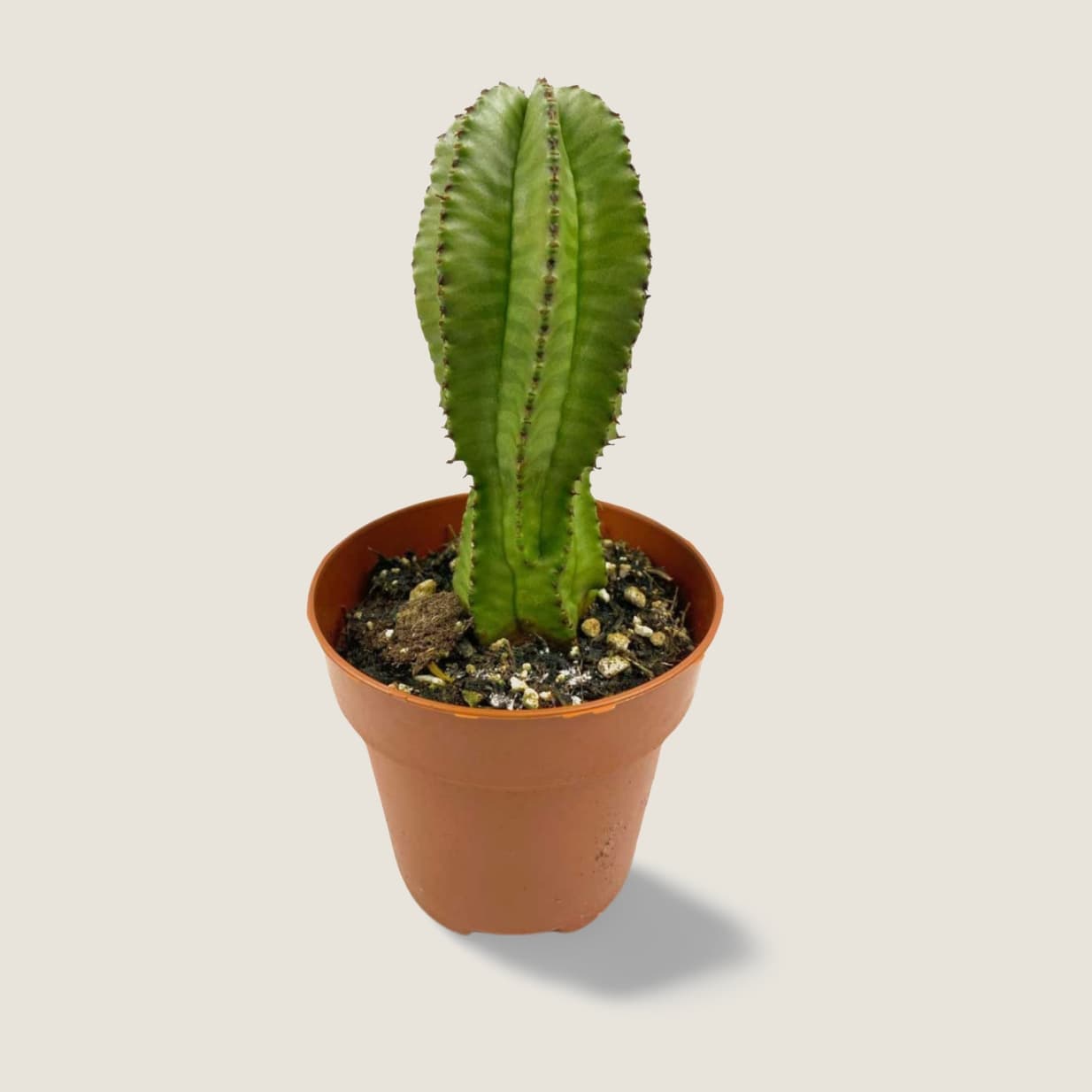
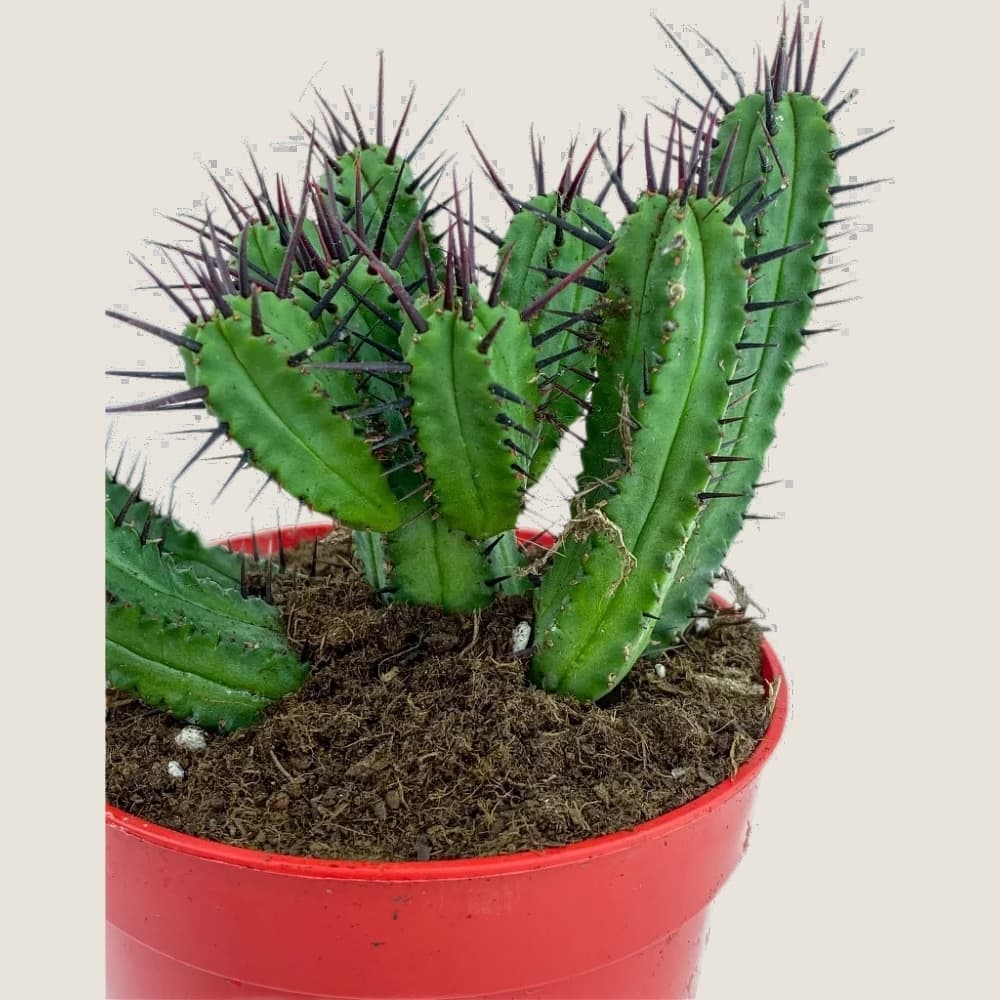
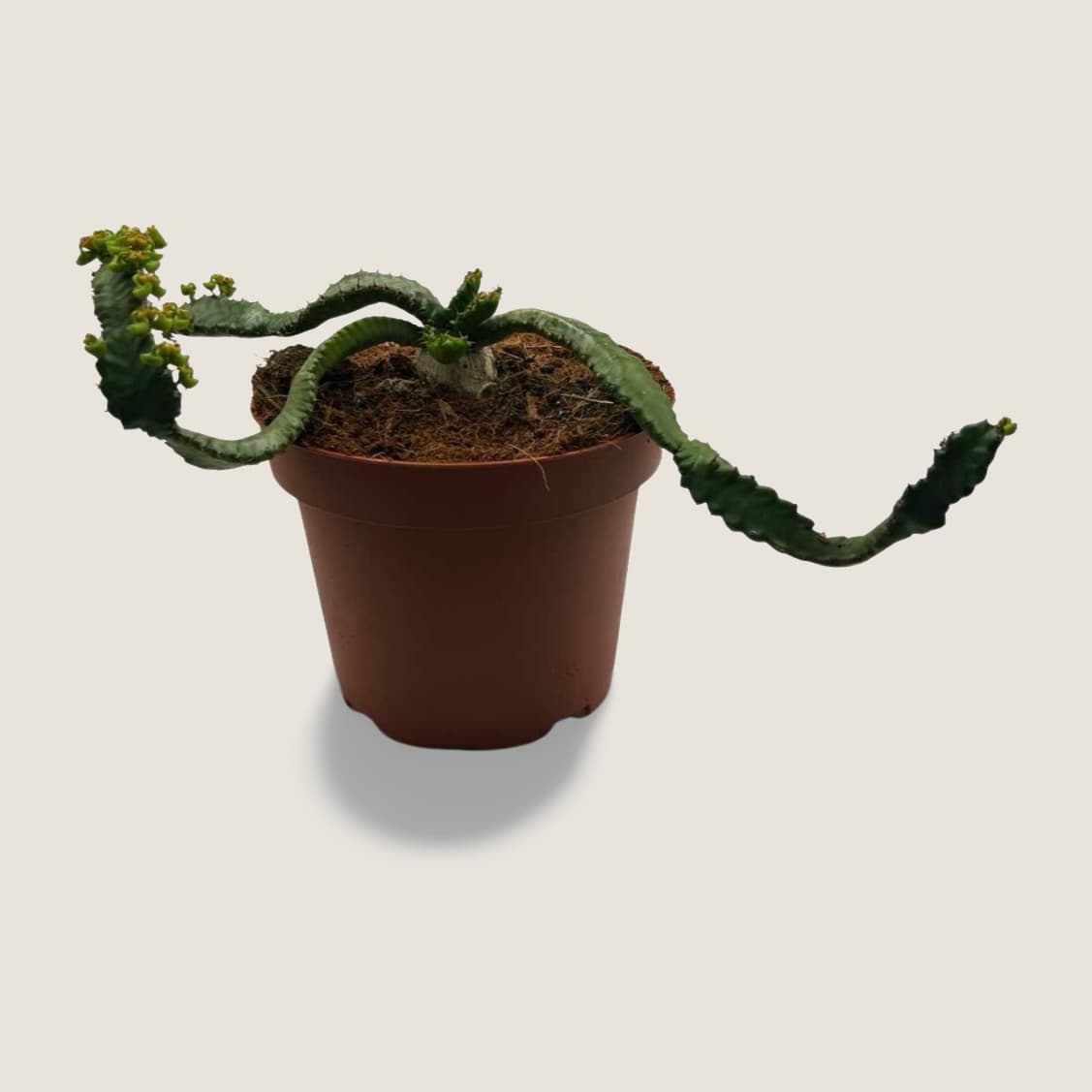
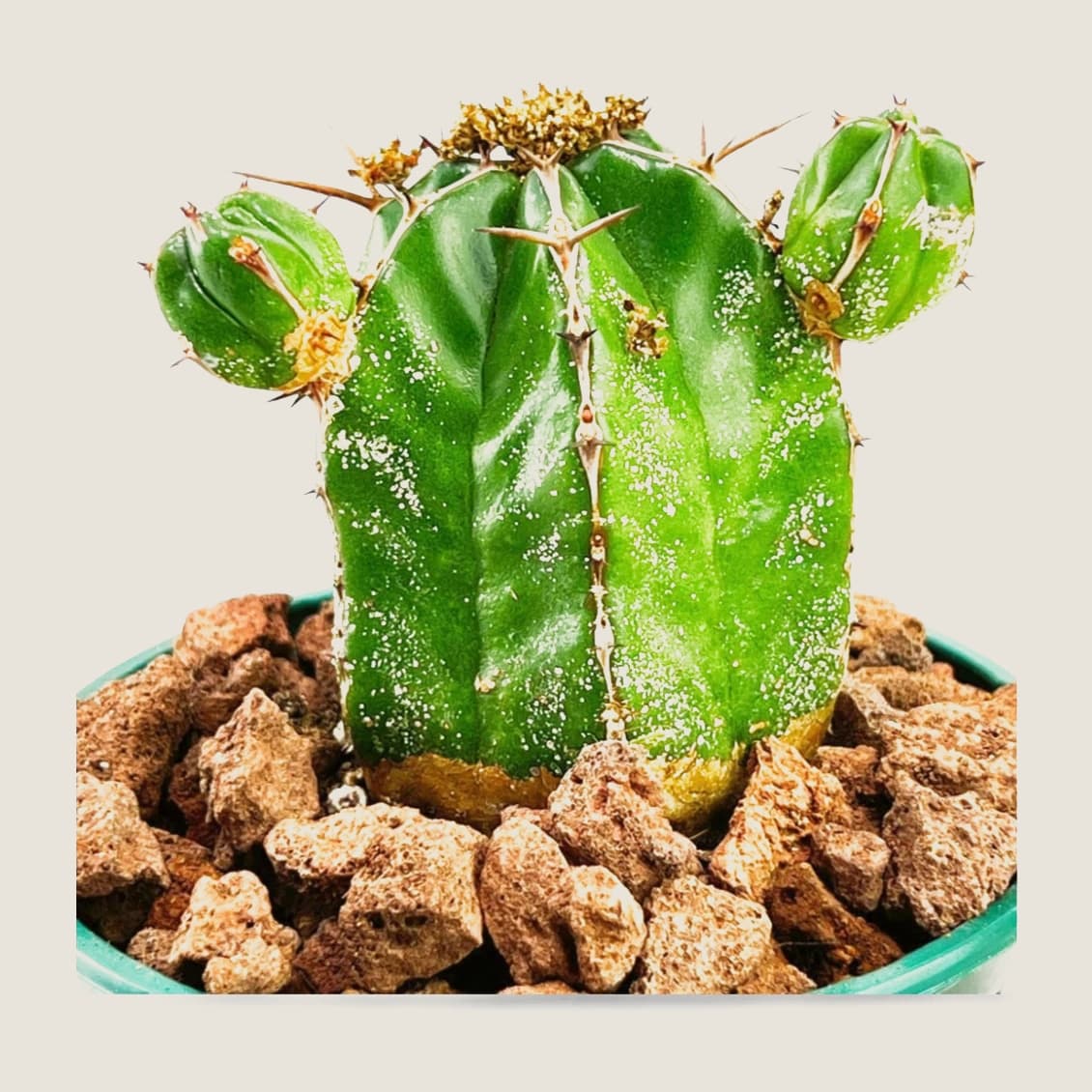
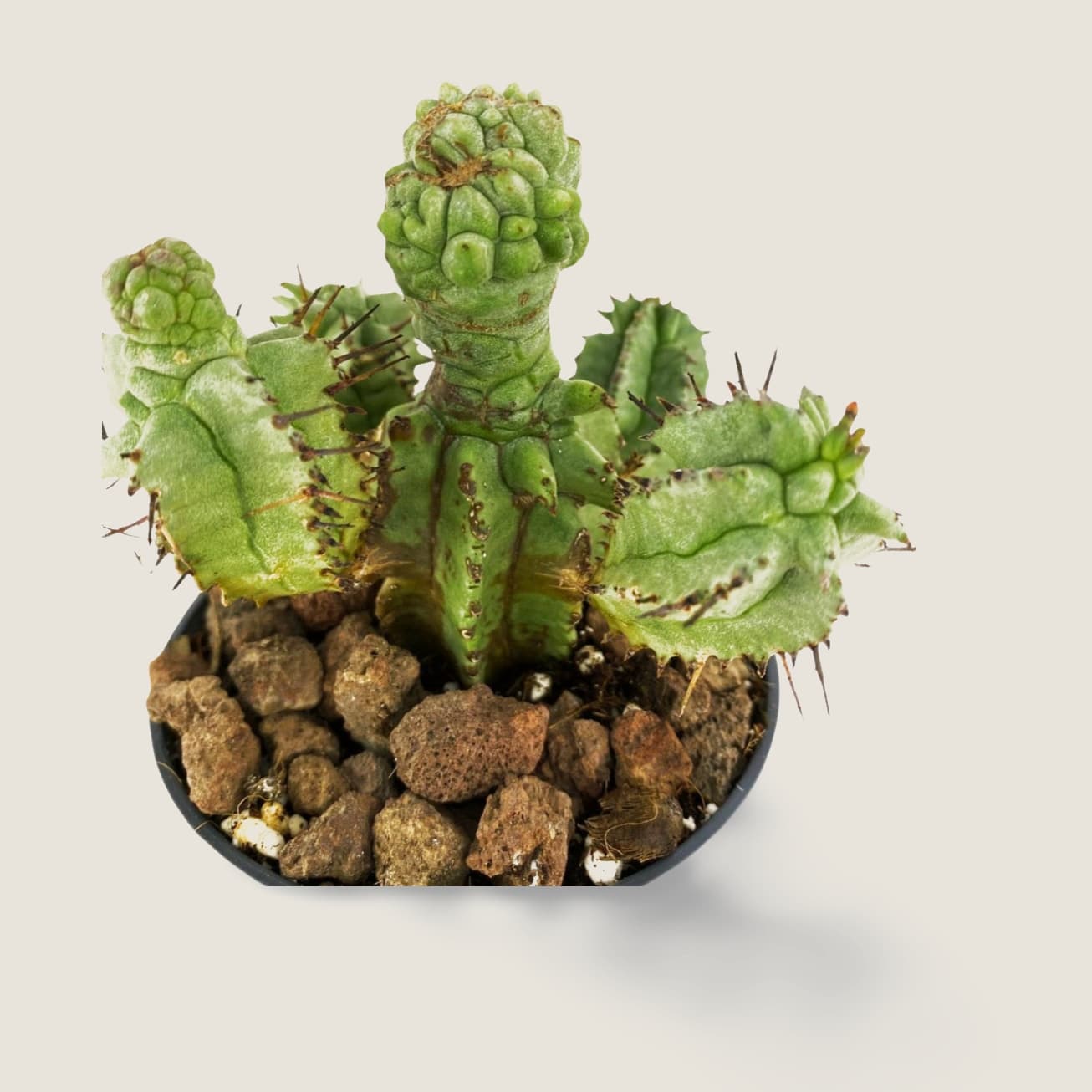
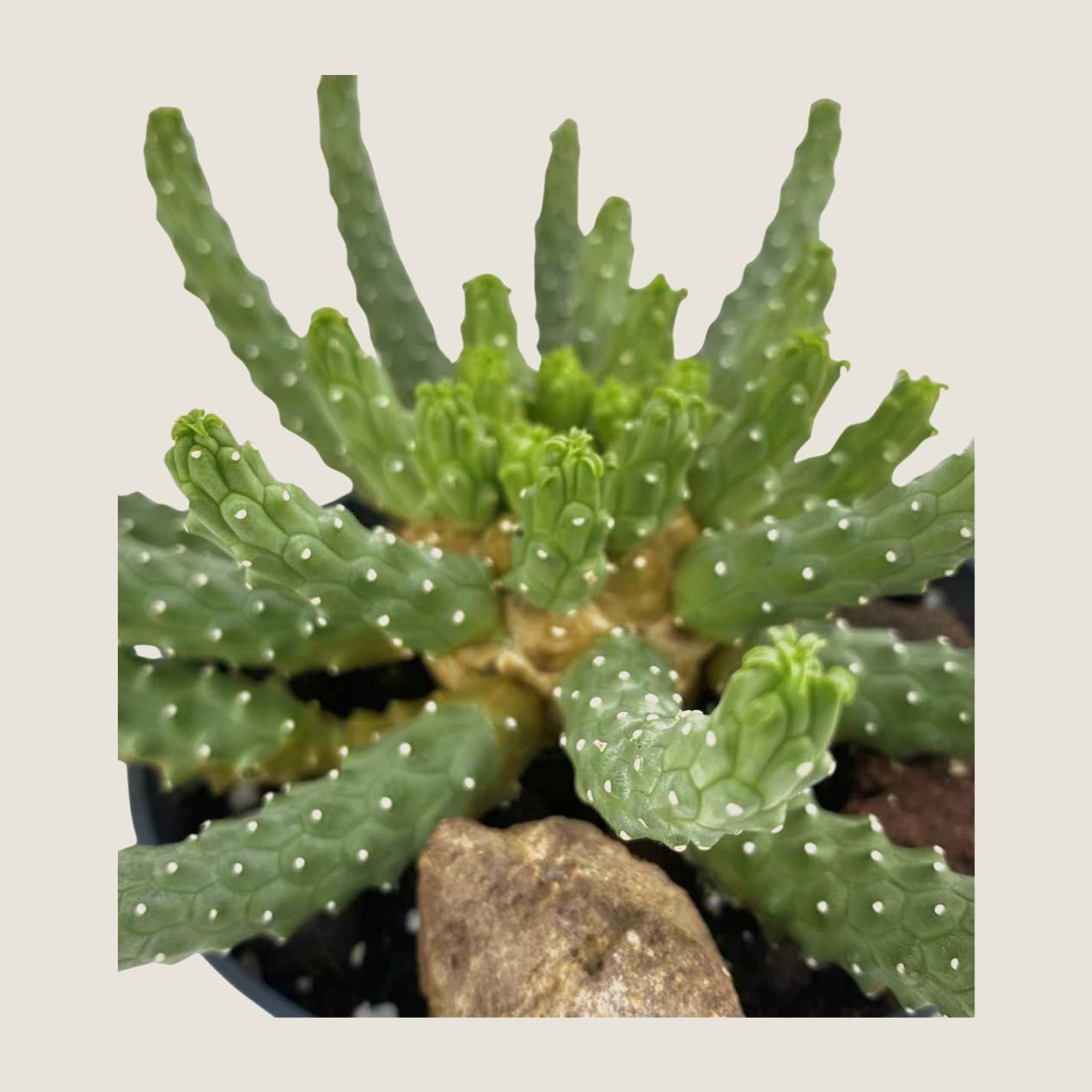
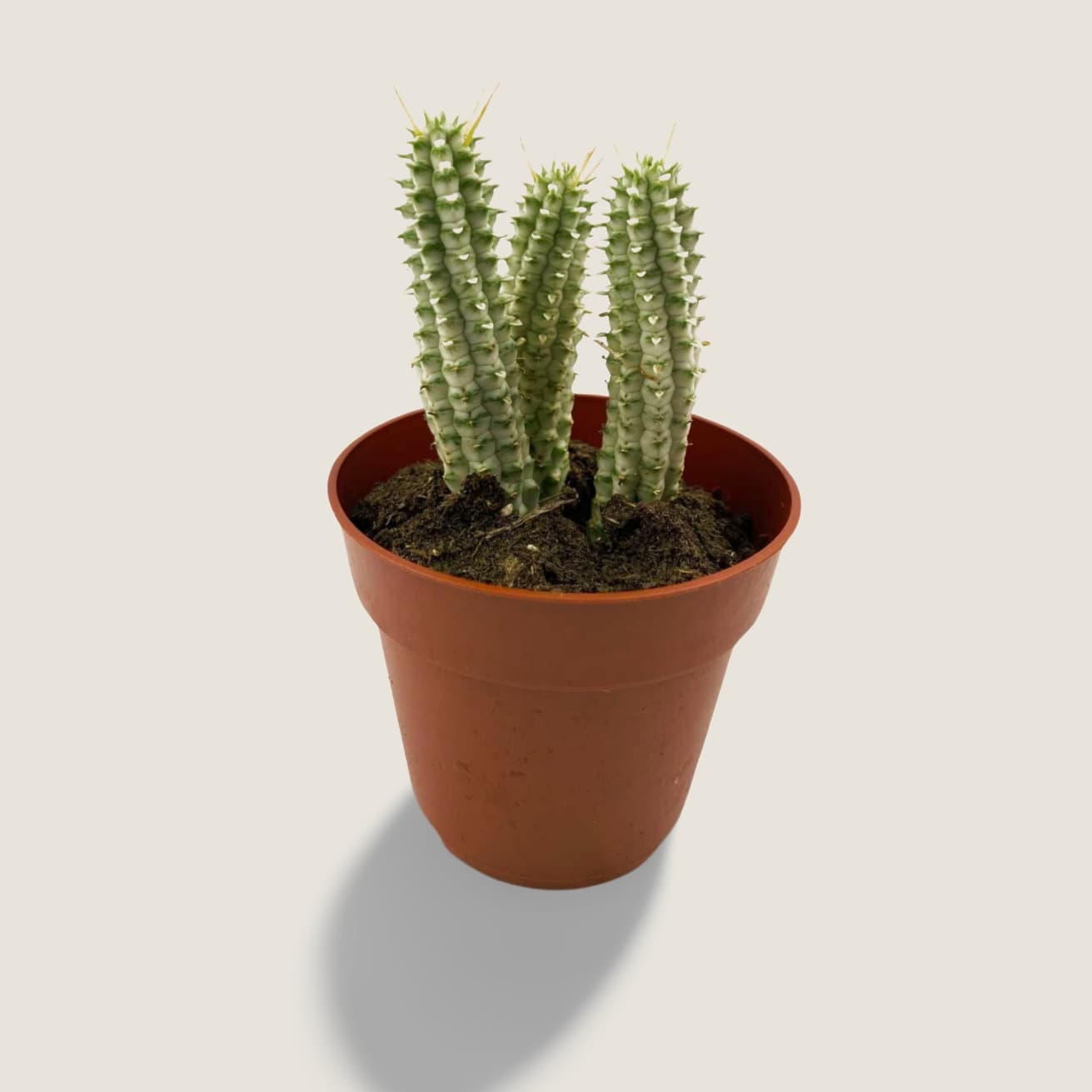
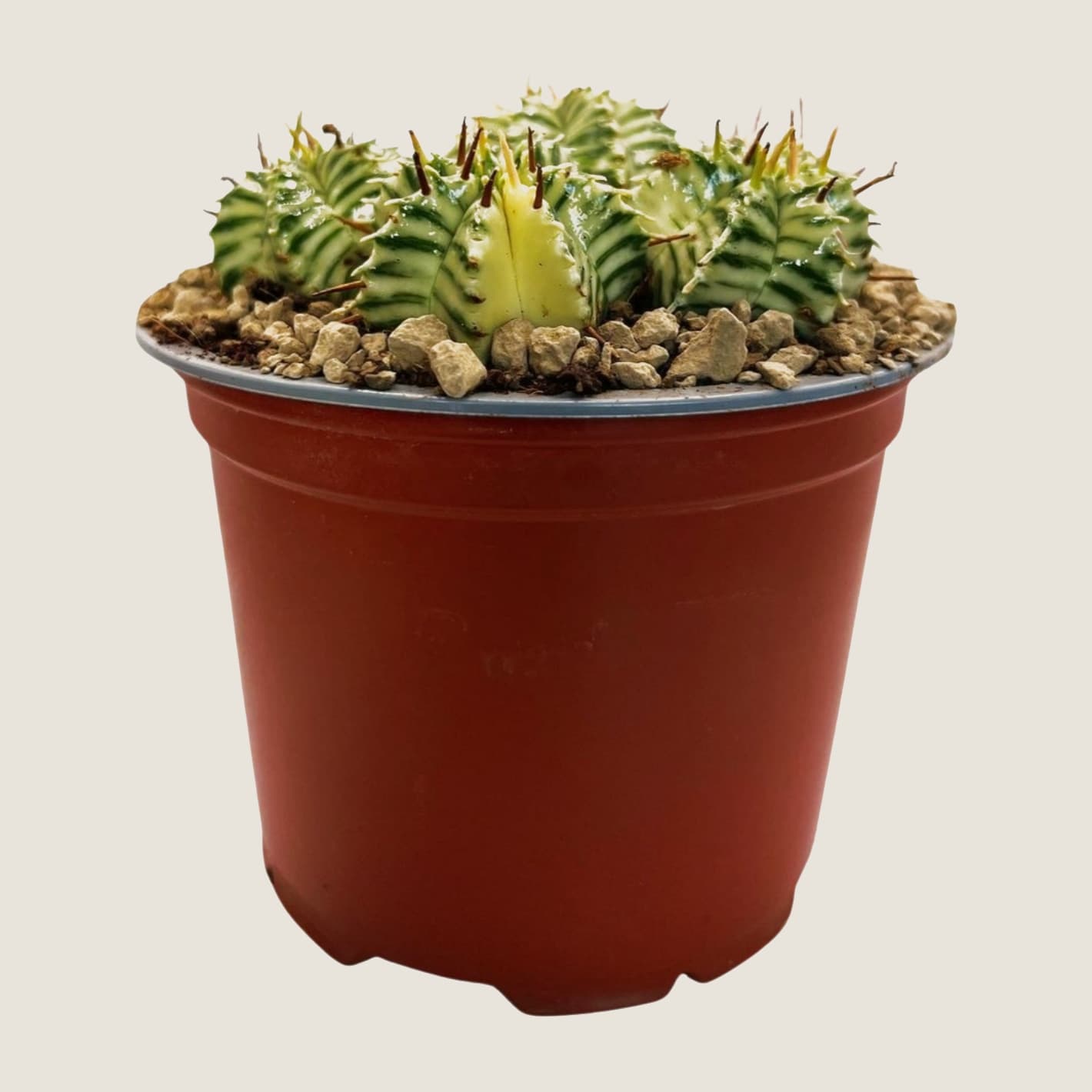
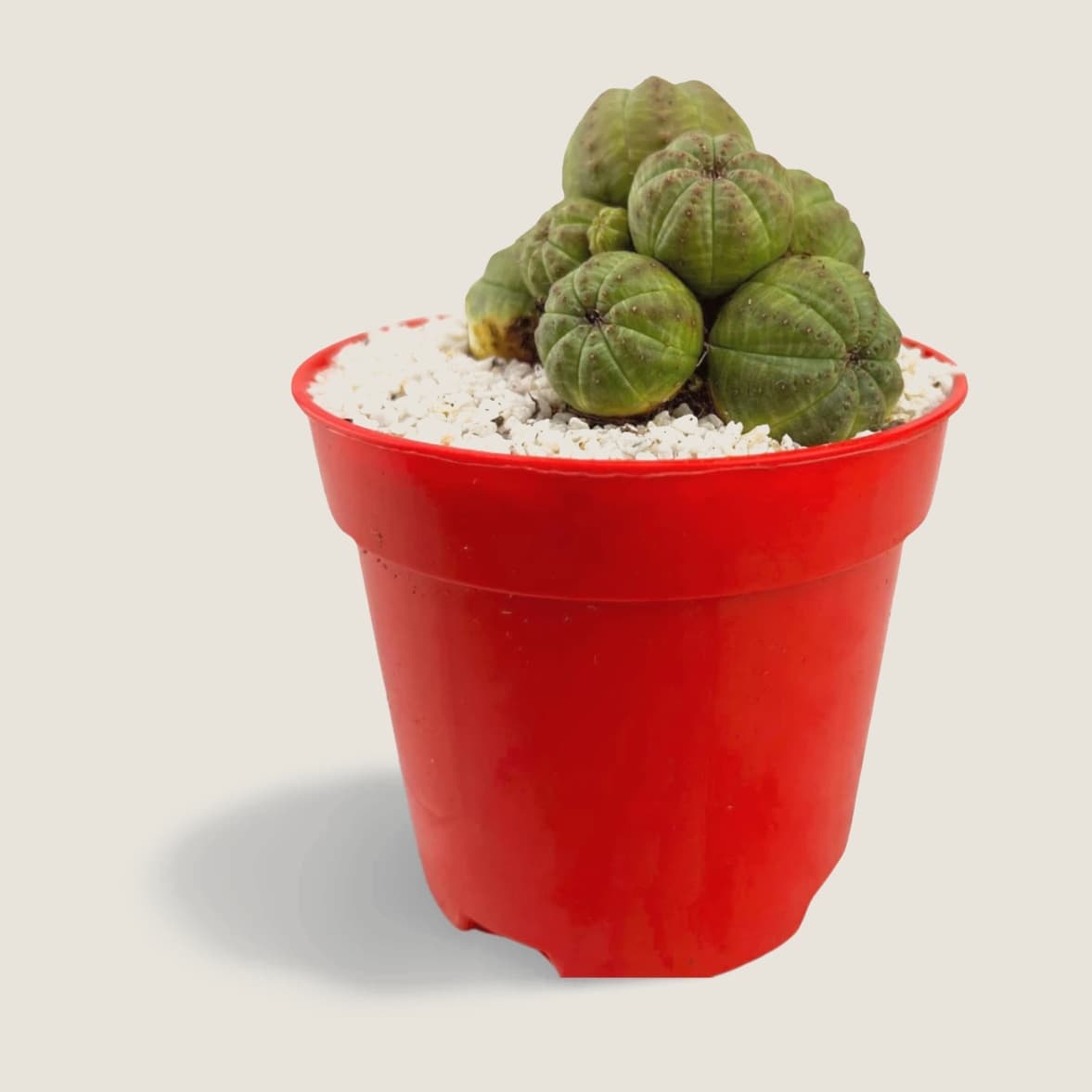
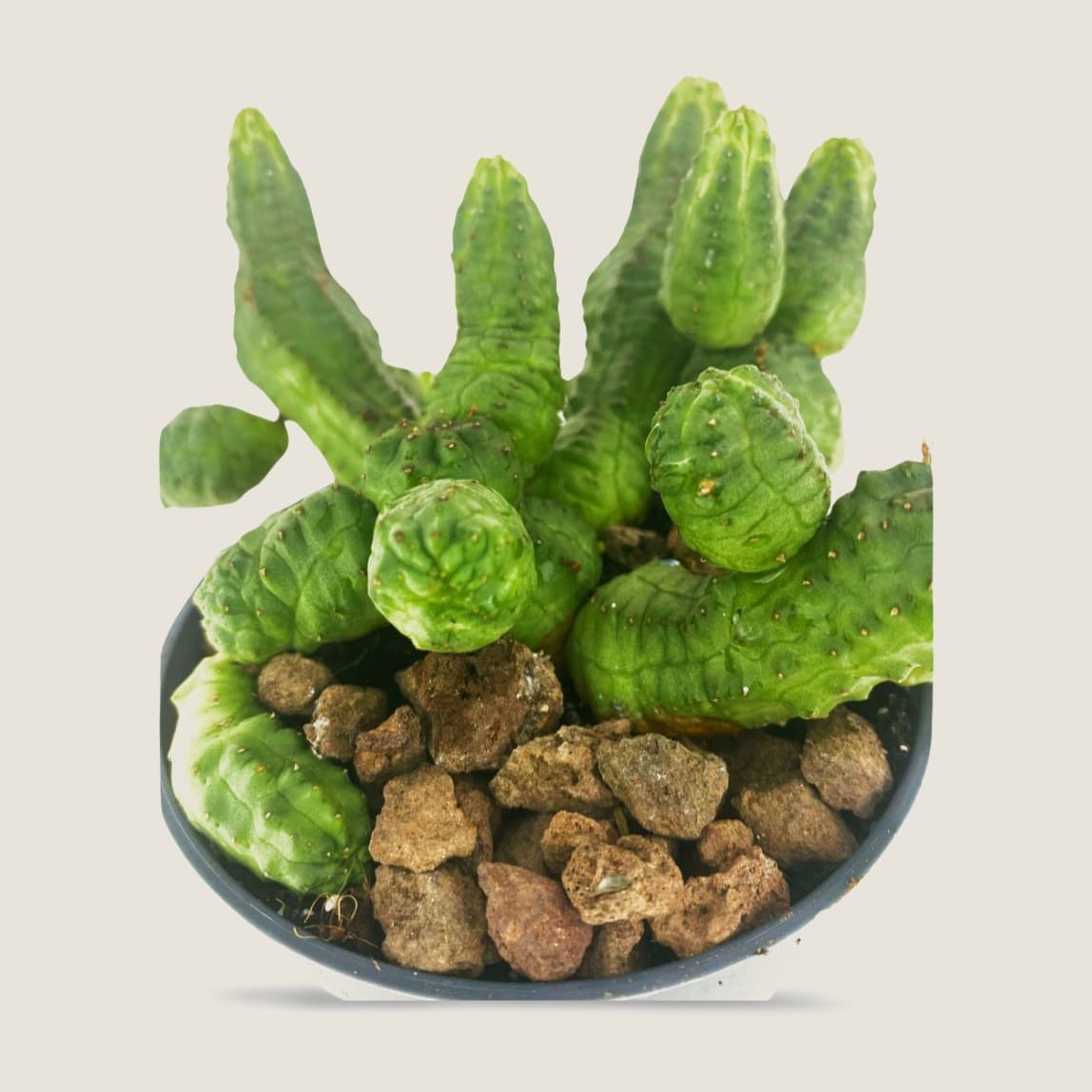
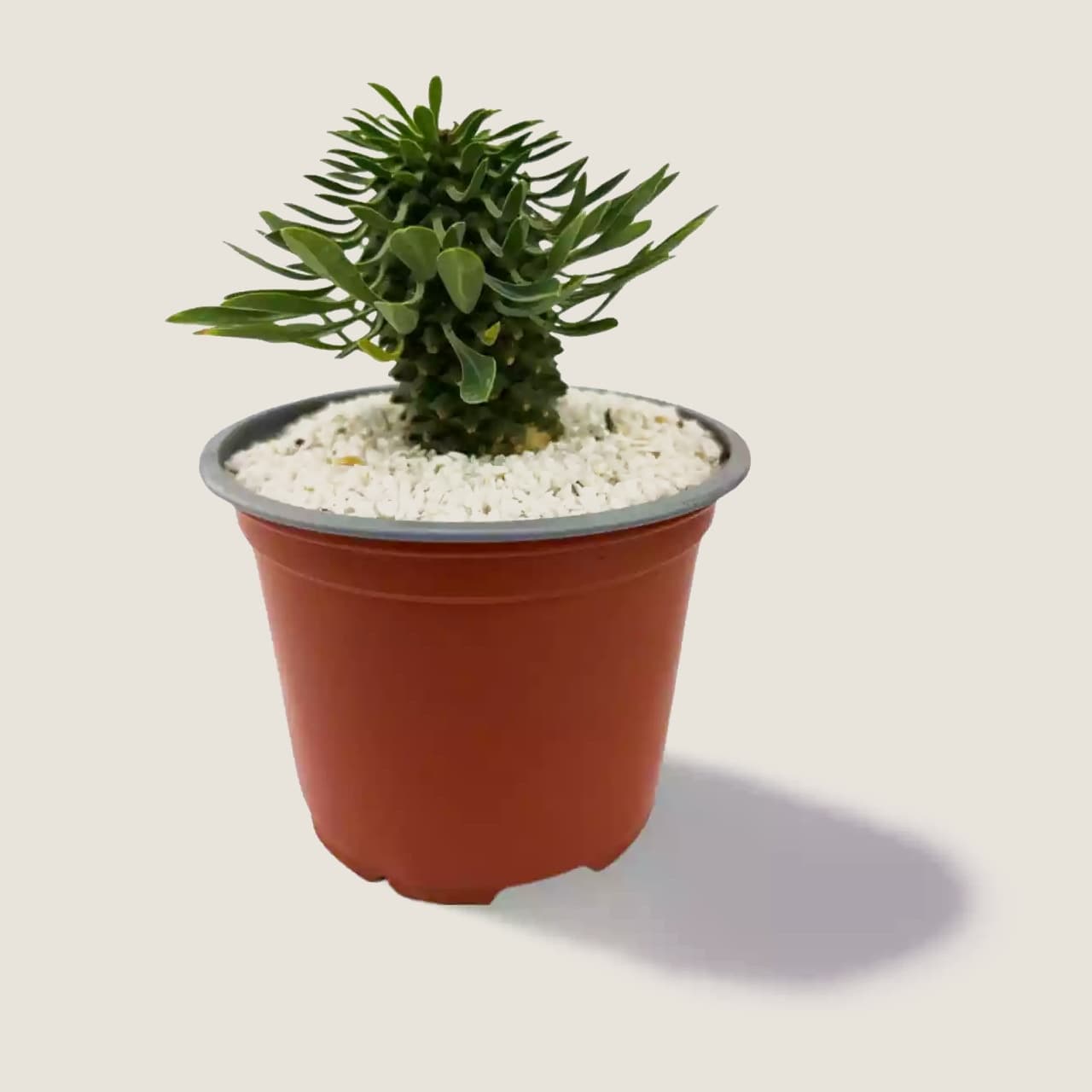
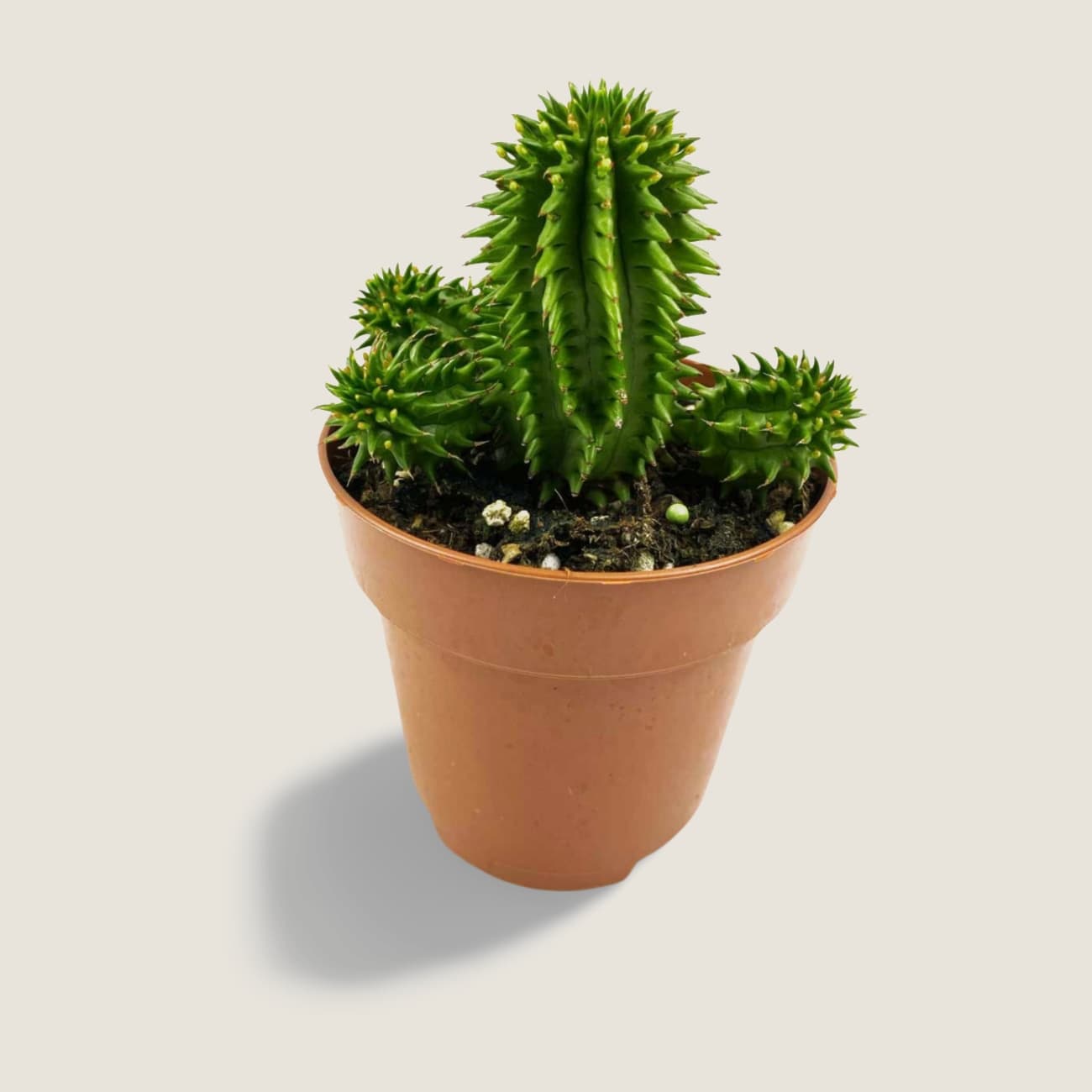
Telling a euphorbia from a cactus. Three clues never fail. First, latex: cut a euphorbia anywhere and it bleeds a milky white sap; a cactus never does. Second, the spines: in succulent euphorbias they emerge in pairs or from a horny shield running along the ribs, not from the cushioned areole that defines a true cactus. Third, the flowers: euphorbias have no showy blooms, only cyathia a few millimetres across, and many species are dioecious, with separate male and female plants, so a single specimen will never set seed on its own.
An important warning about the sap. That white latex irritates skin and can cause serious injury to eyes and mucous membranes. Wear gloves when pruning or taking cuttings, keep your hands away from your face while handling the plant, and wash afterwards. Keep euphorbias out of reach of children and pets. If you do make a cut, misting the wound with cold water will stop the bleeding. These are not dangerous plants on a shelf, but they are plants to respect once you pick up the secateurs.
The shapes in our range. The globular species are the most sought after: Euphorbia obesa, the striped sphere from the South African Karoo, practically a design object; Euphorbia meloformis, here in its variegated form; Euphorbia susannae, which builds tight clusters of small tubercled globes; and Euphorbia pseudoglobosa. The medusoid types have a central body with radiating arms: Euphorbia gorgonis and Euphorbia inermis are the classic examples. Among the columnar and branching kinds you will find Euphorbia aeruginosa, with metallic blue-green stems and copper spines; Euphorbia enopla, densely armed in red; Euphorbia anoplia, spineless with strongly marked ribs; Euphorbia mammillaris variegata, the corncob euphorbia; Euphorbia aggregata variegata; and Euphorbia horrida monstruosa, an irregular growth form that never produces two identical plants. Euphorbia handiensis deserves a special mention: endemic to the Jandía massif on Fuerteventura and threatened in the wild, every cultivated plant comes from propagation, never from collection. Euphorbia ‘Sotetsu Kirin’ adds a scaly, almost prehistoric trunk.
Care. Direct sun or very bright light, with one caveat: globular and variegated forms scorch if moved abruptly from shade into full sun, so acclimatise them over two or three weeks. Water sparingly, every ten to fifteen days at the height of summer and letting the mix dry out completely, then almost not at all from November to March. Use a gritty, mineral compost. And note one key difference from other succulents: euphorbias are more cold-sensitive. Keep them above 8-10 °C. Many African species suffer tissue damage well before freezing point, which makes them houseplants rather than garden plants across most of northern Europe.
Common mistakes. Treating them like tough, frost-hardy cacti and leaving them outdoors through winter. Watering during winter dormancy, which is by far the commonest cause of losses. Panicking at a hardened, brownish base: in many species that is corking, a normal sign of age rather than disease. And cutting without gloves. It is also worth knowing that all succulent Euphorbia are listed on CITES Appendix II; trade is entirely legal from artificially propagated material, which is what we sell.
Euphorbias are shipped from Almería in southern Spain, packed so that neither the spines nor the succulent body are damaged in transit.