Euphorbia enopla
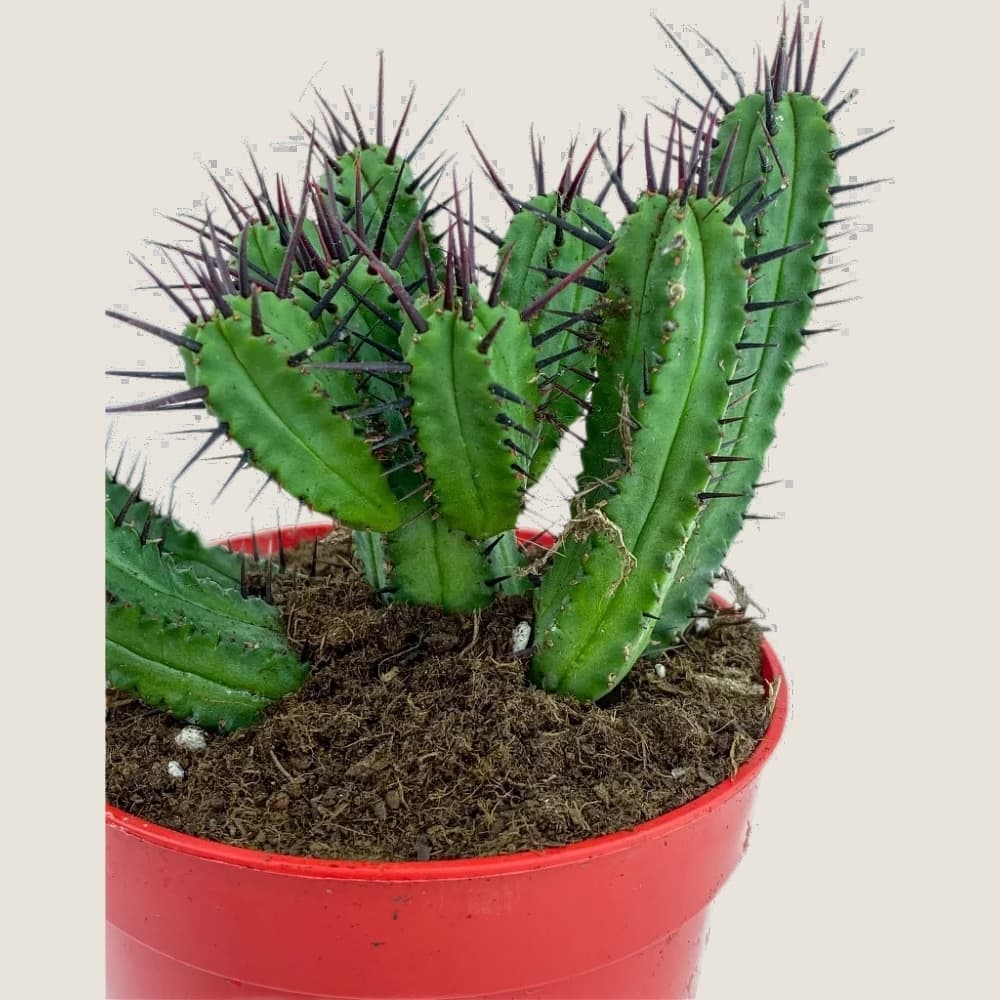
EuphorbiaceaeEuphorbia enopla · cylindrical green stems covered in deep red spines, building a dense clump over time. One of the showiest euphorbias, and one of the easiest. Grown in full sun in Almería.
About Euphorbia enopla
Cylindrical stems of a clean green, branching from the base, and on top of them cherry red spines that on the new tips are almost fluorescent. That contrast is the whole appeal of the plant, and the reason it is called the pincushion euphorbia.
Over the years it builds a dense clump of dozens of stems that can reach half a metre across.
As in horrida, those «spines» are not true spines: they are hardened flower stalks that the plant keeps once they have dried. That is why they are red, and why the new ones are brighter than the old.
It is one of the most rewarding succulent euphorbias to start with: it grows at a decent pace for the genus, branches on its own and forgives a good deal more than a gorgonis or a bupleurifolia.
Botanical fact sheet
| Scientific name | Euphorbia enopla | |
| Family | Euphorbiaceae | |
| Origin | Eastern Cape (South Africa) | |
| Natural habitat | rocky slopes of karroid scrub | |
| Adult size | up to 50 cm as a clump; stems 2-3 cm thick | |
| Flowering | yellowish cyathia at the tip of the stems | |
| Propagation | cutting (let the cut dry for several days before planting) | |
| Toxicity | irritant white latex |
Care
The sun is what gives the red. In shade the stems stretch, grow thinner and the spines come out pale or plainly brown. It is the biggest visible difference between a well-grown plant and a greenhouse one.
Sparing watering in spring and summer, letting it dry out completely; in winter, none. If you are taking cuttings, cut with a clean blade, wash off the latex with water and let the cut dry for three or four days before planting, or it rots.
Did you know?
Euphorbia latex is no minor defensive garnish: in some species it is irritant enough to have been used to poison arrow tips and to stun fish. With enopla it is enough to wash your hands after pruning and keep them away from your eyes, but it is worth taking seriously.
Luz
Direct sun or very bright light
Riego
Sparse: let the substrate dry out between waterings; reduce in winter
Sustrato
Very free-draining mineral substrate, specific for cacti and succulents
Temperatura
Protect below 8-10 °C (cold-sensitive)