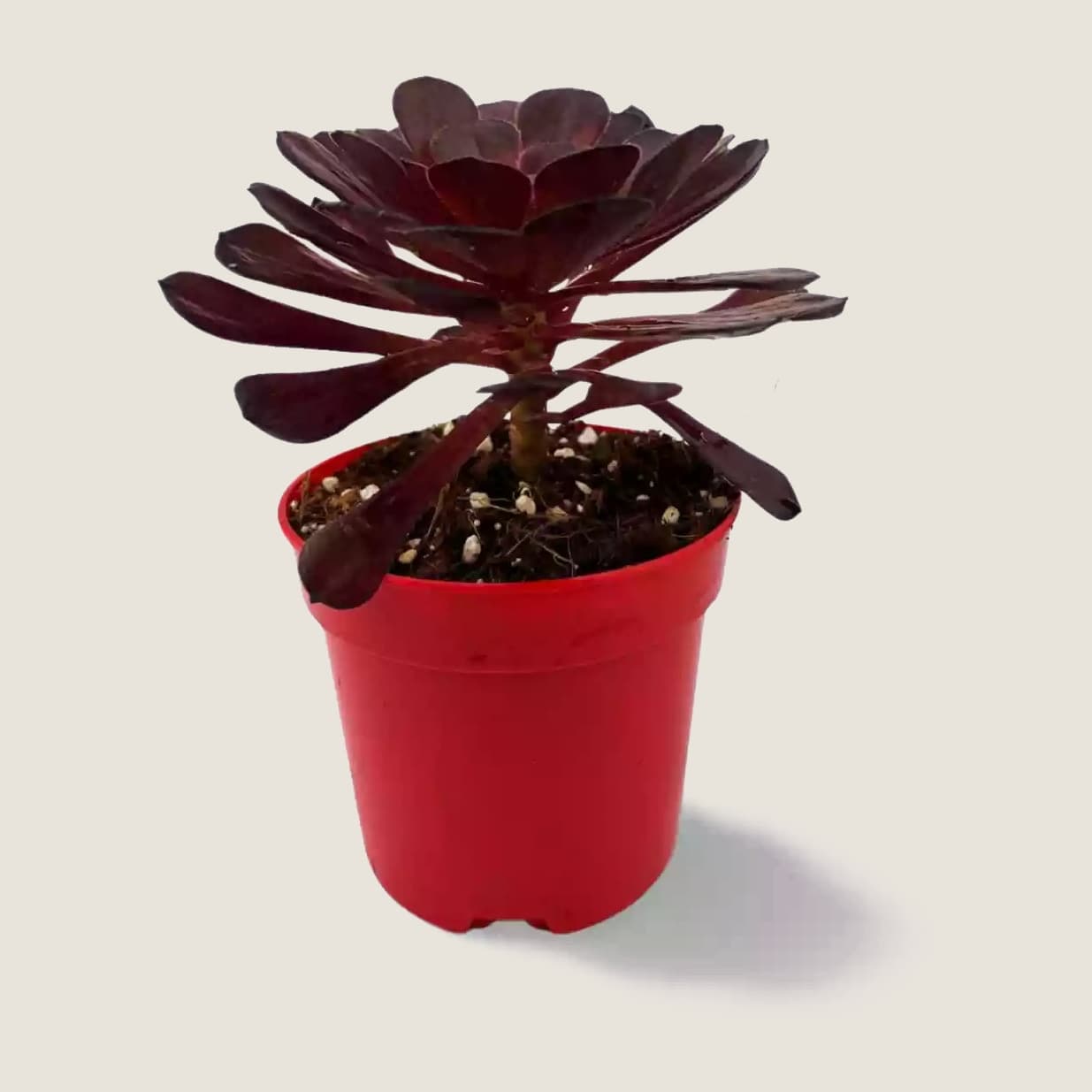
Aeonium Morticia
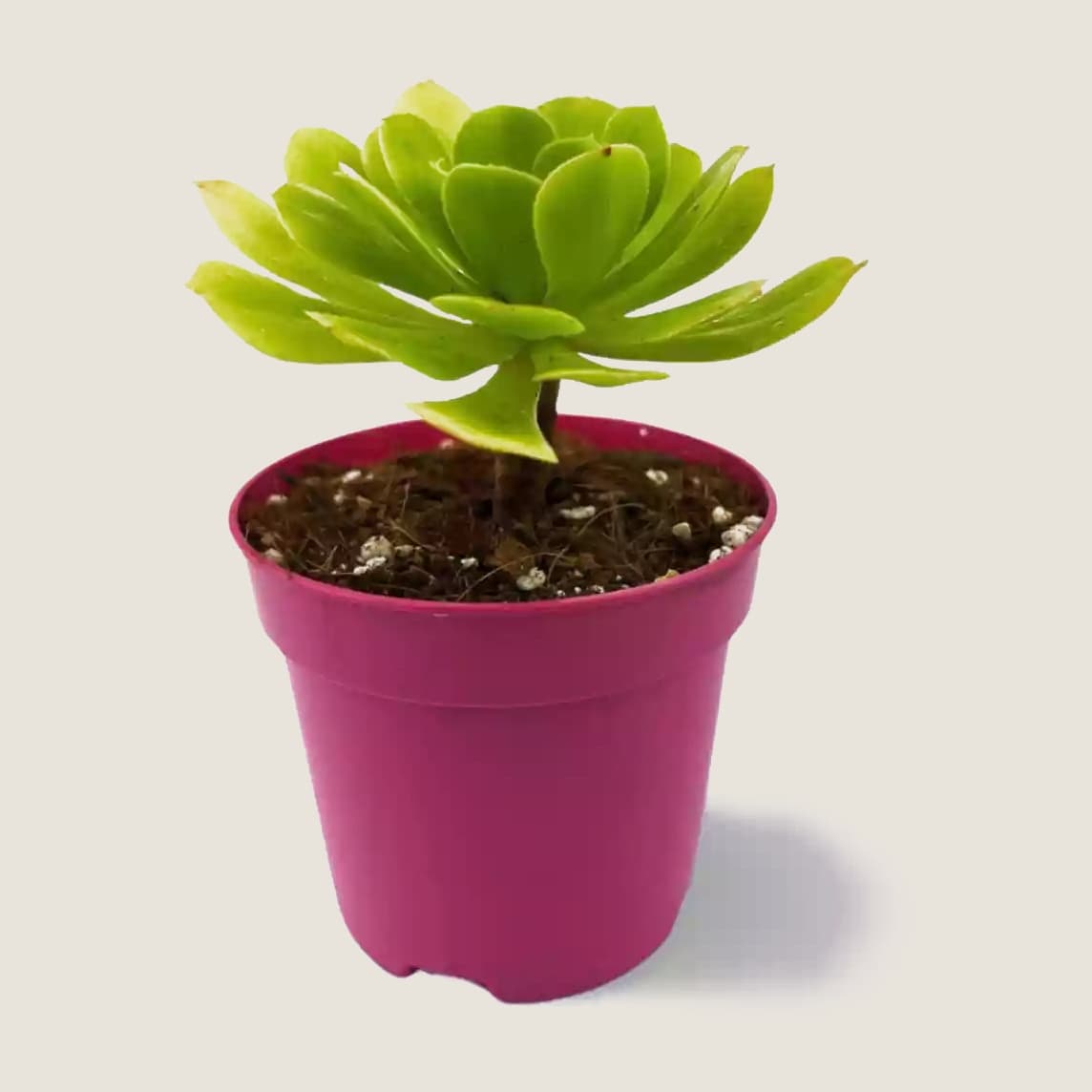
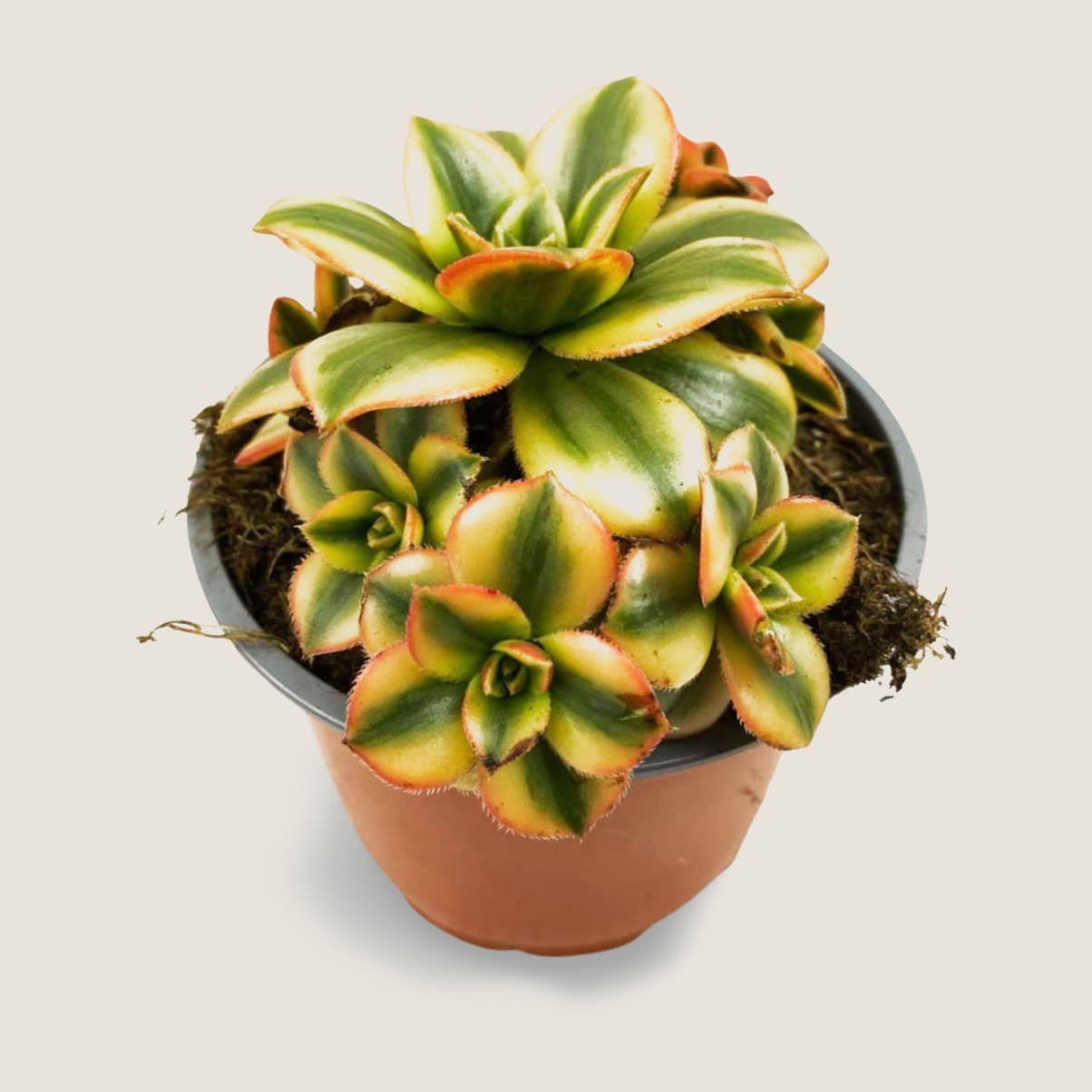
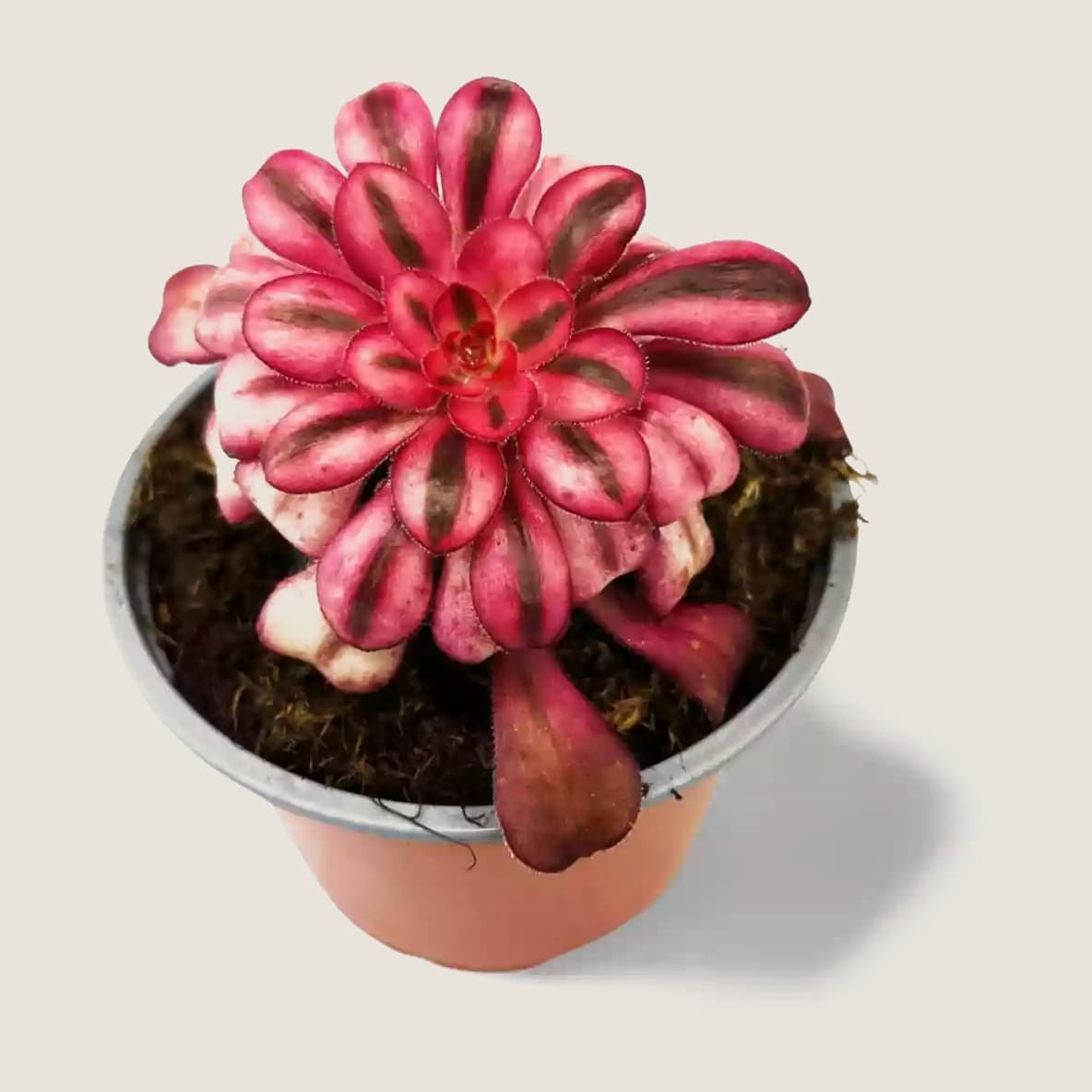
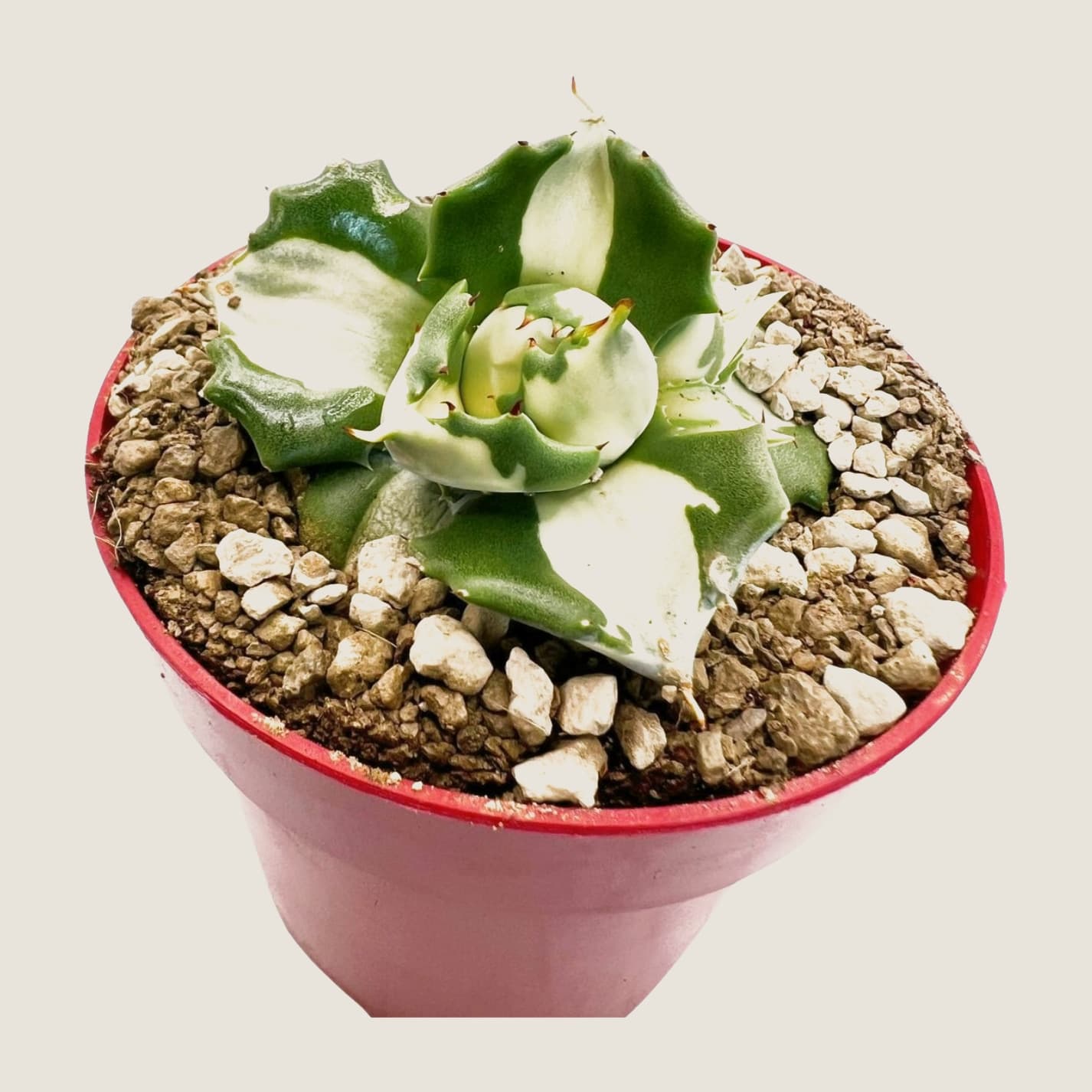
CrassulaceaeAeonium Morticia · a succulent from the Crassulaceae family, with terminal rosettes on woody stems. Grown in our nursery in the Almería desert in full sun, with minimal watering and 100% mineral soil—the plant pictured is the one you will receive.
About Aeonium Morticia
Known in botany as Aeonium Morticia, this succulent belongs to the Crassulaceae family and comes from Canary Islands and North Africa. Its most distinctive feature is terminal rosettes on long stalks, a trait that makes it unmistakable even among advanced collectors.
Your Aeonium Morticia has been grown at Succulentae, a specialized nursery in Almería, under real Mediterranean arid conditions — more resilient and better adapted than artificial greenhouse plants. This produces stronger specimens, with intense coloration and compact form, ready to join your collection.
Botanical fact sheet
| Scientific name | Aeonium Morticia | |
| Family | Crassulaceae | |
| Origin | Canary Islands and North Africa | |
| Natural habitat | coastal cliffs and lowland zones | |
| Adult size | 15-100 cm depending on species | |
| Flowering | yellow pyramid-shaped inflorescences in winter-spring | |
| Propagation | stem or rosette cutting | |
| Toxicity | non-toxic |
Did you know?
The rosettes close on themselves during summer to protect from extreme heat, opening again when the gentle Canarian autumn rains return.
Luz
Gentle direct sun or bright partial shade
Riego
Moderate; they grow in autumn-winter and rest in summer
Sustrato
Very free-draining mineral substrate, specific for cacti and succulents
Temperatura
Protect below 5 °C