Aeonium
Aeonium comprises around 35 species in the Crassulaceae family, almost all of them endemic to the Canary Islands, with a few reaching Madeira, Cape Verde, North Africa and even East Africa. Several islands have species found nowhere else. The shape is unmistakable: a flat, almost plate-like rosette held at the tip of a woody stem that branches with age, giving the plant the look of a miniature tree. No other succulent resembles it.
7 plants in Aeonium
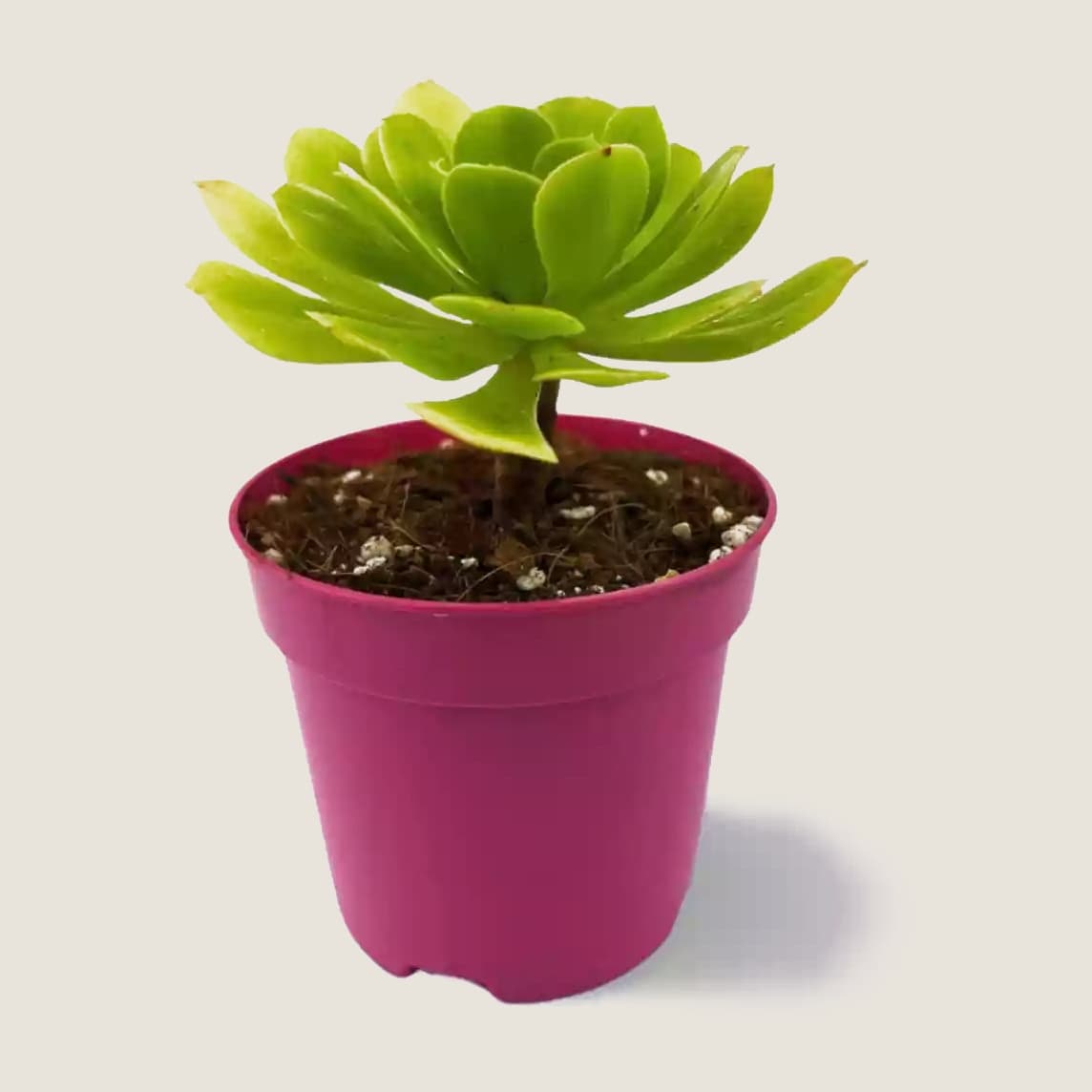

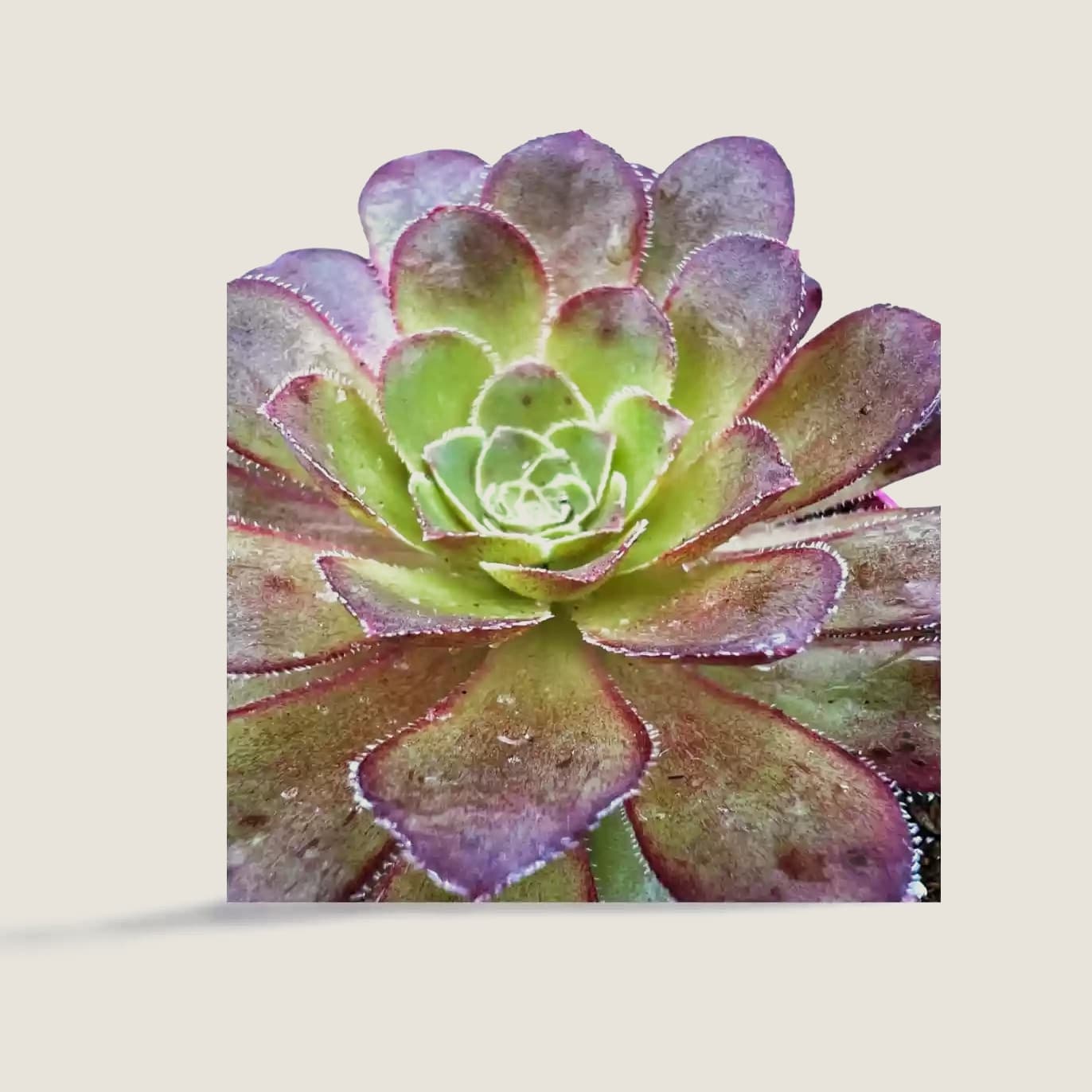
The one thing to understand before buying. Aeoniums run on a reversed cycle compared with nearly every other succulent: they grow in autumn and winter, which is the wet season in their Macaronesian homeland, and go dormant in high summer. Through the hot months they close the rosette into a tight fist, shed their older leaves and look convincingly as though they are dying. They are not. This is normal, and the correct response is to water less, not more. The second quirk is that each rosette is monocarpic: once it flowers, that particular rosette dies after setting seed. On a branched plant this hardly matters, since the remaining heads carry on, but a single-headed specimen is lost entirely.
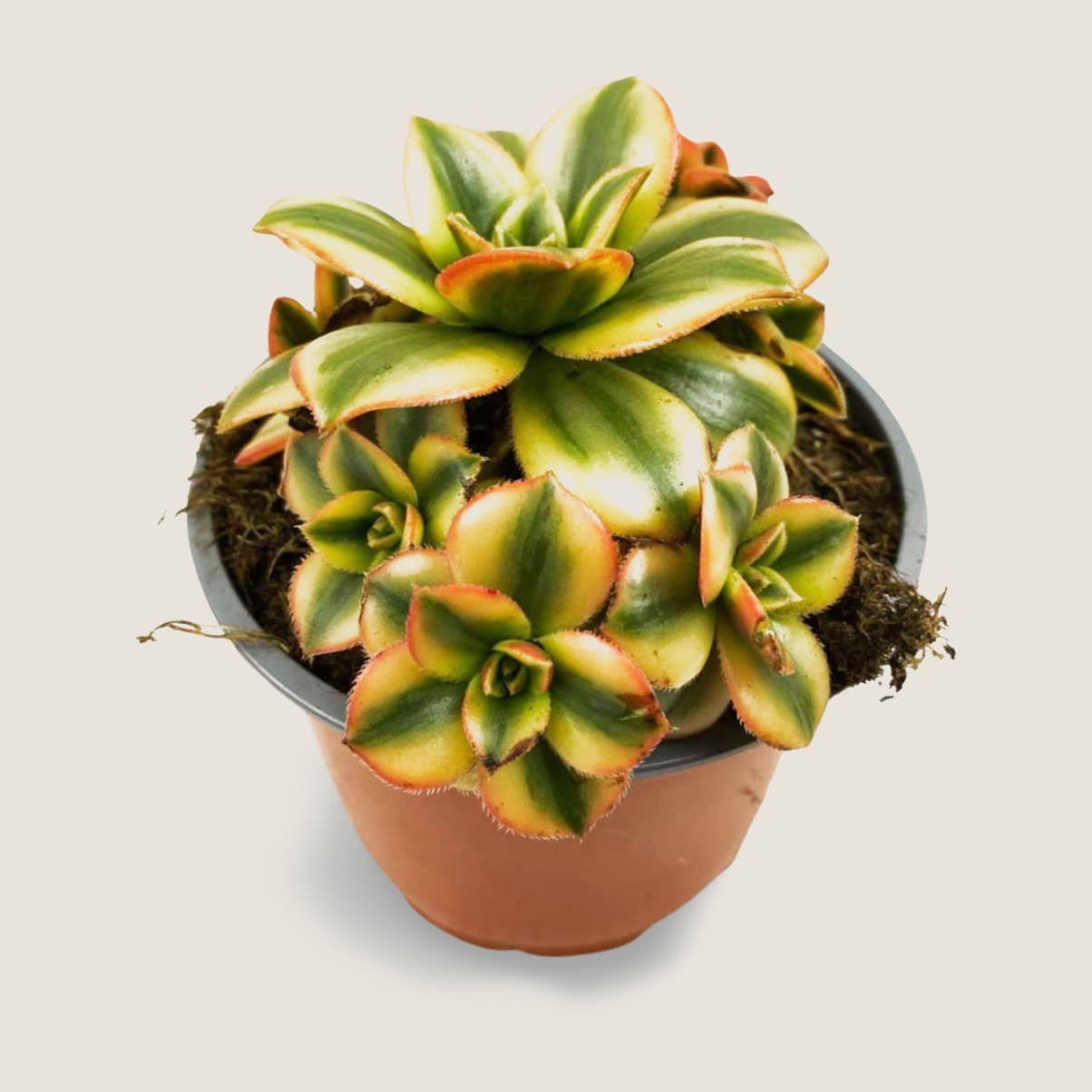
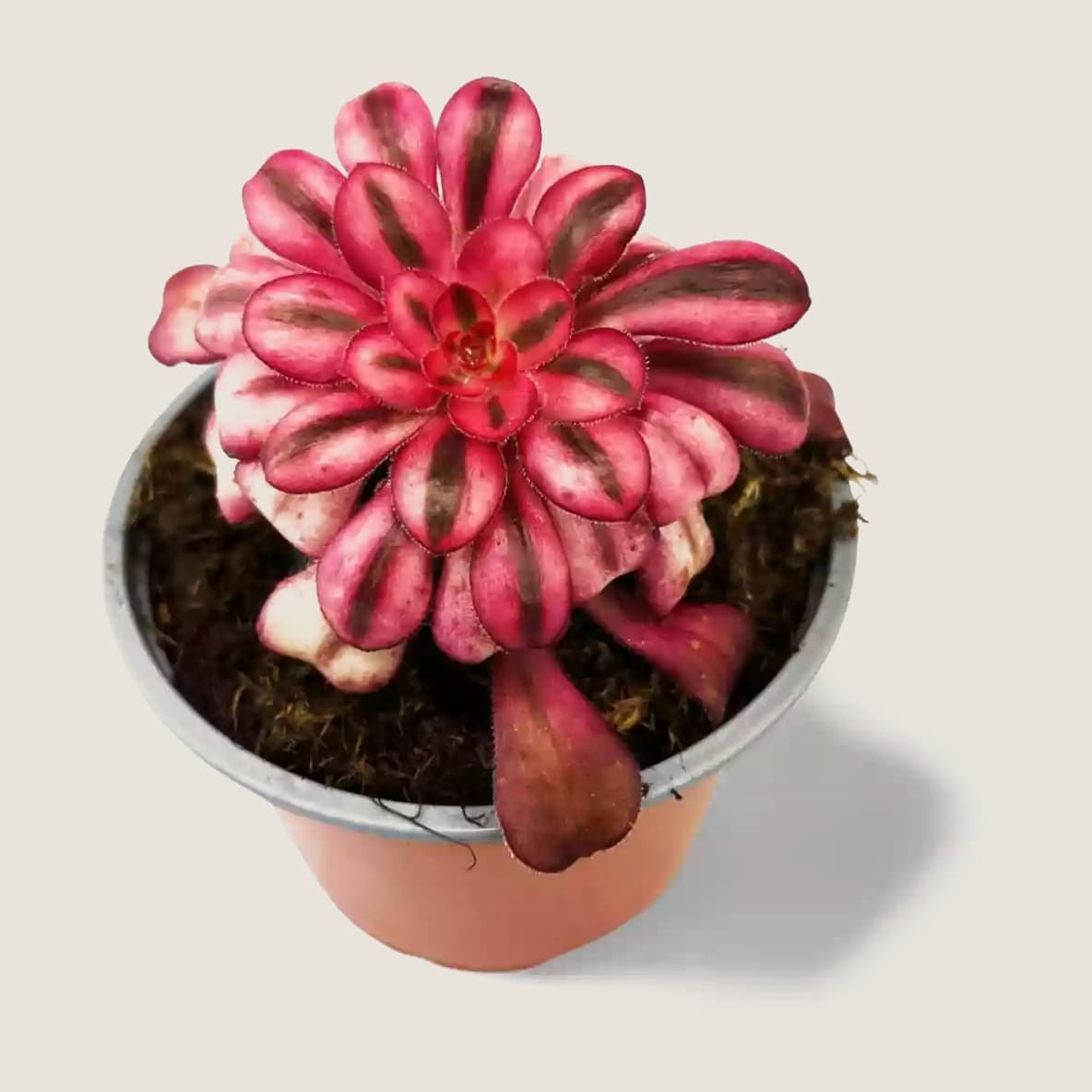
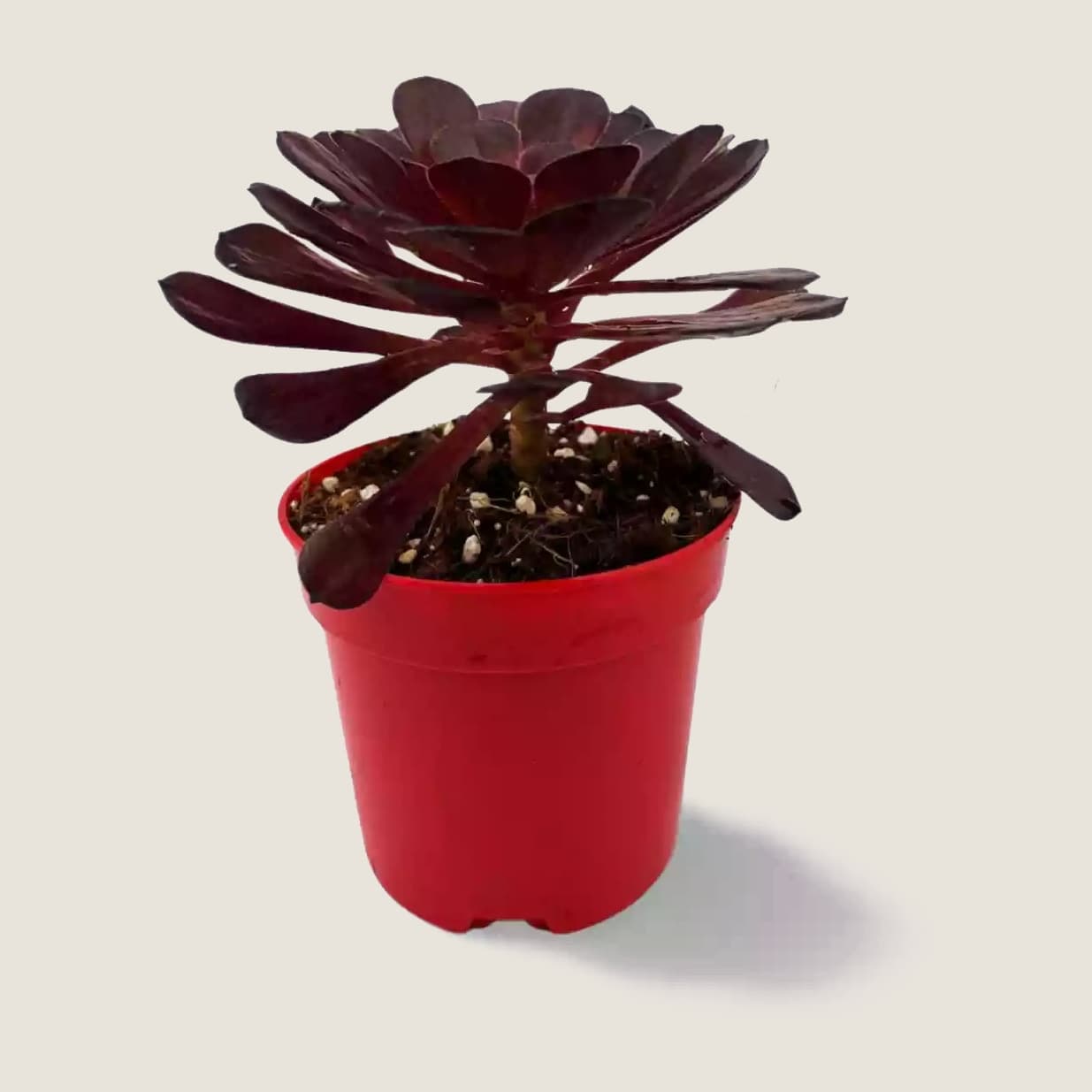
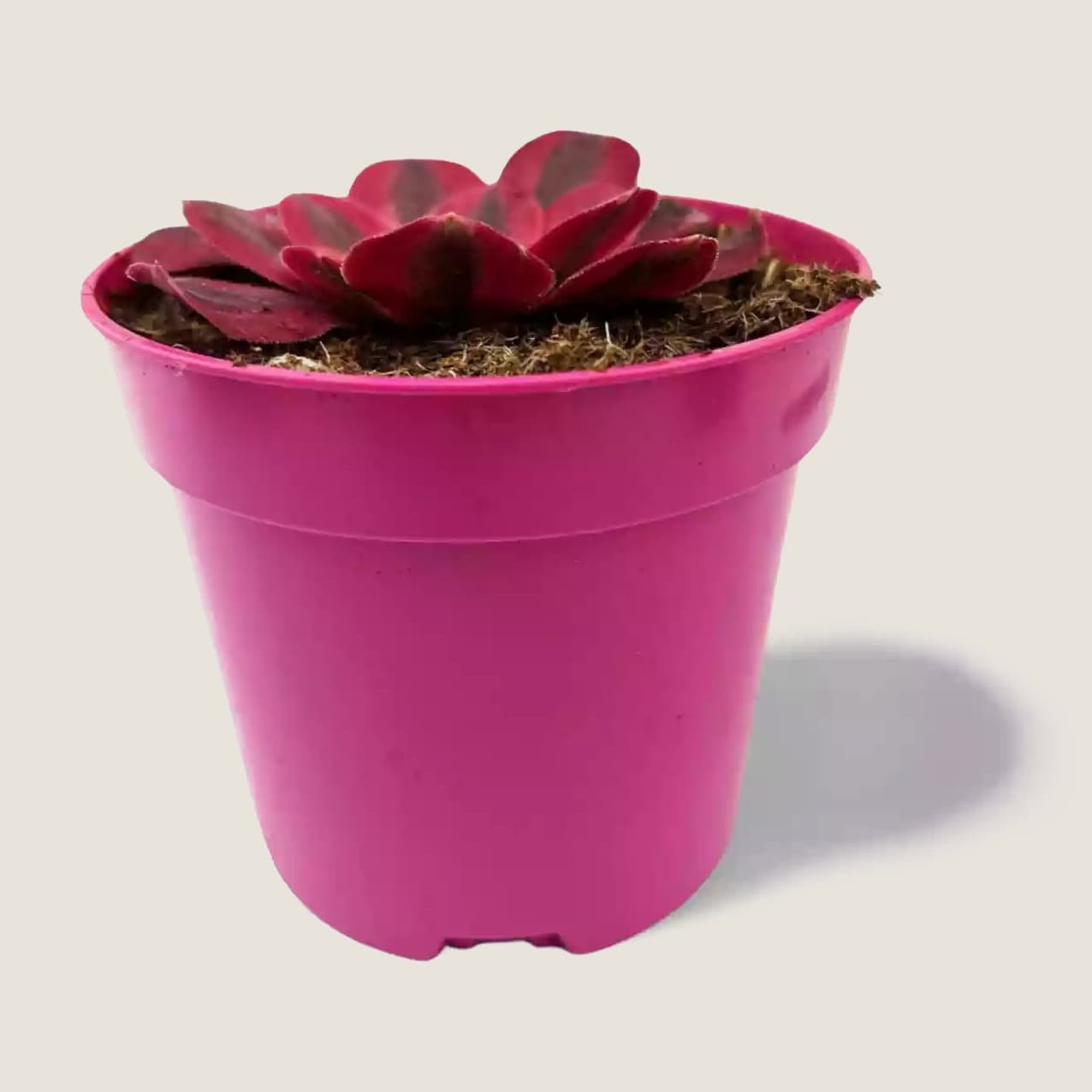
The varieties we stock. Aeonium arboreum is the Canarian classic, the one that forms hedges and colonises roadside banks; here it appears in its dark, almost black rosette form, the most prized in gardens. Aeonium ‘Velour’ follows the same dark line with a velvety finish. At the opposite end sits Aeonium ‘Kiwi’, probably the best known of all: a tricolour rosette with a cream-green centre and rose-pink margins, spectacular but also more prone to scorching in fierce midday sun. The variegates complete the range: Aeonium decorum variegatum in its yellow form, Aeonium ‘Pink Witch’, Aeonium ‘Red Garnet’ (also sold as ‘Vulcan’) and Aeonium ‘Medusa’, an irregular grower much sought after by collectors. Aeonium ‘Morticia’ adds another dark-toned rosette.
Care. Light: gentle direct sun or very bright partial shade. Unlike an echeveria, an aeonium appreciates some protection from the fiercest midday sun, and the variegated forms and ‘Kiwi’ burn easily. Water moderately during the growing season, roughly October to May, letting the top of the compost dry between waterings, and very sparingly in July and August. The mix should drain freely but can carry rather more organic matter than a cactus compost, since these plants grow among rocks where leaf litter accumulates. Roots are shallow, so deep pots are unnecessary. Keep them above 5 °C and free of frost. In Britain and northern Europe they make excellent patio plants from May to September, brought into a bright, cool room for the winter, which happens to be exactly when they want to grow.
Common mistakes. By far the biggest is watering in summer on seeing a closed rosette and fallen leaves: it reads as thirst, and the plant rots during its rest period. The second is keeping one in a dim interior all year round; the stem stretches, goes bare and the rosette ends up small and gawky. If that has already happened the fix is simple and reliable: cut off the head with a hand span of stem, let the cut dry for a few days and replant it. It roots readily and the old stump usually breaks into several new shoots. The third is mistaking the natural loss of basal leaves for disease; a healthy aeonium is always shedding from below while growing from above.
Every aeonium is selected individually and shipped from Almería, in southern Spain, with the stem secured so the rosette survives the journey intact.