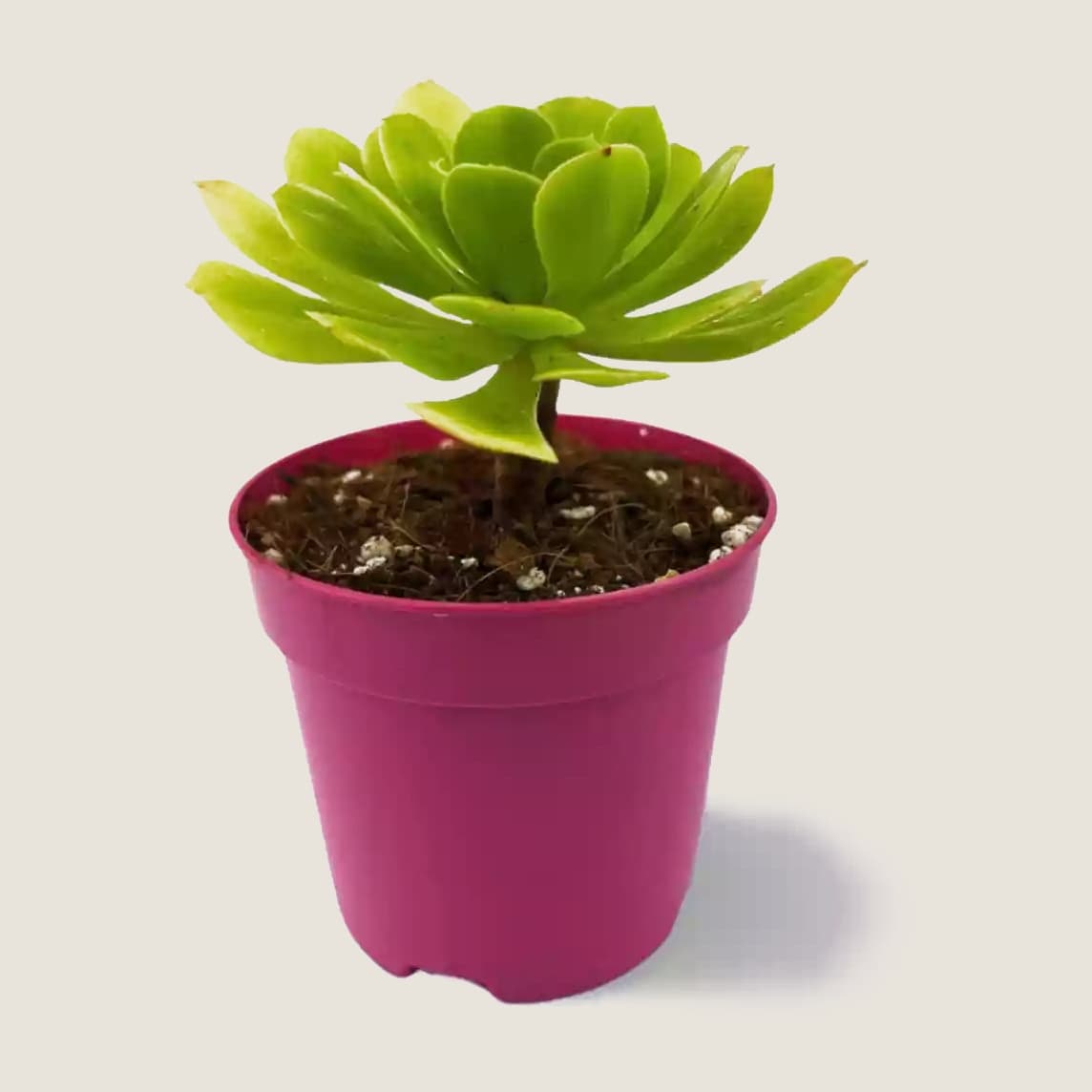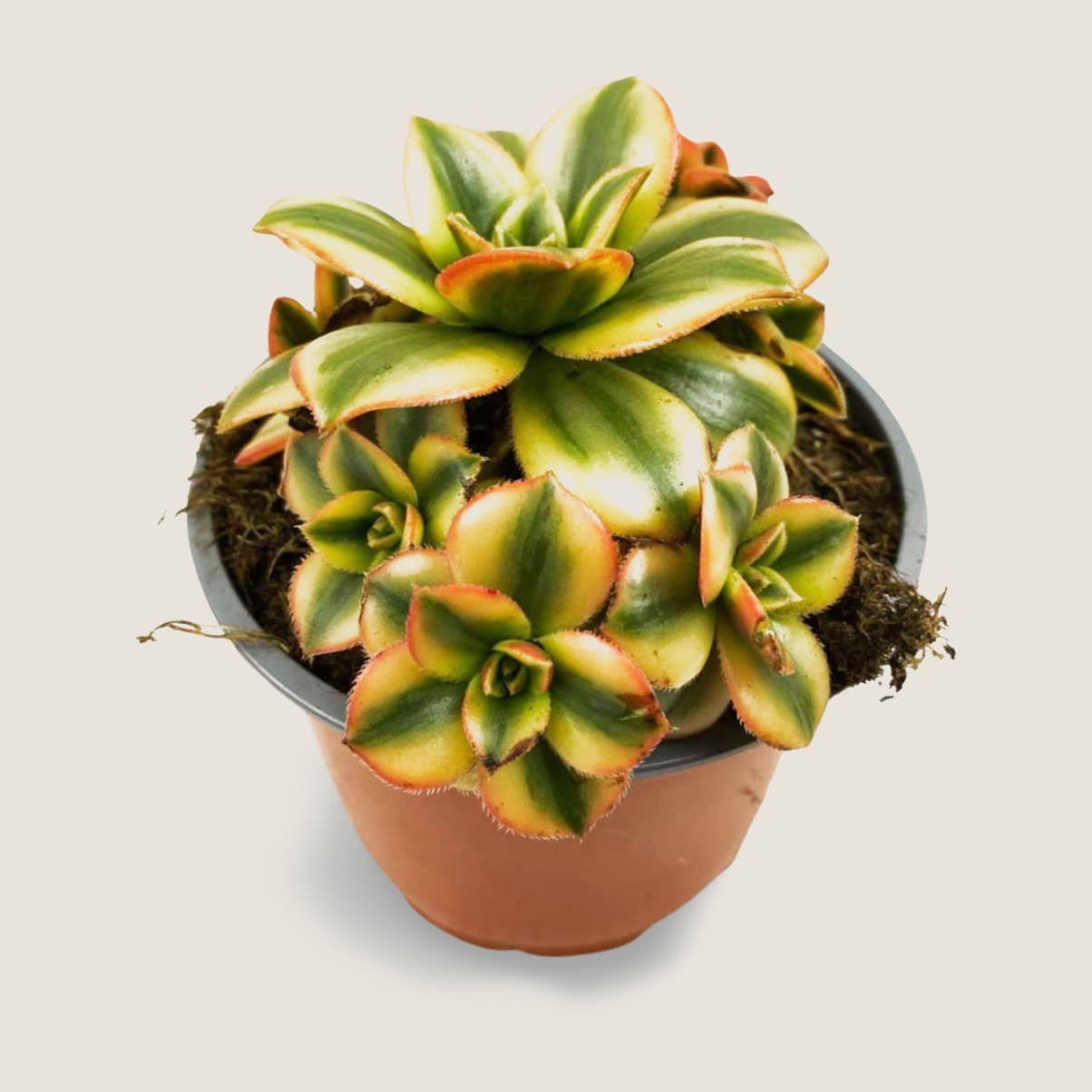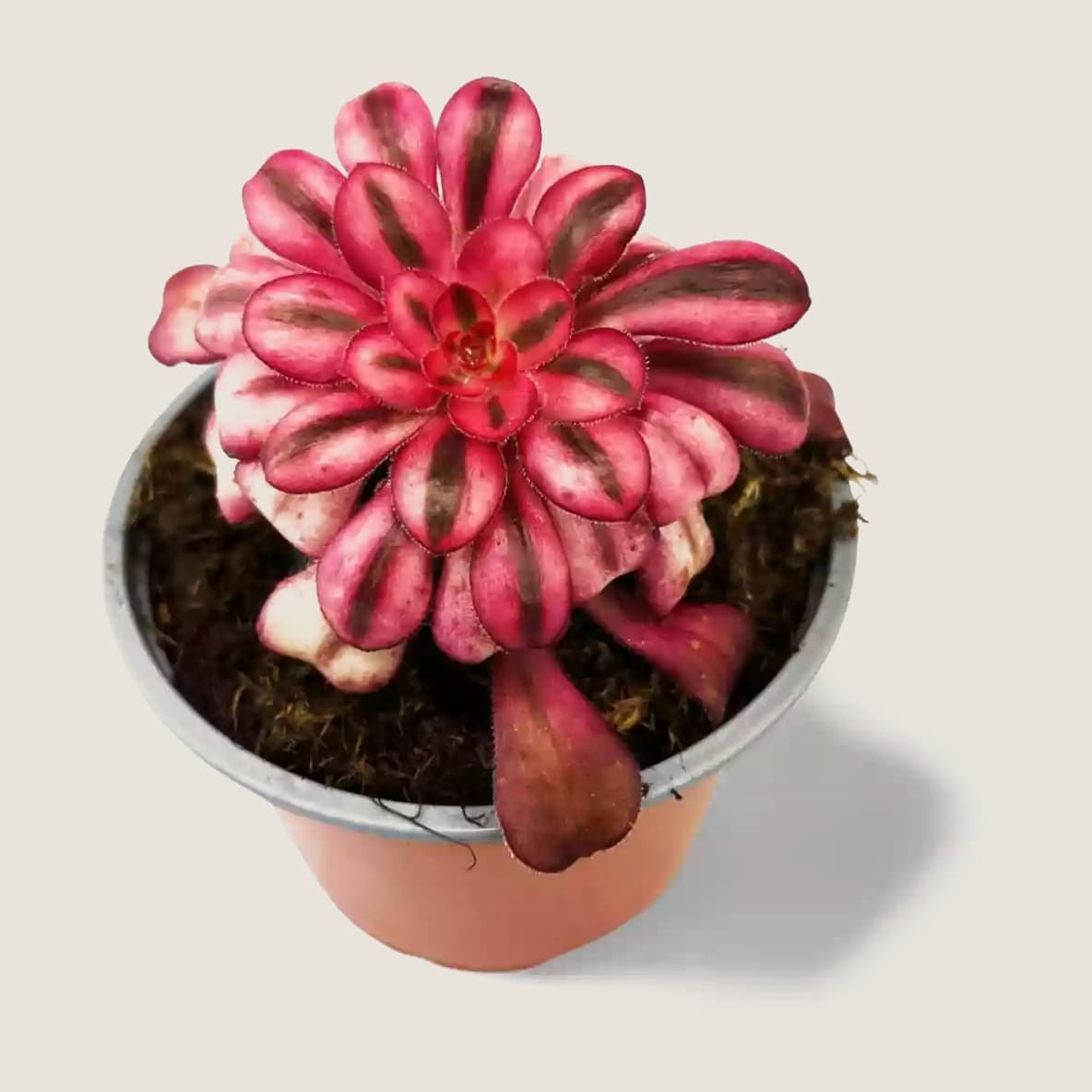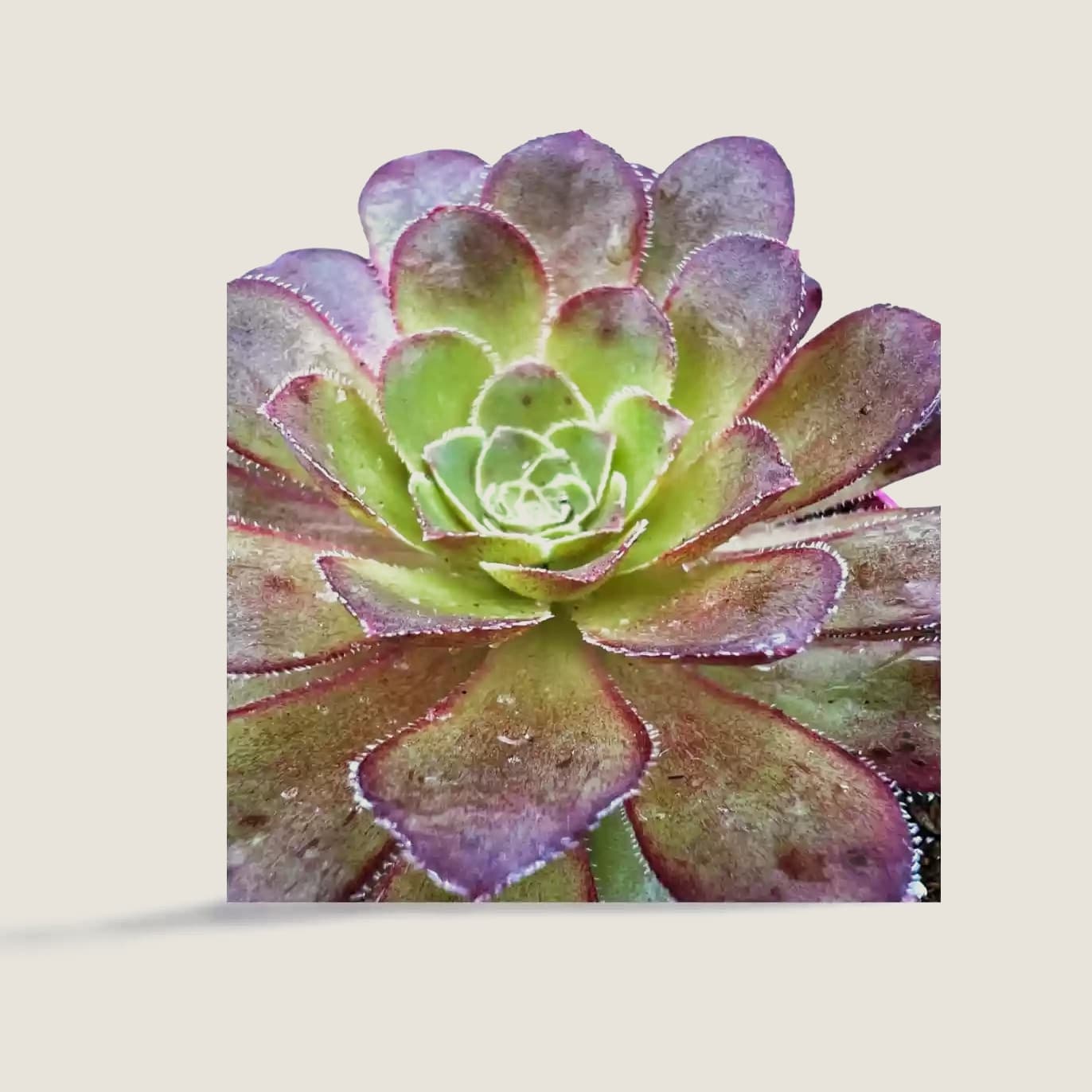
Aeonium velour
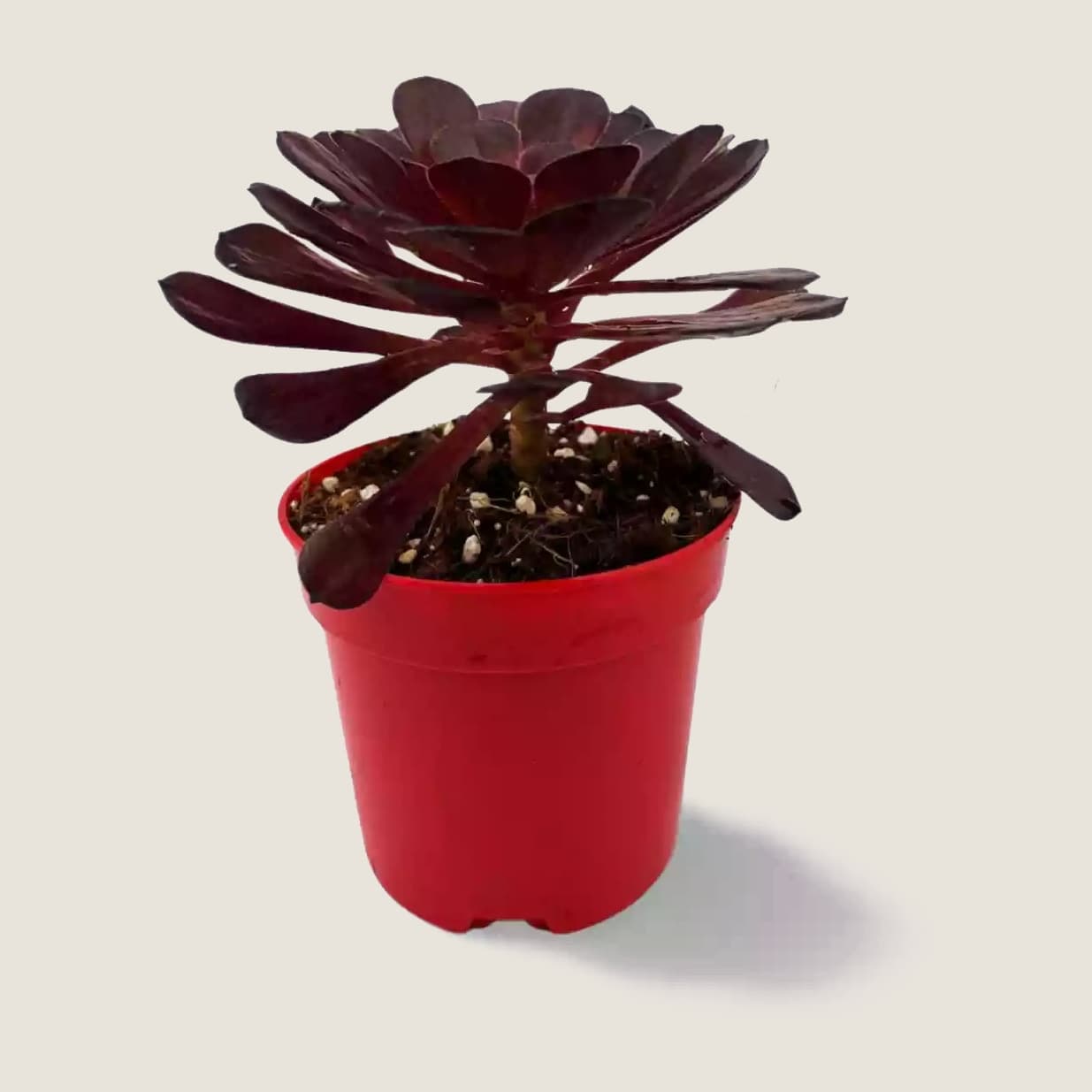
CrassulaceaeAeonium velour · large rosettes of an almost black purple with a green heart, dark enough to look like velvet. It grows in winter and rests in summer. Grown outdoors in Almería.
About Aeonium velour
Large, flat rosettes of a purple so dark that it reads as black, with a pale green centre for contrast. That is where the name comes from: in the sun the surface has the matt, deep look of velvet.
It is a hybrid related to the well-known 'Zwartkop', from which it differs by keeping that green heart at the centre of the rosette and by a slightly more wine-coloured tone. It builds woody stems with a rosette at each tip.
Like all aeoniums it is a Mediterranean-climate plant, not a desert one: it grows in autumn and winter and stops in summer. Treating it like a cactus is the fastest way to lose it.
Botanical fact sheet
| Scientific name | Aeonium 'Velour' (an arboreum hybrid) | |
| Family | Crassulaceae | |
| Origin | garden hybrid; the genus is from the Canaries and North Africa | |
| Natural habitat | cultivation — Mediterranean climate with mild winters | |
| Adult size | rosettes 15-20 cm; the plant, up to 1 m | |
| Flowering | pyramid of yellow flowers; that rosette dies after flowering | |
| Propagation | rosette cutting with a good length of stem | |
| Toxicity | not toxic |
Care
The black is made by the sun. In part shade the rosette turns bronze-green and loses all interest; in direct sun it darkens to deep purple. It is one of the few cases where more sun is always better, even in Almería.
In summer it closes the rosette and drops leaves: that is its rest. Water very little then, and properly in autumn and winter. Always water at the base. When the stem goes bare and looks gangly, cut the head off with a hand's length of stem, let the cut dry for a week and replant it.
Did you know?
That dark purple is anthocyanin too, the same pigment as the red edge of Kalanchoe luciae and of autumn leaves. In the aeonium it works as a permanent sunscreen: it absorbs excess light before it can damage the photosynthetic machinery. That is why the plant only turns black when the light is strong — with little light it stops making the pigment, because it does not need it.
Luz
Gentle direct sun or bright partial shade
Riego
Moderate; they grow in autumn-winter and rest in summer
Sustrato
Very free-draining mineral substrate, specific for cacti and succulents
Temperatura
Protect below 5 °C