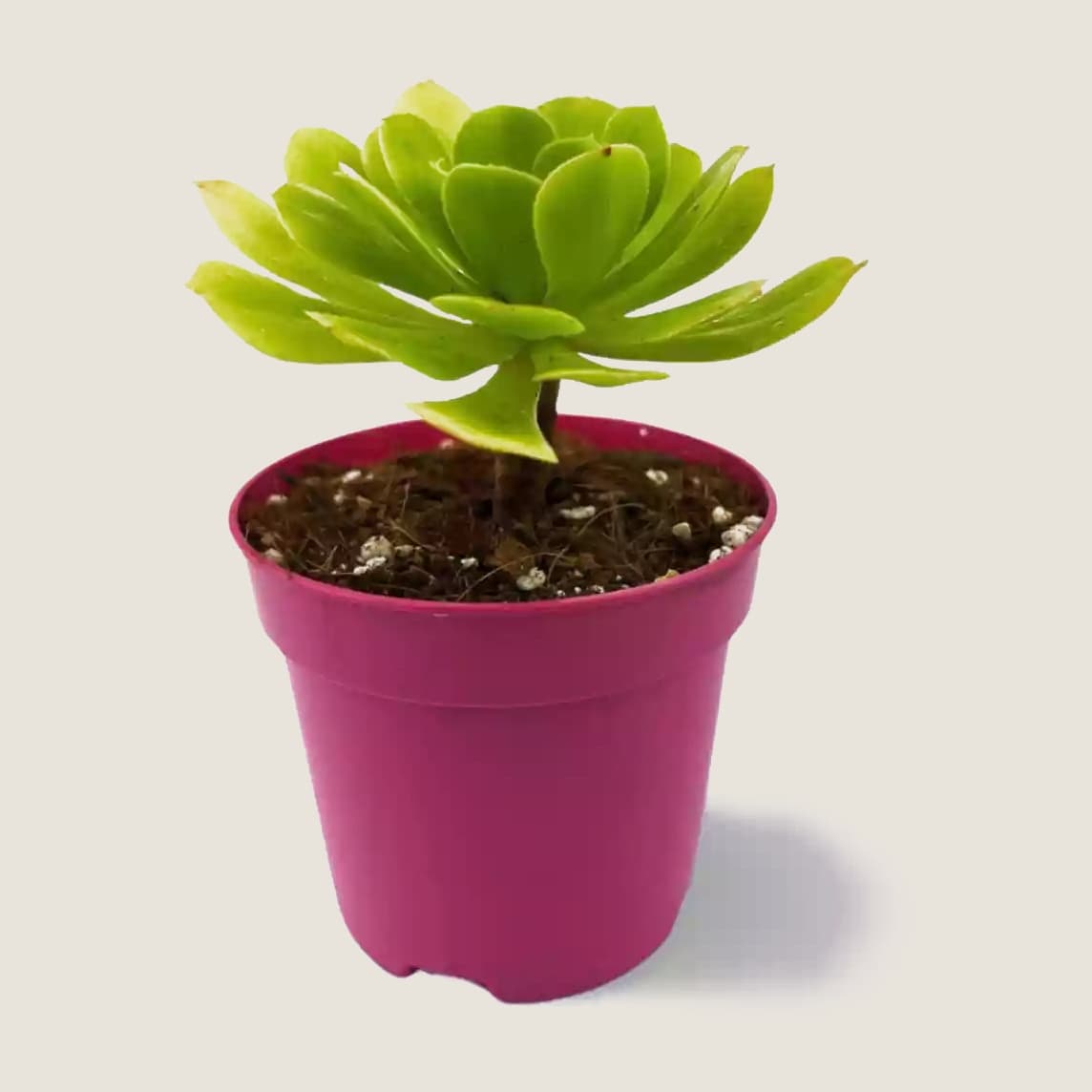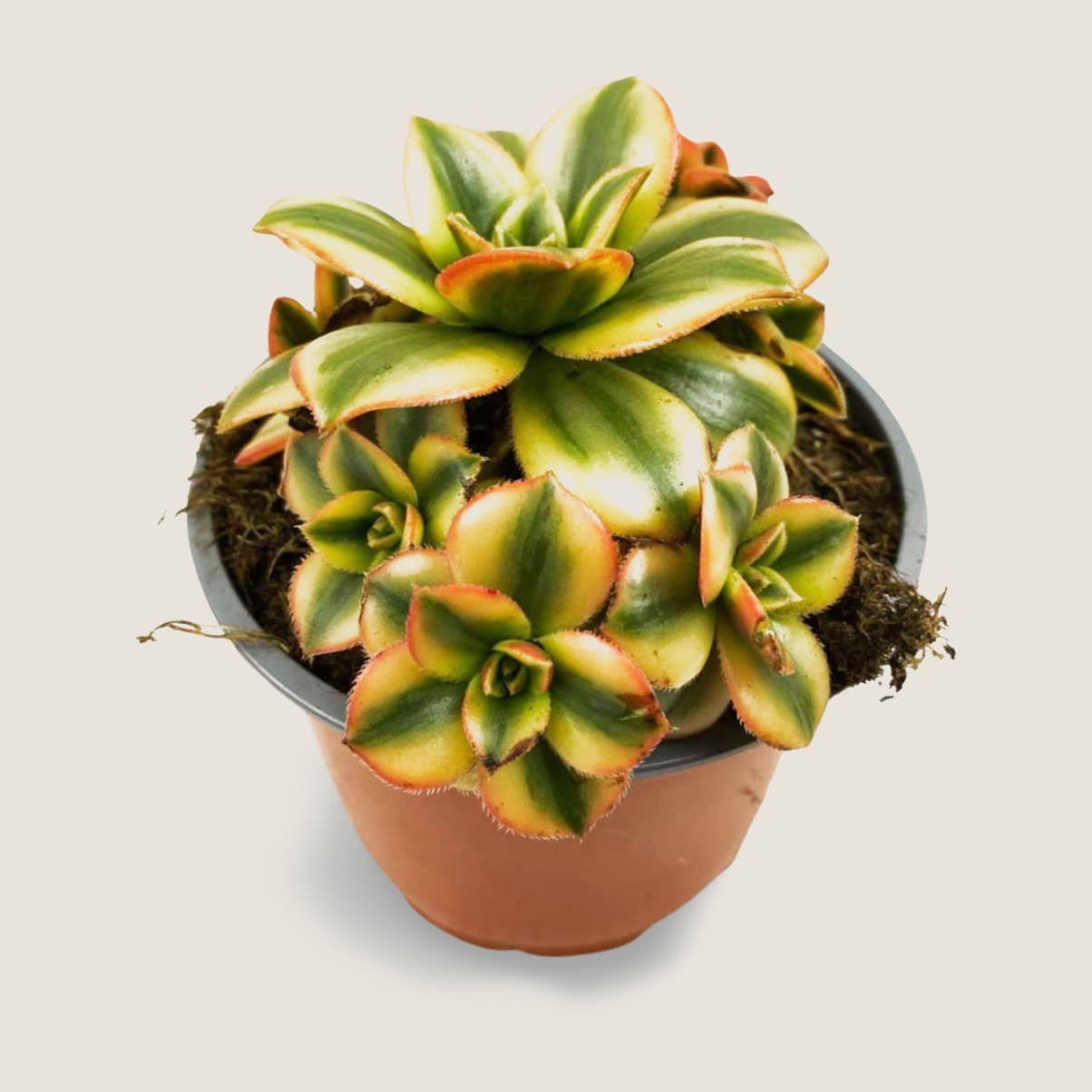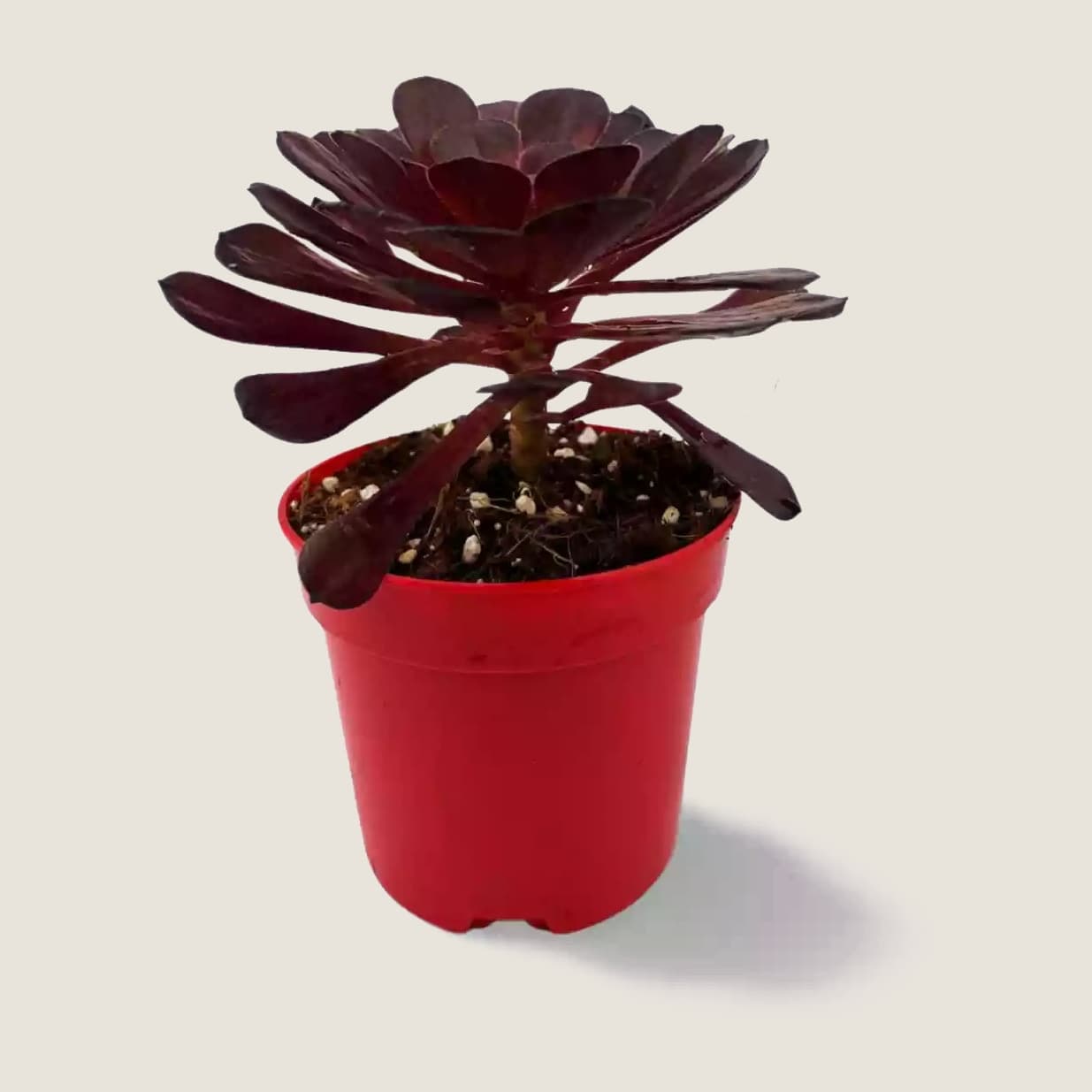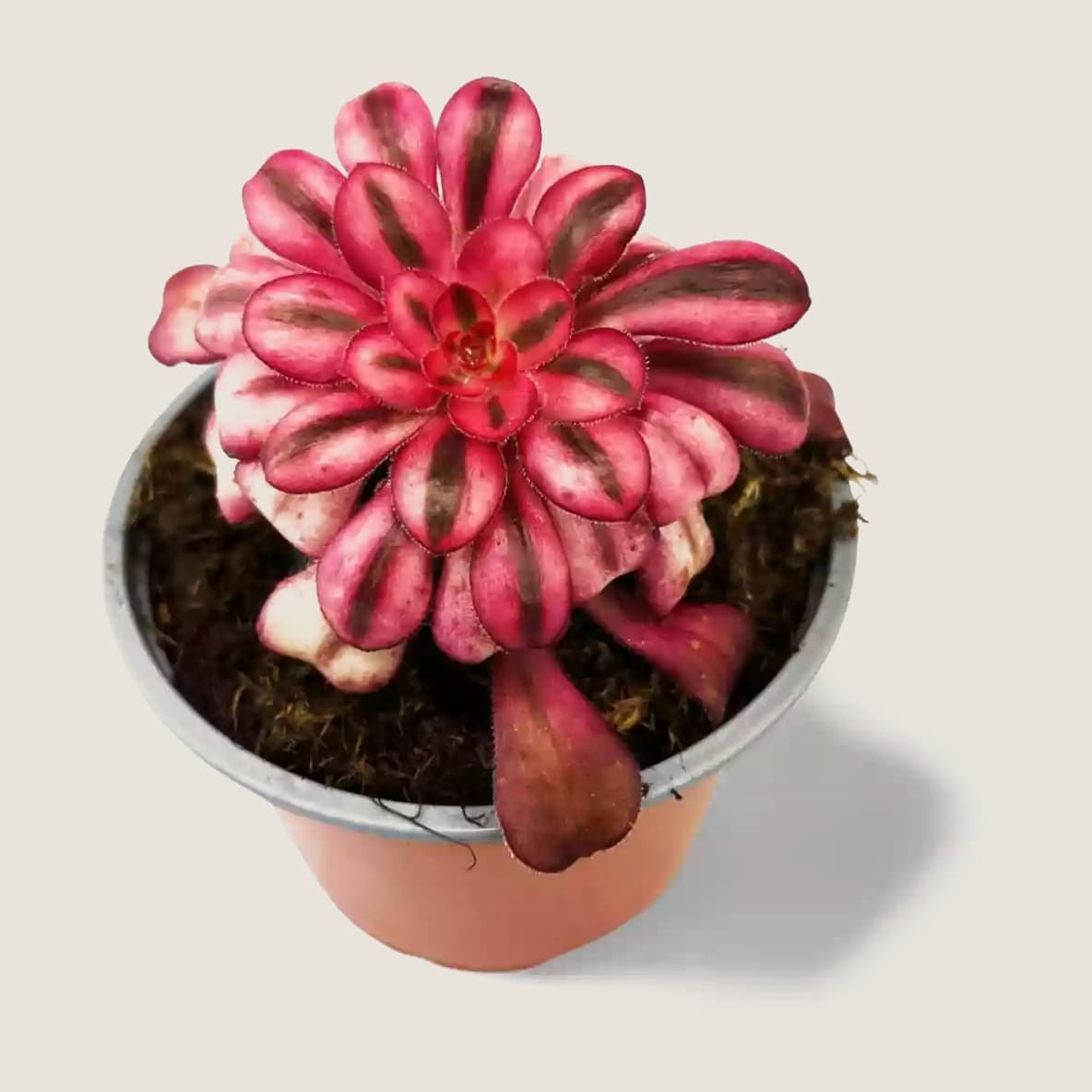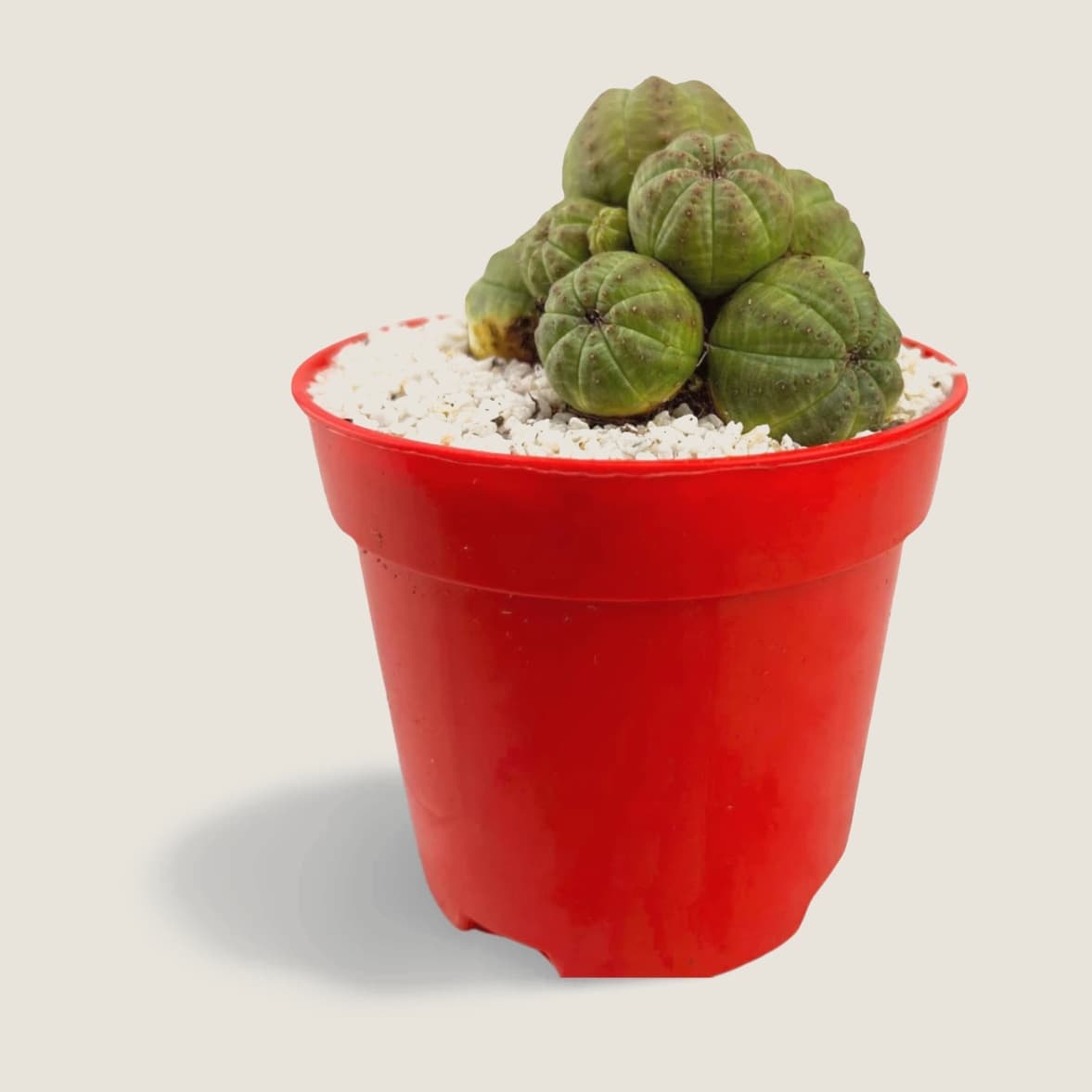
Euphorbia obesa
EuphorbiaceaeEuphorbia obesa · a succulent from the Euphorbiaceae family, with a fleshy stem and white sap, and a variety of shapes. Grown in our nursery in the Almería desert in full sun, with minimal watering and 100% mineral soil—the plant in the photo is the one you will receive.
About Euphorbia obesa
Known in botany as Euphorbia obesa, this succulent belongs to the Euphorbiaceae family and comes from mainly Africa and Madagascar. Its most distinctive feature is convergent evolution with cacti: fleshy body with spines, a trait that makes it unmistakable even among advanced collectors.
We grow Euphorbia obesa at Succulentae, in the heart of the Almería desert, where the dry Mediterranean climate replicates the ideal conditions for the plant to develop its compact form and best coloration. It's the difference between a succulent grown under real sun and a greenhouse one — and it shows in shape, color and longevity.
Botanical fact sheet
| Scientific name | Euphorbia obesa | |
| Family | Euphorbiaceae | |
| Origin | mainly Africa and Madagascar | |
| Natural habitat | arid and semi-arid zones | |
| Adult size | 5 cm to 30 m depending on species | |
| Flowering | discreet cyathia with decorative bracts | |
| Propagation | cutting (cut and let the sap dry) | |
| Toxicity | toxic and irritating white sap |
Did you know?
Although it looks like a cactus, Euphorbia is not: its resemblance is due to convergent evolution. It is distinguished by its milky white sap, while true cacti do not have it.
Luz
Direct sun or very bright light
Riego
Sparse: let the substrate dry out between waterings; reduce in winter
Sustrato
Very free-draining mineral substrate, specific for cacti and succulents
Temperatura
Protect below 8-10 °C (cold-sensitive)