Echeveria
Echeveria is the most recognisable genus in the Crassulaceae family: symmetrical rosettes of fleshy leaves that have become the very image of a succulent. It gathers around 150 species, concentrated in Mexico and extending into Central America and the northern edge of South America, and it is named after Atanasio Echeverría y Godoy, the botanical illustrator who travelled with the Royal Botanical Expedition to New Spain in the 18th century. Almost all of them grow on rocky slopes at altitude, under fierce sunlight, with cool nights and rain concentrated into a few months of the year. That habitat explains everything the plant needs indoors: plenty of light, very little water and a mix that refuses to hold moisture.
15 plants in Echeveria
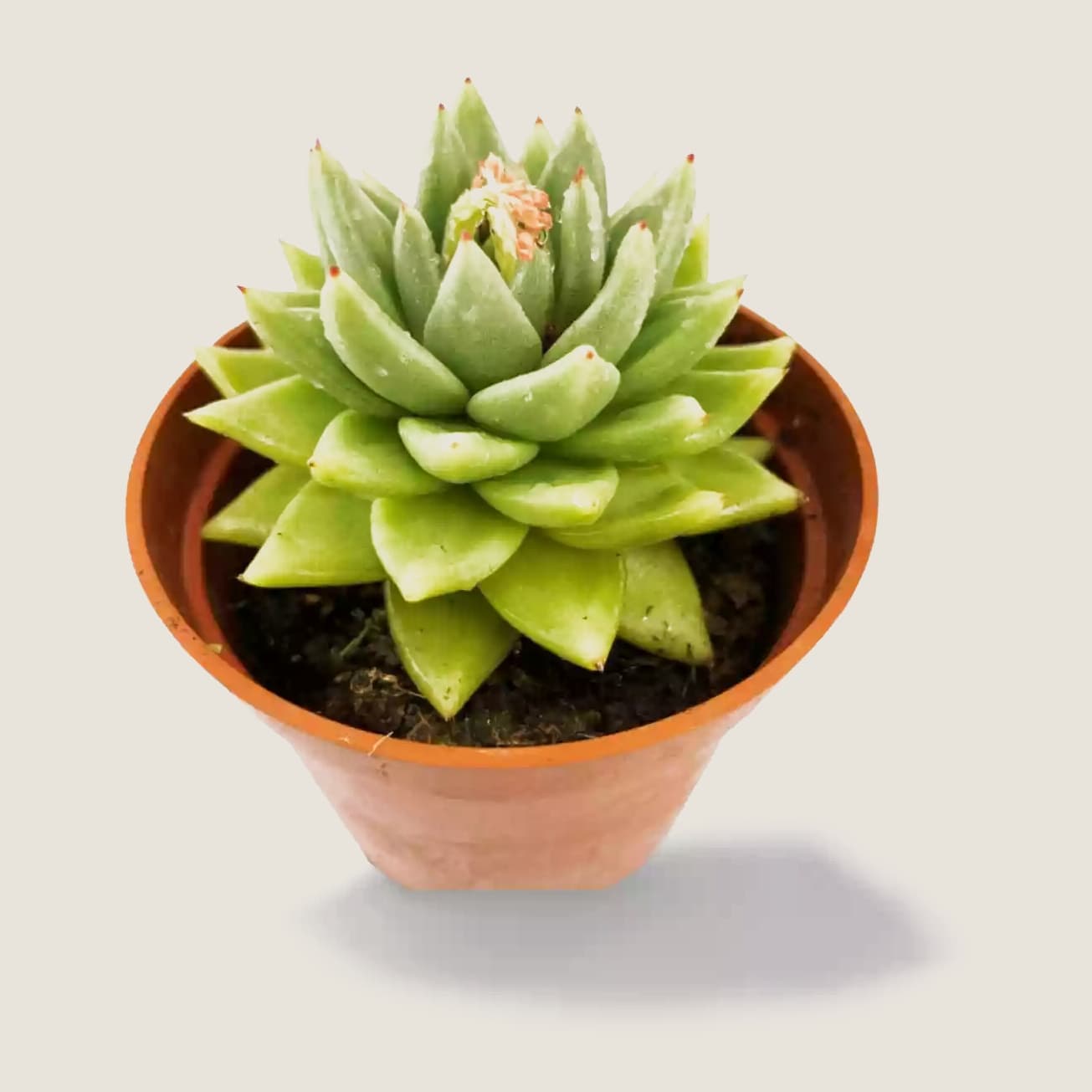
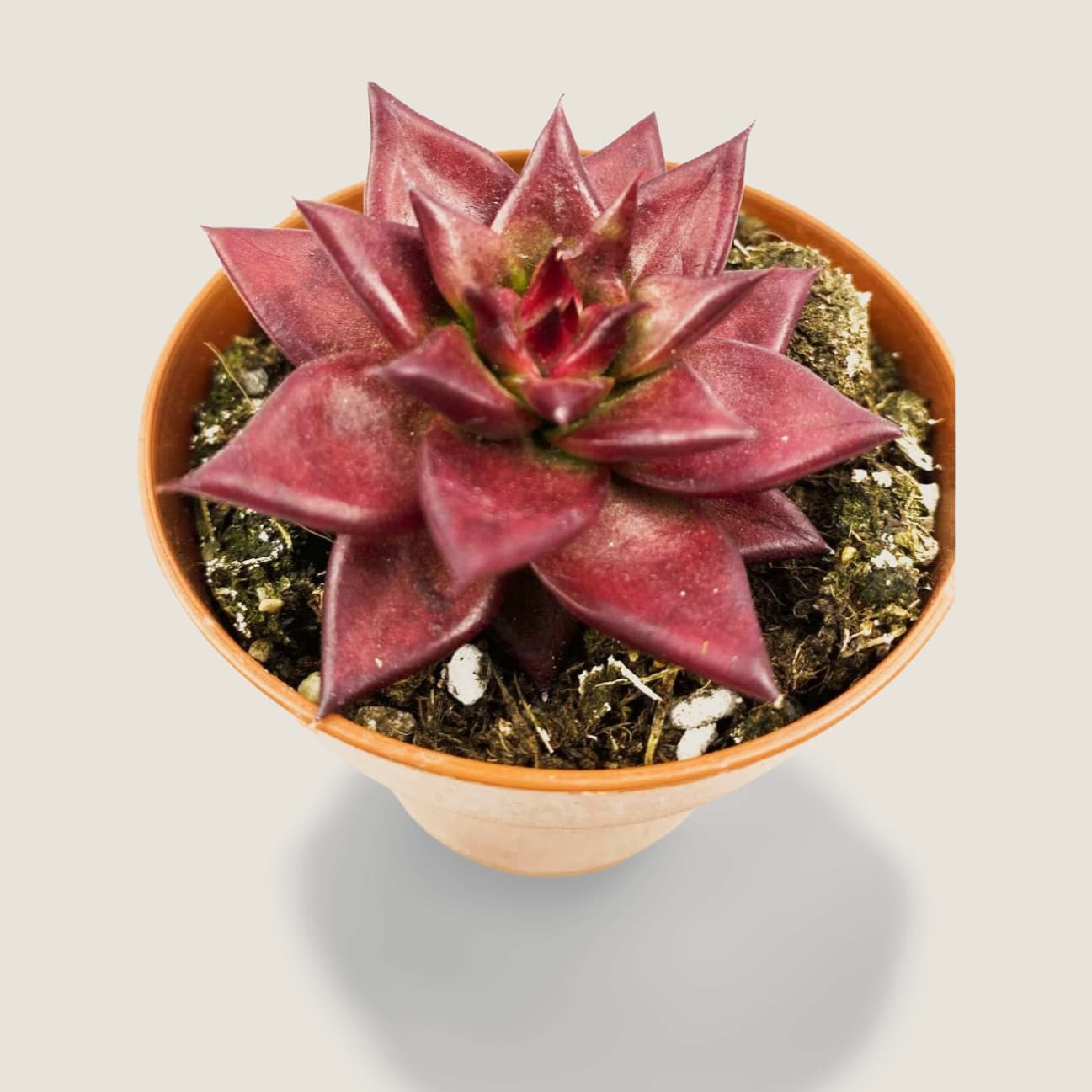
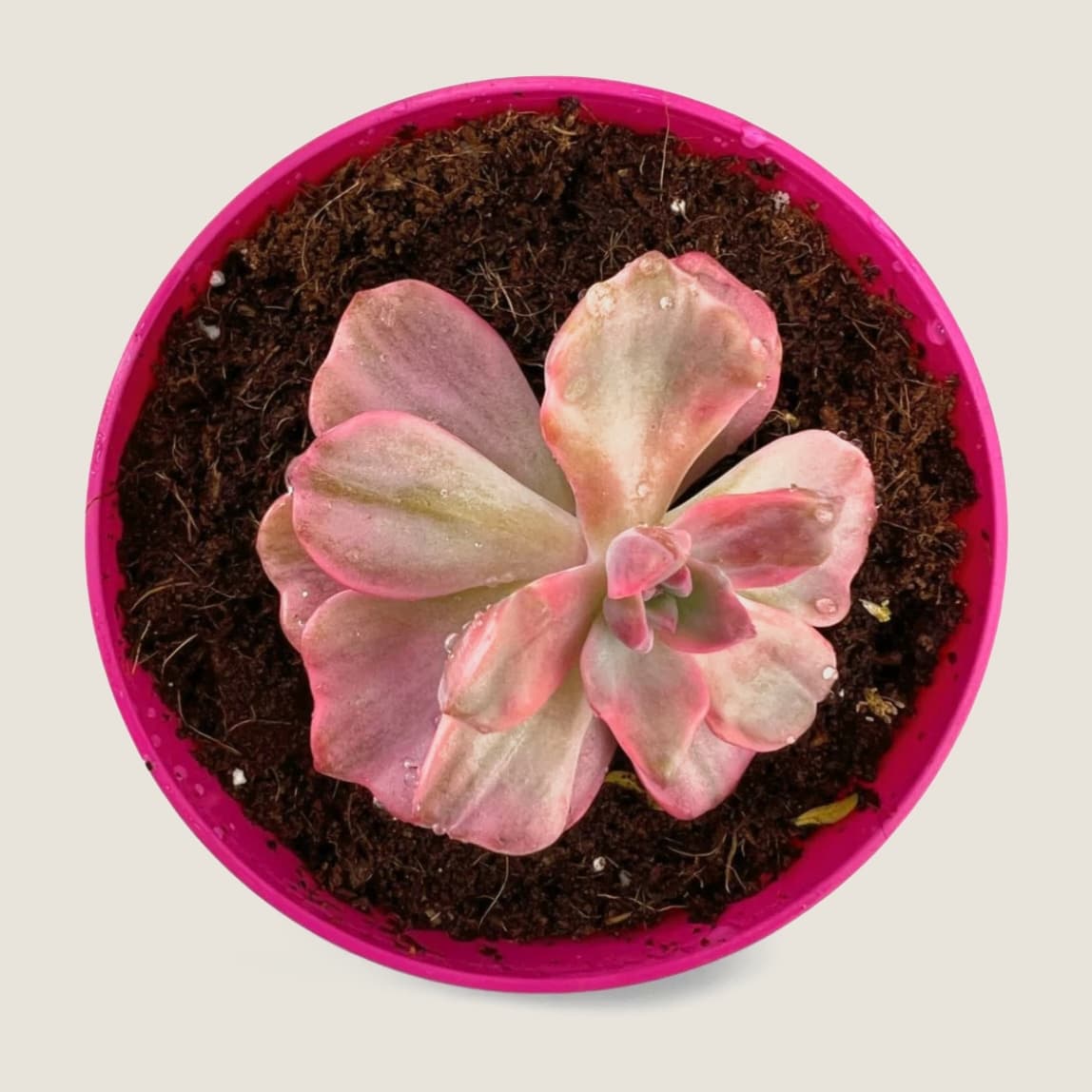
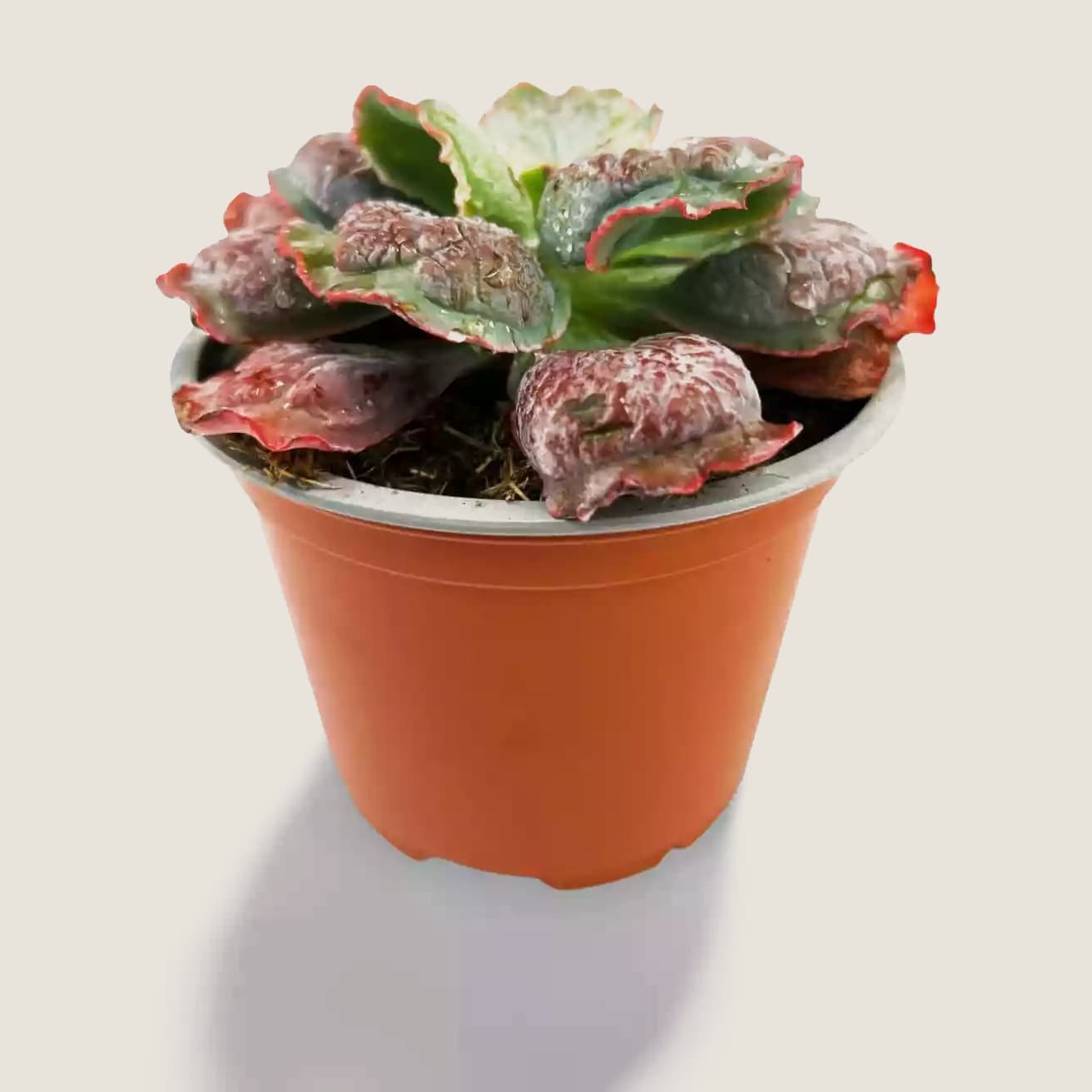
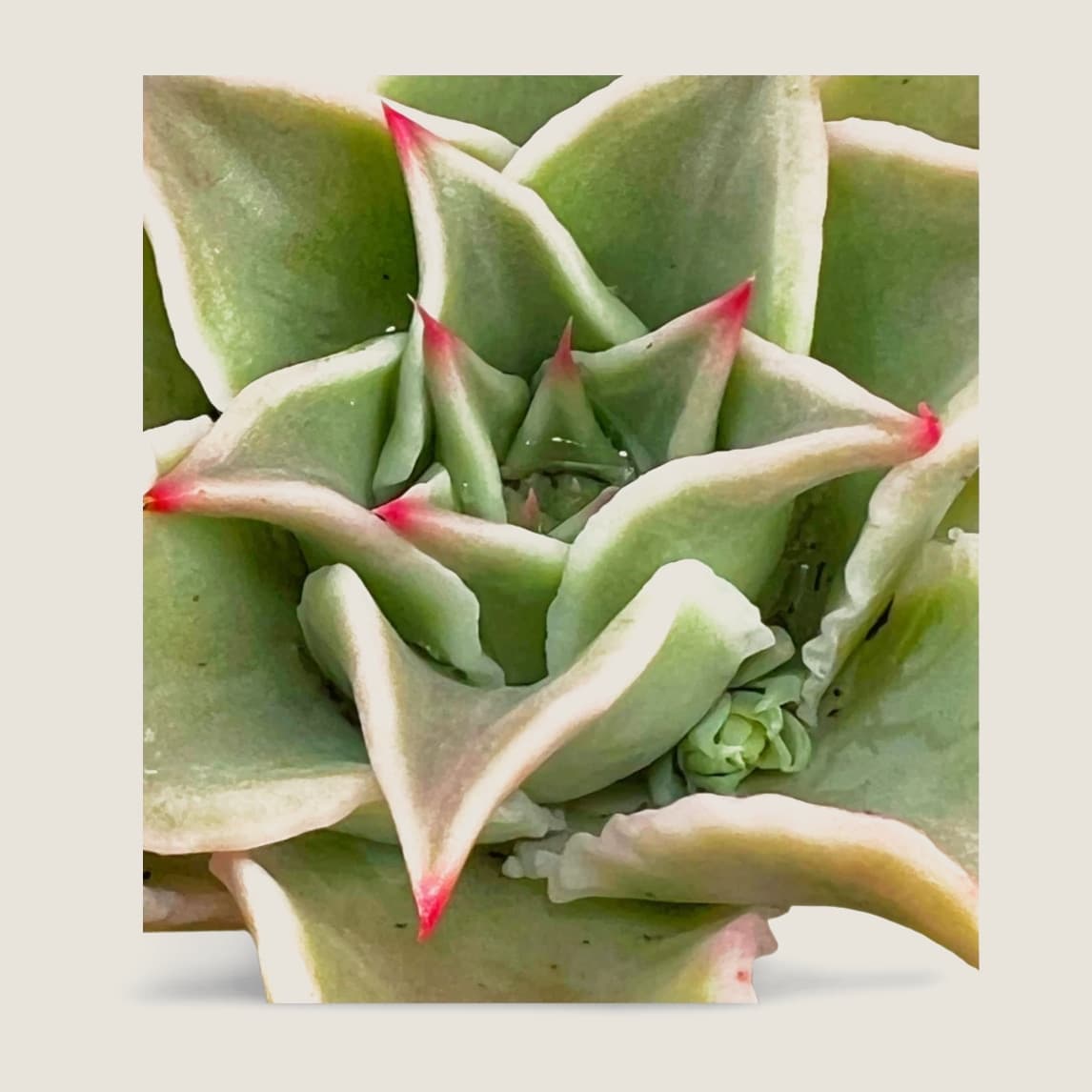
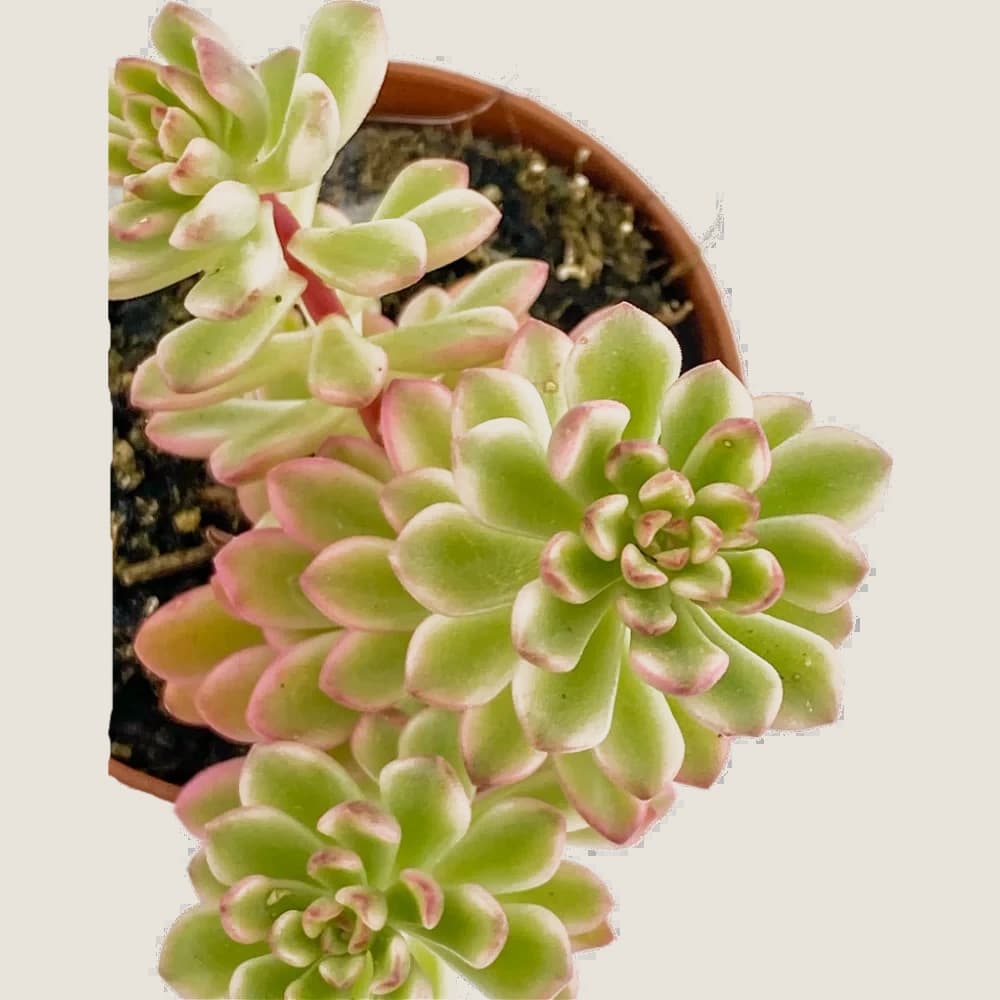
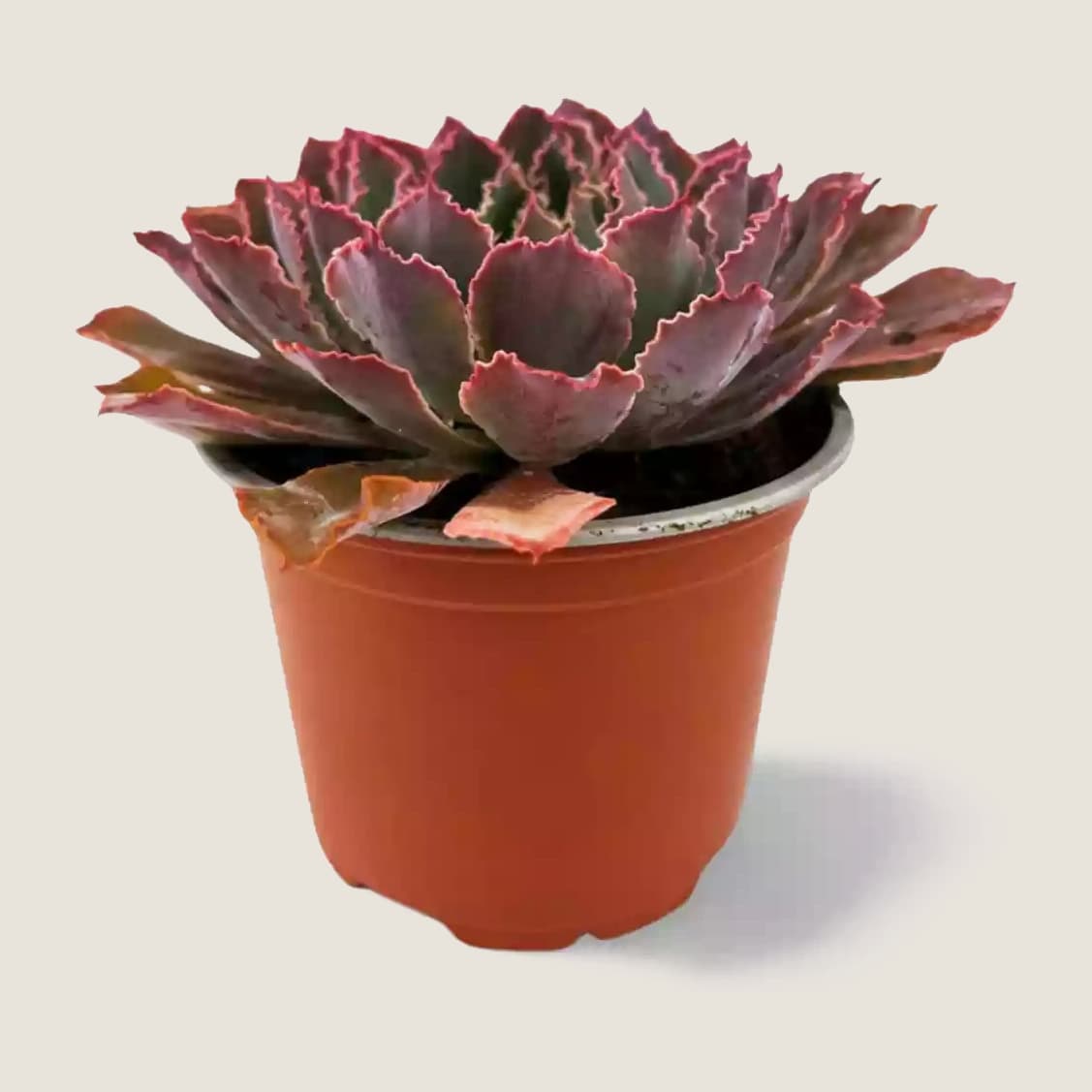
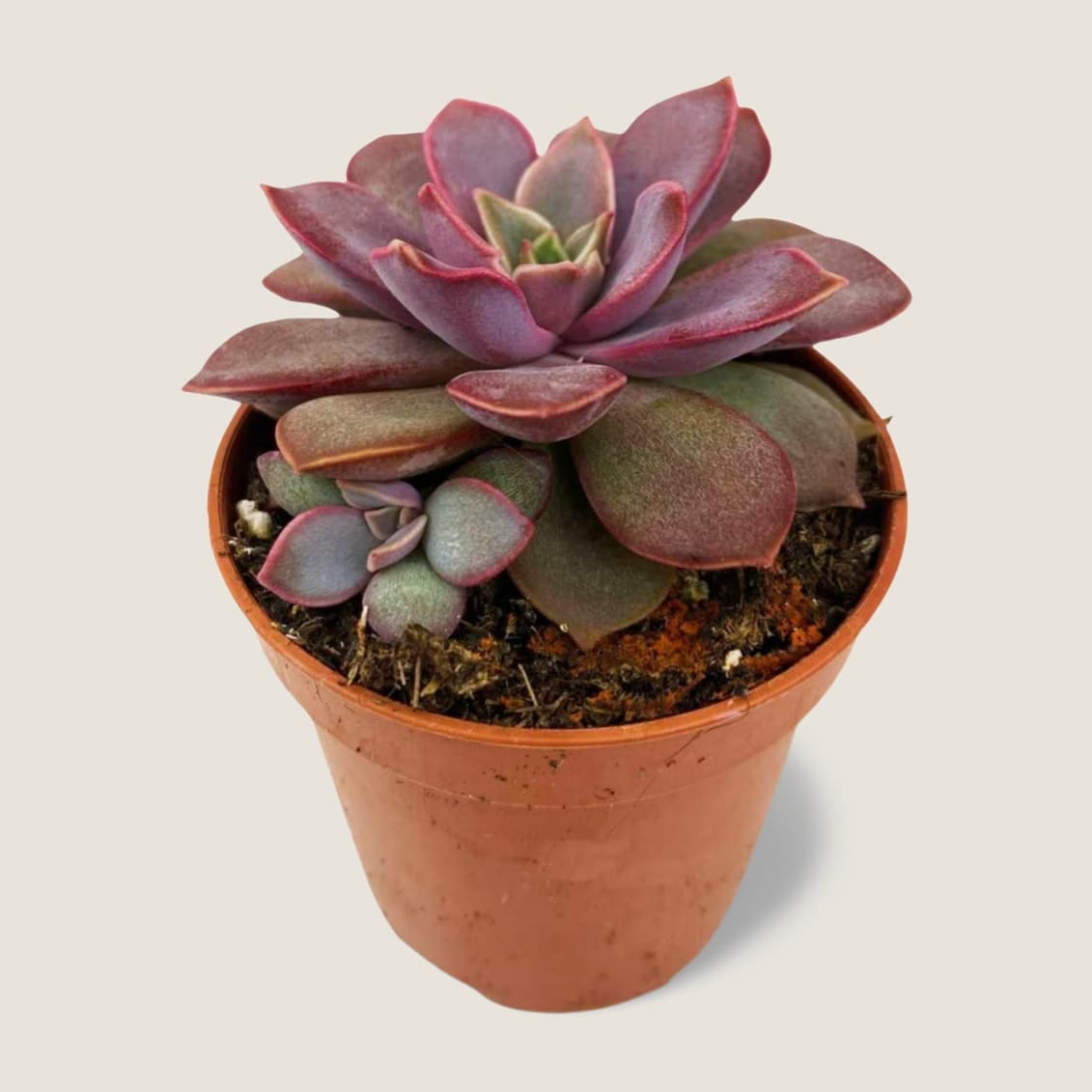
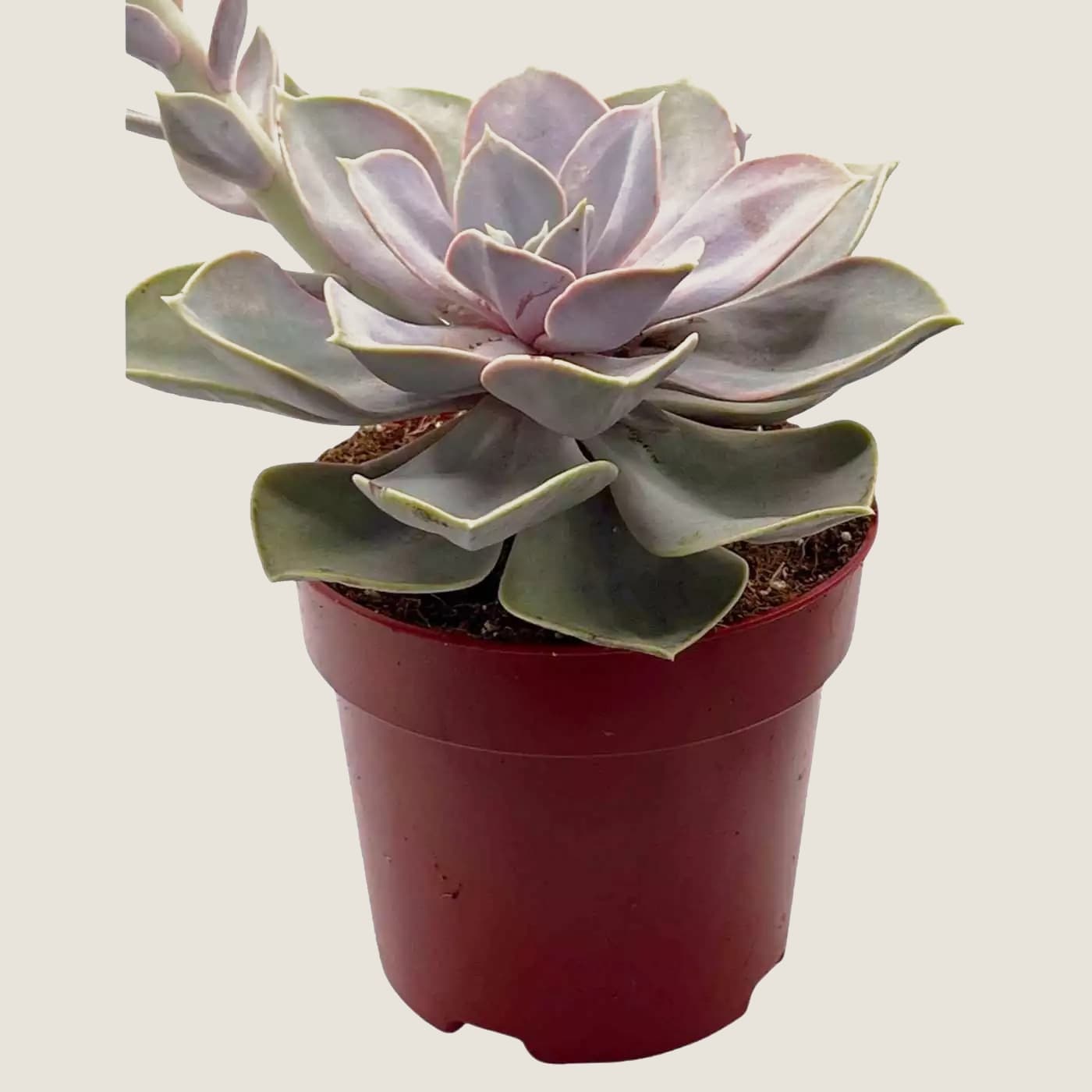
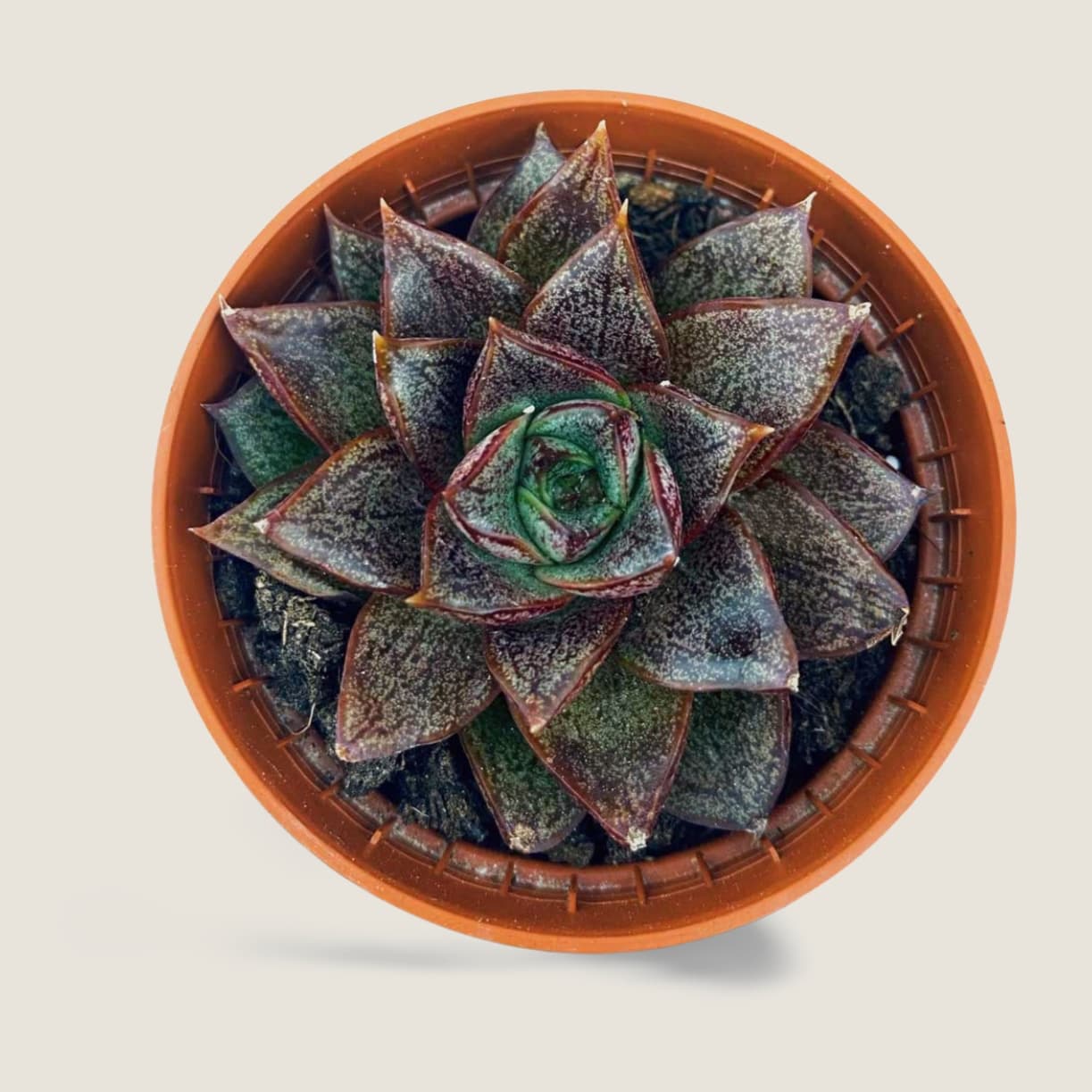
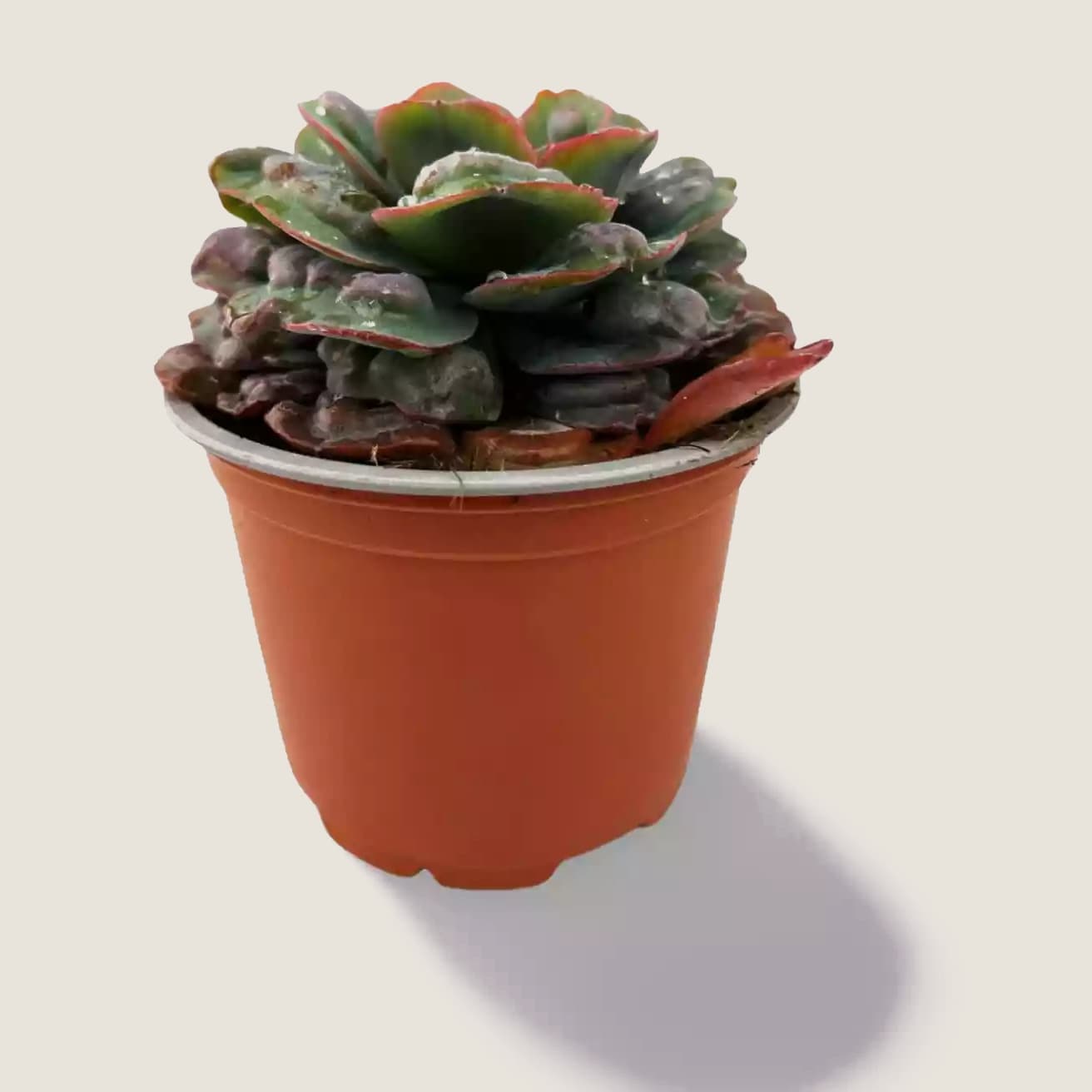
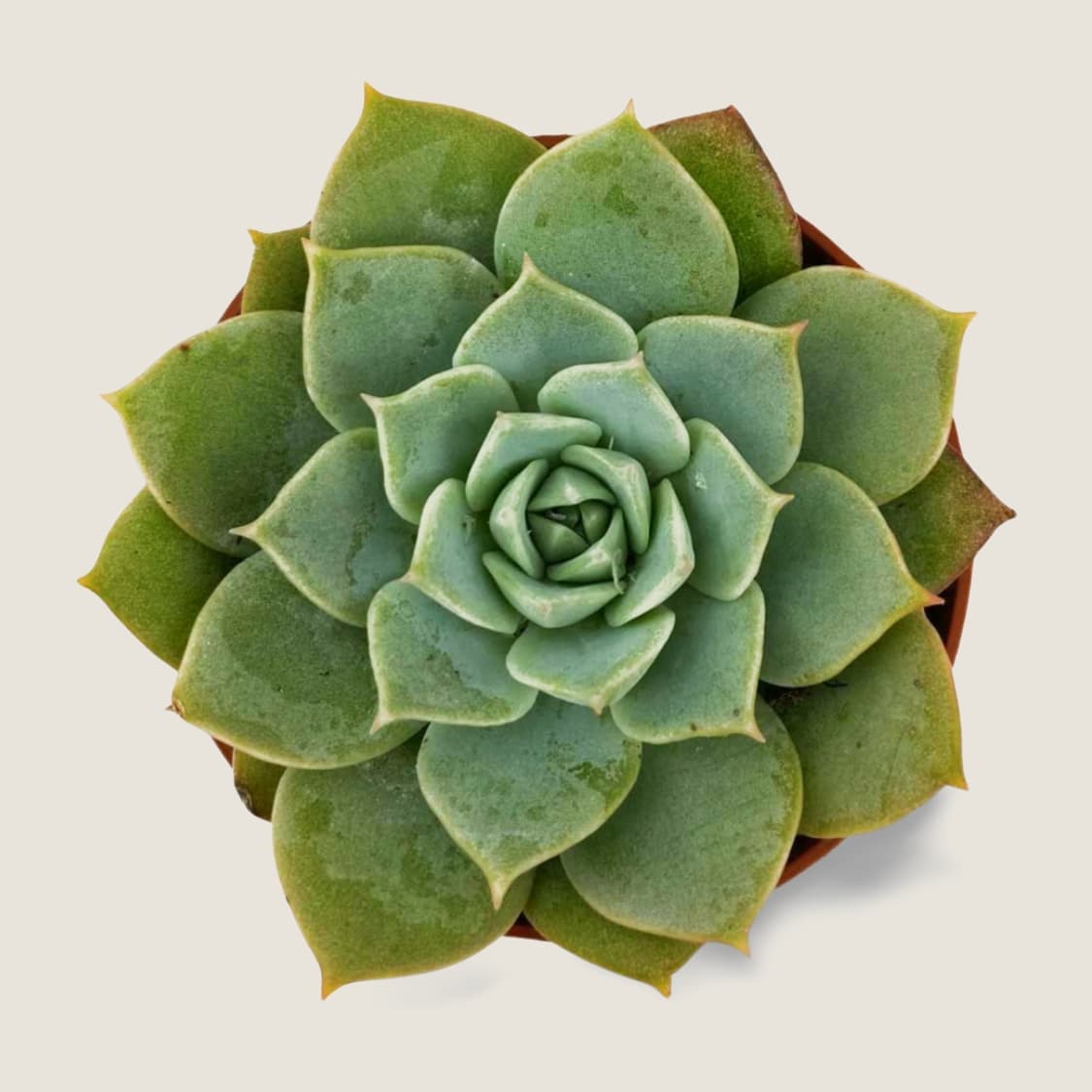
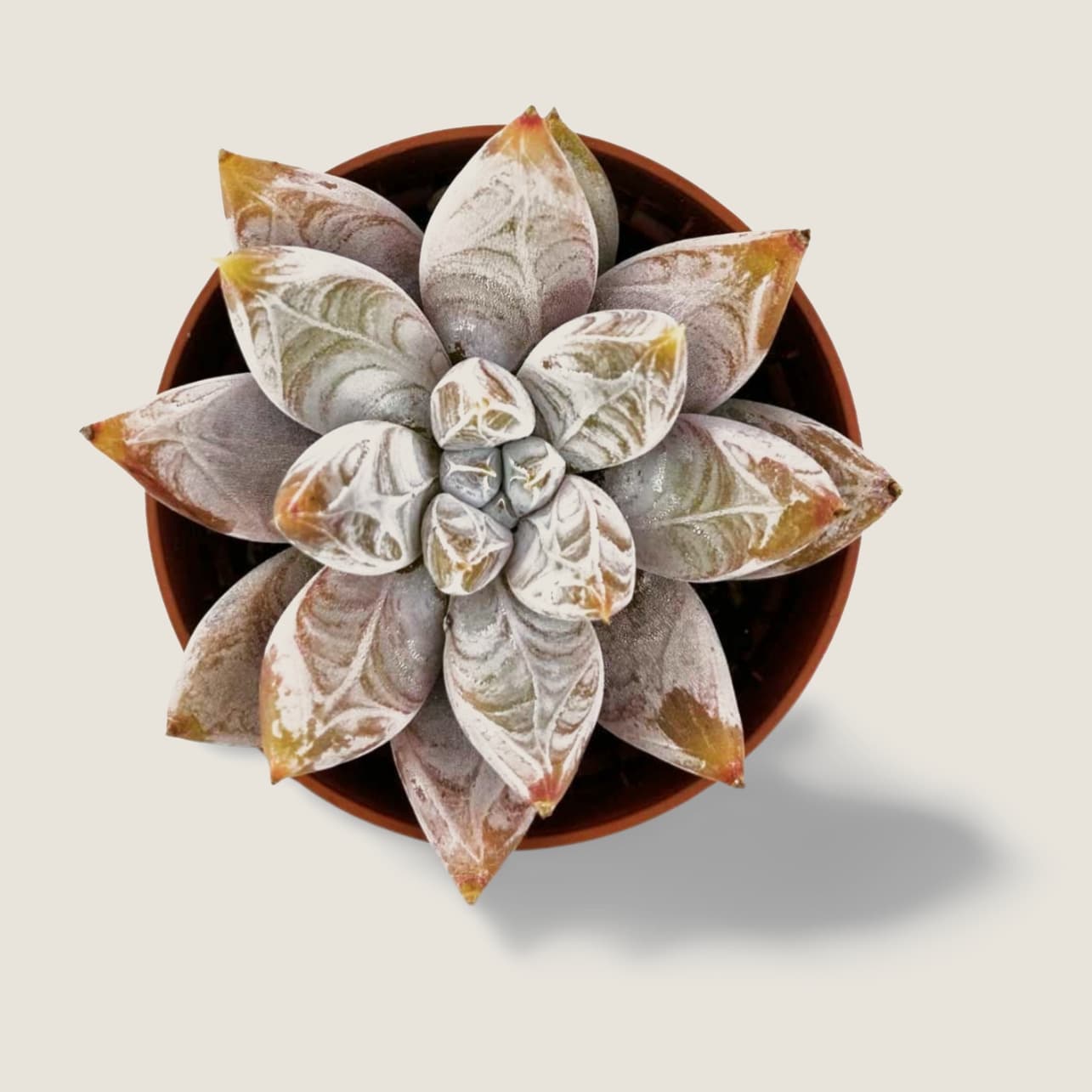
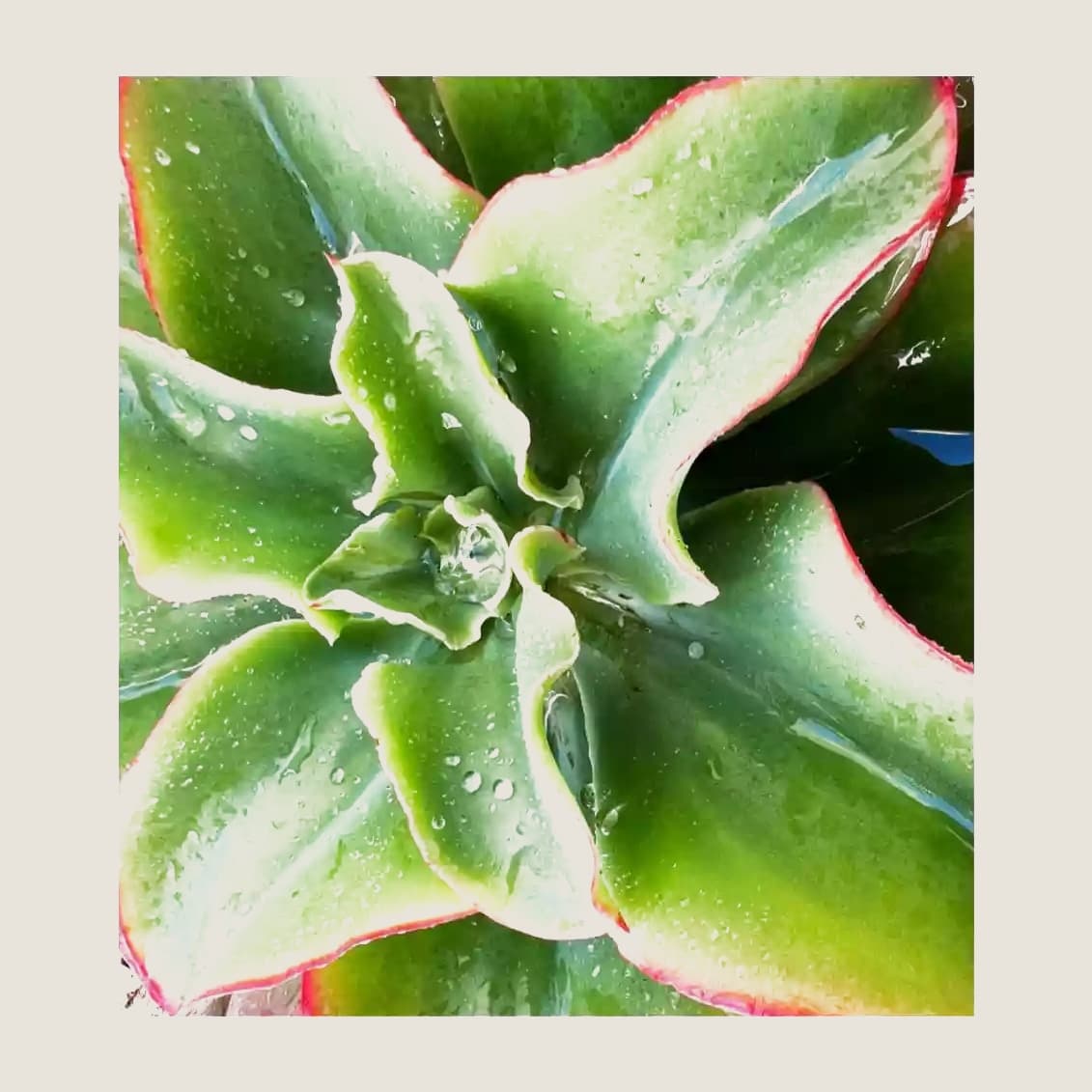
Any echeveria collection really contains two different things. True species tend to have stricter, more architectural shapes. Echeveria agavoides carries hard triangular leaves ending in a horny tip, closer to a miniature agave than to a rose; the Romeo selection takes the same outline into an almost uniform wine red. Echeveria purpusorum is small and slow, with thick, stiff leaves marbled in maroon over olive green. Echeveria secunda glauca makes flat rosettes in a very clean glaucous blue and offsets freely, eventually filling the pot with a colony. Echeveria tolimanensis, from around Tolimán in Querétaro, breaks the pattern: its leaves are almost cylindrical, blue-grey, and point upwards instead of opening out.
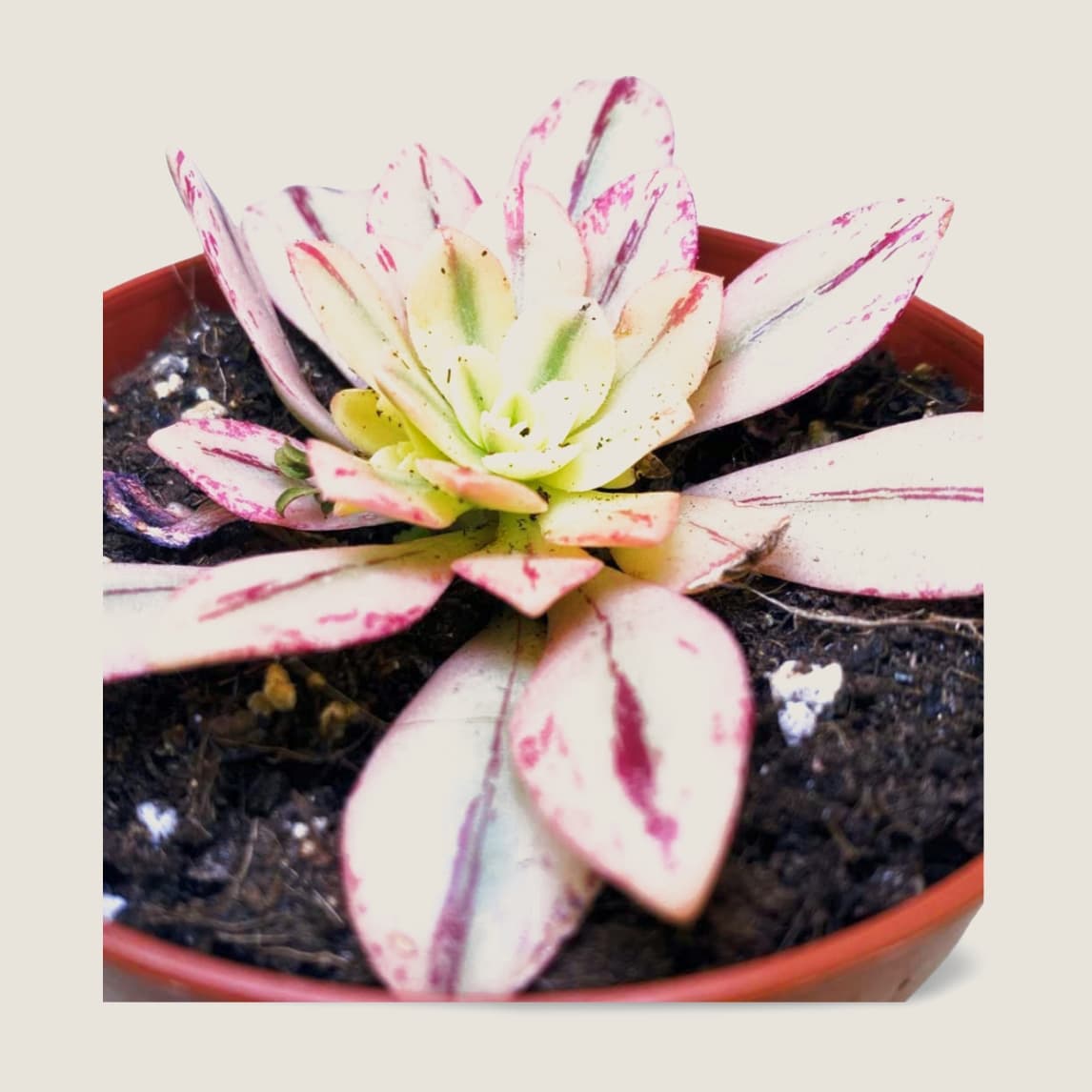
Hybrids are bred for colour and texture instead. Echeveria ‘Perle von Nürnberg’ is the European classic, raised in Germany from E. gibbiflora and E. elegans, with a lavender-grey that deepens the more sun it gets. ‘Neon Breakers’ and ‘Trumpet Pinky’ go for ruffled margins and hot pink edges. ‘Raindrops’ develops carunculations, the rounded bumps in the centre of each leaf that give the plant its name. ‘Minibelle’ is caulescent: it builds a stem and ends up looking like a small shrub of rosettes. Alongside them sit the variegates, such as Echeveria hanaikada variegata and Esmeralda Variegada, plus nursery selections like Angel Wings, Madiba, Perla Púrpura, Linguas and Triquiana.
How to care for echeveria. Light is the deciding factor. Four to six hours of direct sun is the minimum; in northern Europe a south-facing windowsill is the obvious spot, and a grow light genuinely helps between November and February. Water by the soak-and-dry method: drench the pot until water runs from the drainage hole, then leave it completely alone until the mix is bone dry, which may mean every week or ten days in summer and once a month or less in winter. Use a gritty, mineral compost sold for cacti, improved with pumice, lava grit or coarse sand; standard potting soil holds far too much water. Echeverias tolerate temperatures down to around 5 °C, but it is the combination of cold and wet roots that kills them, never the cold alone.
The mistakes beginners make are remarkably consistent. Too little light comes first: the rosette stretches, the leaves space out, the colour fades and it never tightens up again, so the only fix is to behead it and re-root the top. Second, watering little and often instead of thoroughly and rarely. Third, letting water sit in the centre of the rosette, especially in full sun, which causes rot and scorch marks. Fourth, handling the leaves: many echeverias are coated in farina, a powdery wax that shields them from ultraviolet light and never grows back where a fingerprint has wiped it away. Fifth, ignoring mealybugs, which hide precisely in the leaf axils at the centre of the rosette. And if a plant has been raised under glass, move it into full sun gradually over a couple of weeks.
Every echeveria is picked individually and shipped from Almería, in southern Spain, in packaging designed to keep the rosette intact anywhere in Europe.