Sedum
Sedum (Crassulaceae) is one of the largest succulent genera: some 400 species spread right across the northern hemisphere, from Asia through Europe to the Americas. That range explains the single most important thing for a buyer to know — the name sedum covers two very different groups. On one side, the hardy mat-forming stonecrops of European and Asian mountains, many now reclassified into Phedimus and Hylotelephium although the trade keeps the old name. On the other, the Mexican sedums: thick-leaved, beautifully coloured and distinctly tender. Treating one like the other is behind most sedum failures.
4 plants in Sedum
Telling ours apart
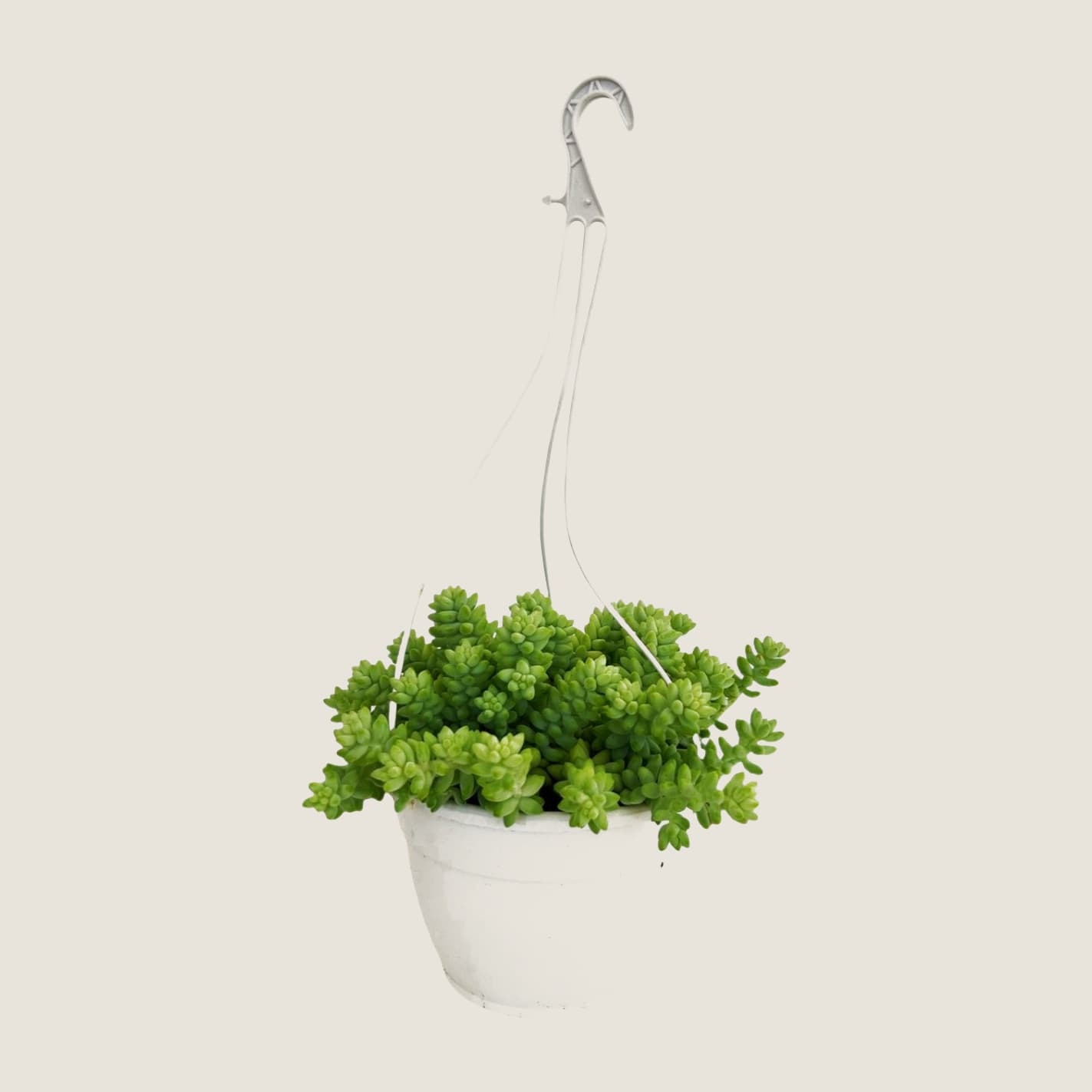
Sedum morganianum, burro's tail, is Mexican and trailing: stems up to half a metre long, packed with plump blue-green leaves. A hanging basket or shelf-edge plant, with famously fragile foliage.
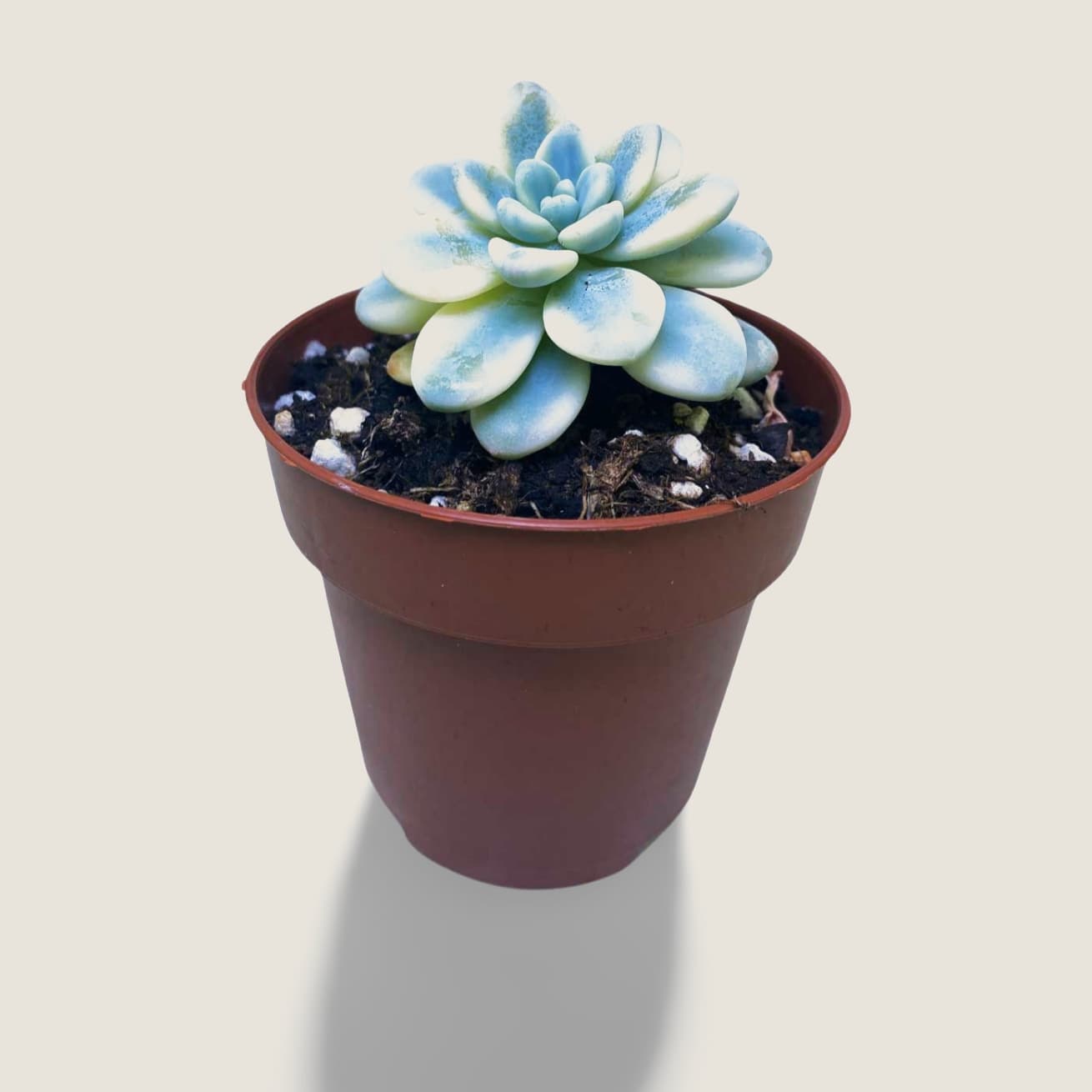
Sedum clavatum in its variegated form makes compact rosettes of thick blue-grey leaves edged in cream. Also Mexican, also tender.
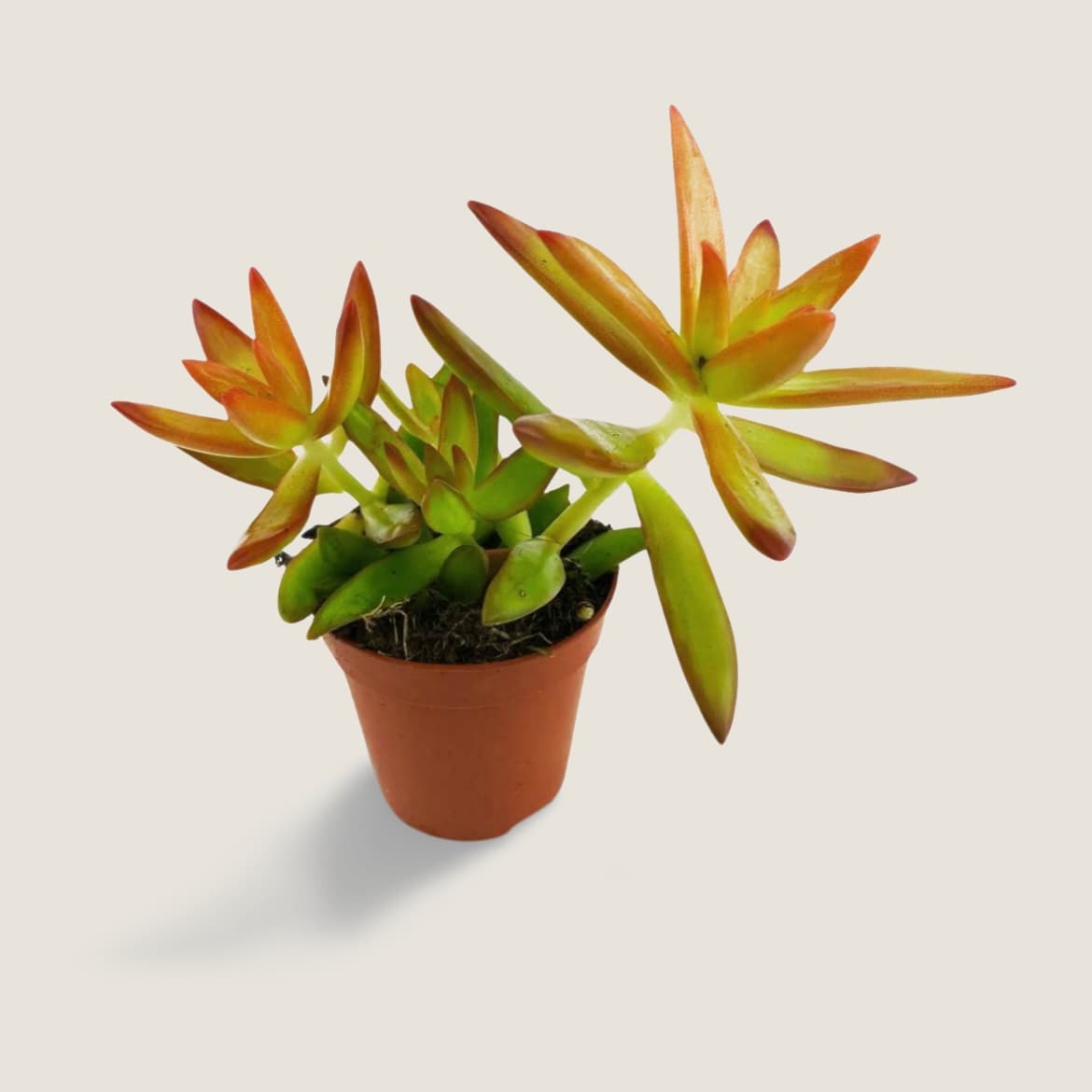
The plant sold as coppertone sedum, from the Sedum adolphii and Sedum nussbaumerianum group, has pointed leaves that shift from lime green to burnt orange in direct sun — the colour is the whole point, and it only appears in strong light.
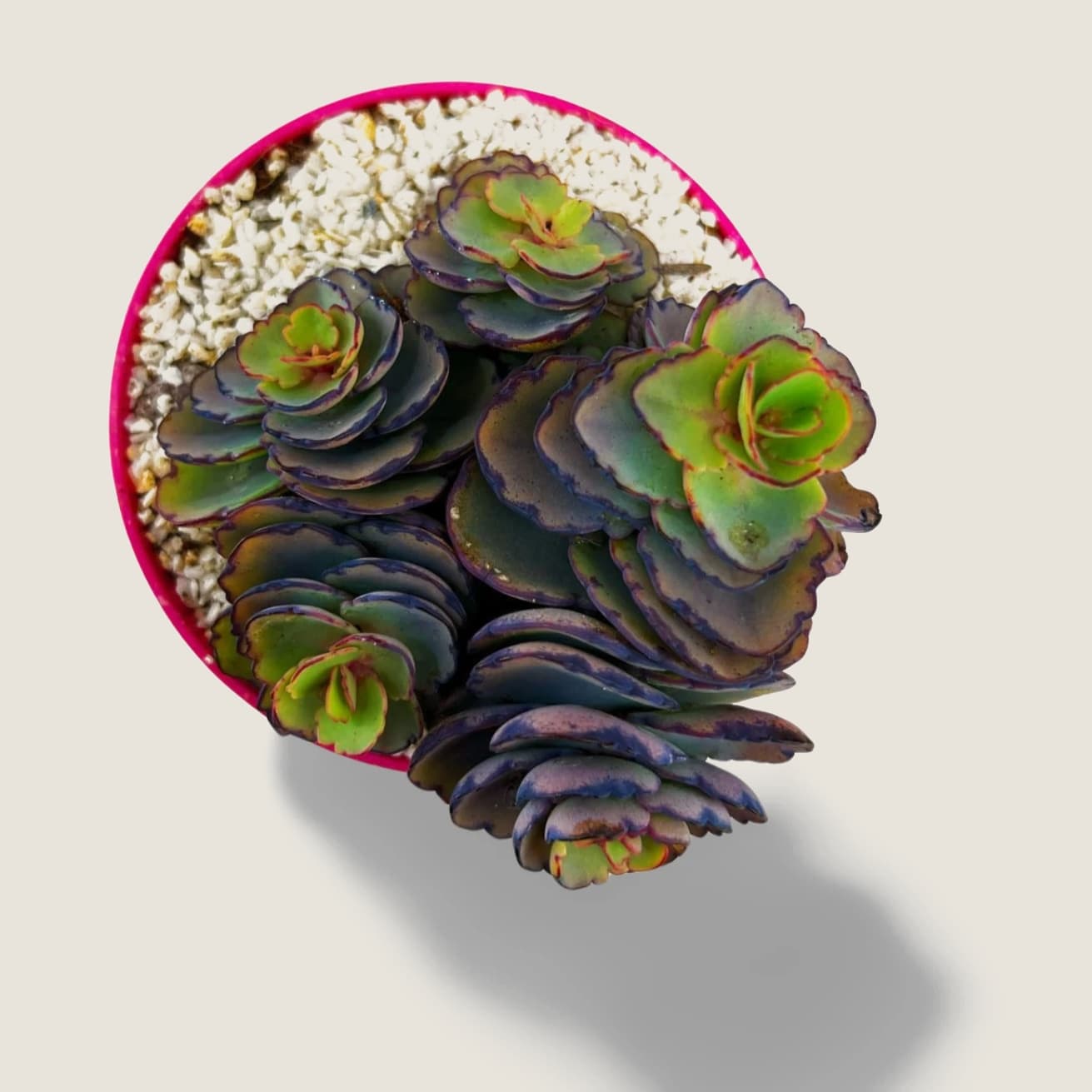
Sedum spurium “Dragon's Blood” (now Phedimus spurius) is the opposite case: a Caucasian ground-cover with flat toothed leaves that deepen to wine red in autumn, and it is fully hardy in the UK. This is the stonecrop for rockeries, dry walls, gravel gardens and green roofs.
How to grow them
- Light: full sun. All sedums want as much as they can get; in shade they stretch, the internodes lengthen and the colour drains away.
- Water: sparingly. These are among the most drought-tolerant succulents there are. Soak, then let the compost dry out completely before the next watering.
- Compost: gritty and sharply drained. In outdoor containers, add coarse grit at the base and as a top dressing — winter wet kills more stonecrops than winter cold.
- Cold: the crucial distinction. Phedimus spurius stays outdoors all year without protection; the Mexican species (morganianum, clavatum, coppertone) need to stay above about 5 °C and, above all, must not sit cold and wet.
Where people go wrong
The first mistake is treating every sedum the same in winter: leave a Sedum morganianum outdoors through a frost and it turns to mush, while the spurius in the trough beside it does not blink. The second is handling burro's tail — leaves drop at the slightest touch and never regrow at that point on the stem. The upside is that fallen leaves root by themselves on dry compost, so keep them and propagate. The third is overfeeding, which gives soft growth, long internodes and washed-out colour. The fourth is shade, the real cause behind almost every “my sedum has gone green and leggy”. And the fifth, on outdoor mats, is heavy soil plus summer overwatering.
The sedums we stock
- Sedum morganianum — burro's tail, trailing, fragile blue-green leaves.
- Sedum clavatum variegata — compact blue-grey rosettes edged cream.
- Coppertone sedum — pointed leaves turning burnt orange in sun.
- Sedum spurium “Dragon's Blood” — hardy ground-cover with deep red foliage, outdoors year round.
Every plant is picked by hand and ships from Almería, well packed and ready to pot on.