Cereus
Cereus is one of the oldest genera in the Cactaceae — it gave the family its name — and covers around thirty columnar cacti from South America and the Caribbean, mainly Brazil, Argentina, Paraguay and Uruguay. They are strongly ribbed, grow upright and, by cactus standards, quickly, and they carry spectacular flowers: large, white and nocturnal, open for a single night and pollinated by moths and bats. Several species also bear edible fruit in habitat.
5 plants in Cereus
Telling ours apart
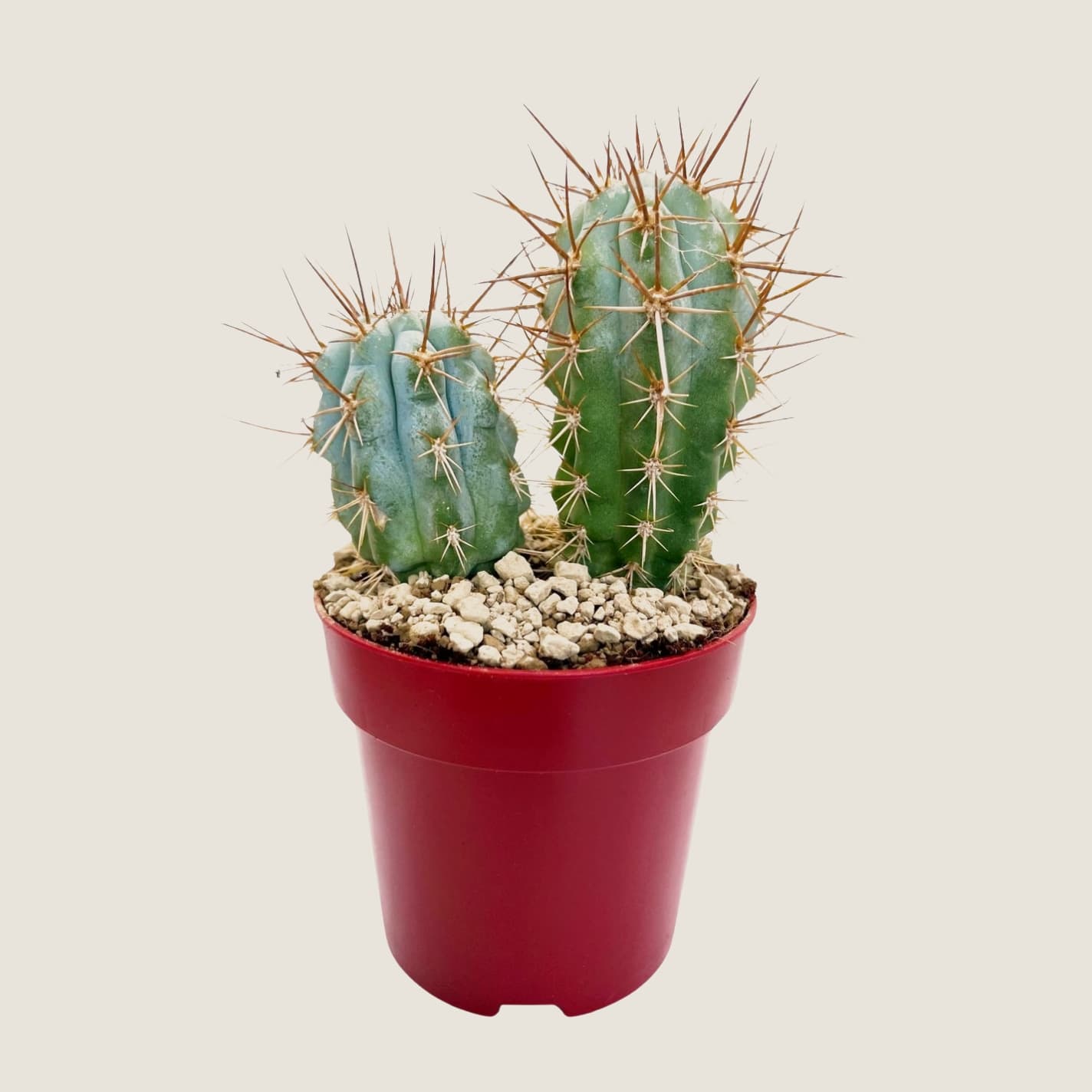
Cereus azul is the classic type: a thick column with well-defined ribs and a deep blue-glaucous skin that develops properly only in full sun. It is a structural plant, the sort that anchors a whole collection visually.
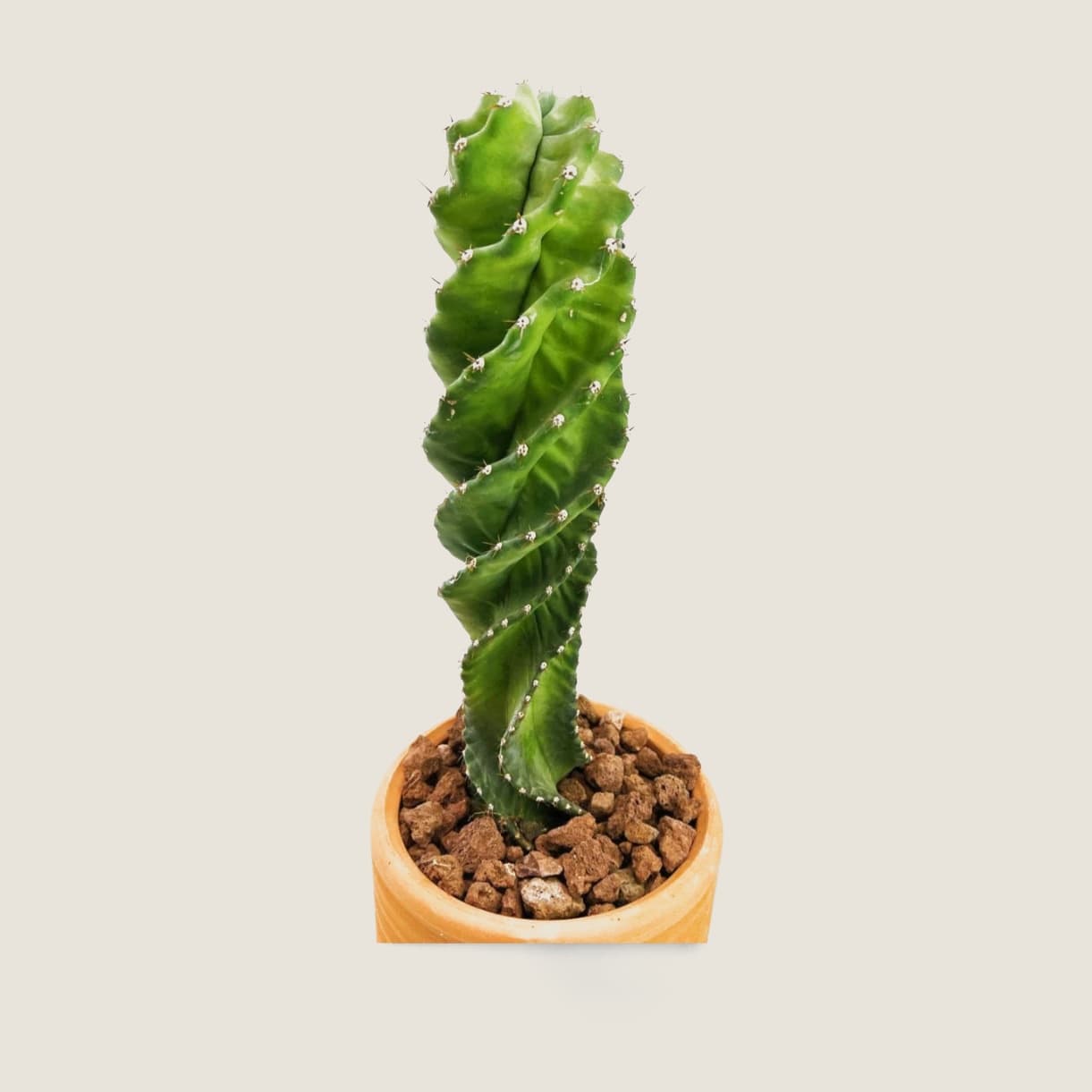
Cereus forbesii f. spiralis is the form whose ribs twist in a helix around the stem. Two things are worth knowing before buying: the twist becomes more pronounced with age and good light, and not every plant spirals to the same degree. It rewards patience.
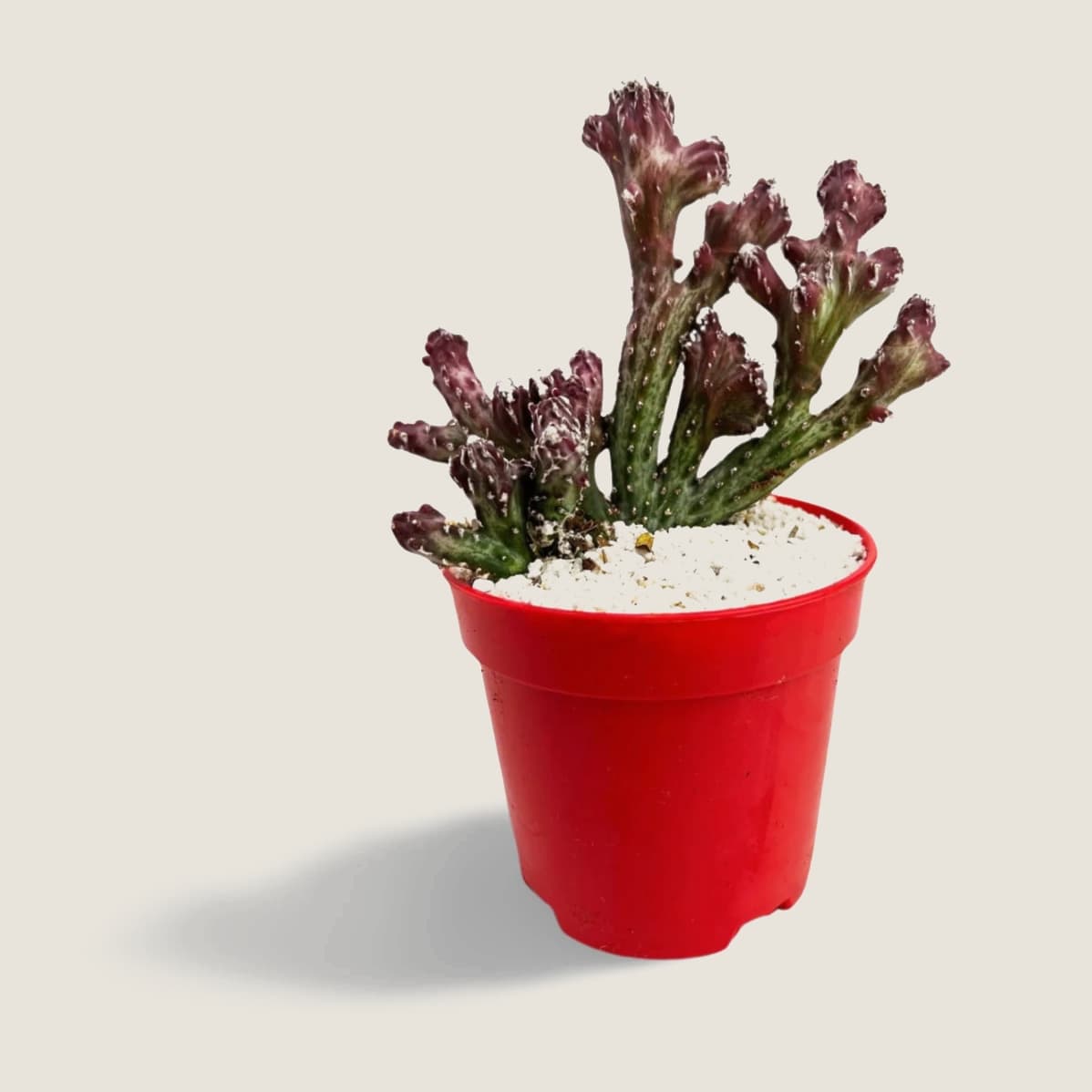
The crested Cereus spegazzinii is a different case altogether. Cresting is not a species or a variety but the result of fasciation — the growing point turns from a dot into a line, producing a fan of undulating tissue unique to each plant. Crests grow more slowly and are a little fussier about water than normal-form plants.
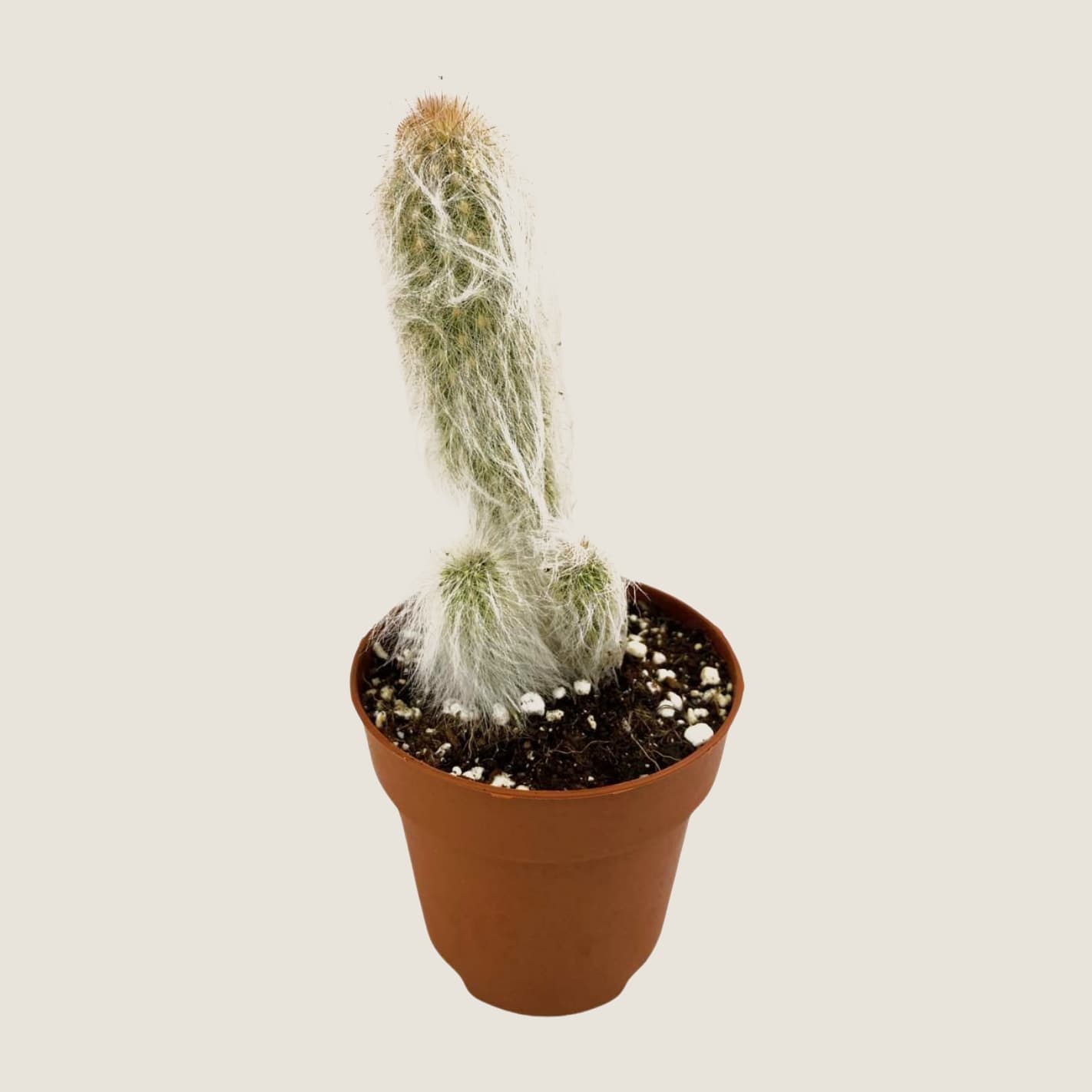
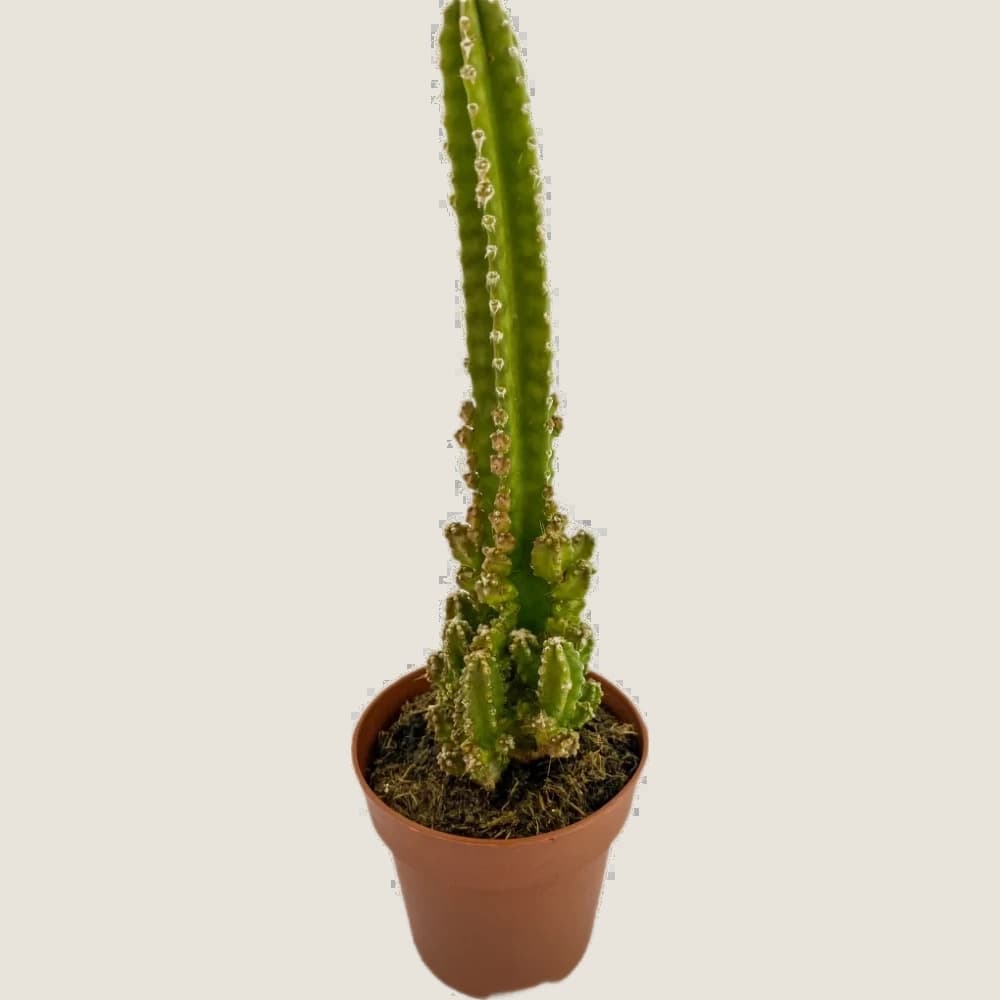
The plant sold as Cereus tetragonus, the fairy castle cactus with branching four-angled stems, is botanically Acanthocereus tetragonus; the trade name has stuck, which is why you will find it in this section. Alongside them we also list a Cephalocereus, a neighbouring genus from central Mexico, likewise columnar with nocturnal pink flowers on mature plants and slightly more cold-sensitive — keep it above 8 °C.
How to grow them
- Light: full direct sun. The more light, the tighter the growth and the stronger the blue on the epidermis.
- Water: sparingly in summer, only once the compost is bone dry, and none at all in winter. The dry winter rest is not optional; it is what keeps the plant alive.
- Compost: gritty and free-draining, in a heavy pot — terracotta for preference. A mature Cereus is top-heavy and will tip a light plastic pot over.
- Cold: they take a degree of cold if completely dry, but keep them above 5 °C to be safe. A frost-free greenhouse or a cool, bright room is ideal.
Where people go wrong
Winter watering kills more Cereus than anything else. The plant is dormant, uses no water, and the roots rot from below with no visible warning until it is too late. The second mistake is moving a cactus straight from a windowsill into full July sun: scorch leaves permanent white scars, so acclimatise over two or three weeks in partial shade. The third is mistaking basal corking for disease — as a Cereus matures the lower stem turns brown and woody, and that is entirely normal. The fourth is underestimating the size: they gain height and weight fast and want repotting every two or three years. Check deep in the rib grooves too, where mealybug likes to hide.
The Cereus we stock
- Cereus azul — the classic thick, glaucous blue column.
- Cereus forbesii f. spiralis — spiralled ribs, a genuine collector plant.
- Cereus spegazzinii cristate — a fasciated fan, no two alike.
- Cereus tetragonus — the fairy castle cactus, branching and four-angled.
- Cephalocereus — Mexican columnar species, a little more demanding on warmth.
All of them ship from Almería in packaging designed to protect spines and roots in transit.