Mammillaria
Mammillaria is one of the largest genera in the Cactaceae: depending on the author, between 150 and 200 species are accepted, though more than three hundred names have been published over two centuries. Its centre of diversity is Mexico, home to the great majority, with a few species reaching the south-western United States, the Caribbean and northern South America. The name comes from the Latin mamilla, little nipple, after the tubercles covering the body.
3 plants in Mammillaria
How to recognise them
What separates them from other globular cacti is that they have no ribs: the stem is covered instead in separate tubercles arranged in intersecting spirals that follow the Fibonacci series. The areole is also split in two: the apical part produces the spines, the axil between the tubercles produces flowers, wool and sometimes bristles. That is why the flowers do not emerge from the apex but in a ring around it, forming the characteristic crown. Flowering is followed by elongated red fruits like tiny chillies, which stay on the plant for months and are nearly as decorative as the flowers themselves.
The species we stock
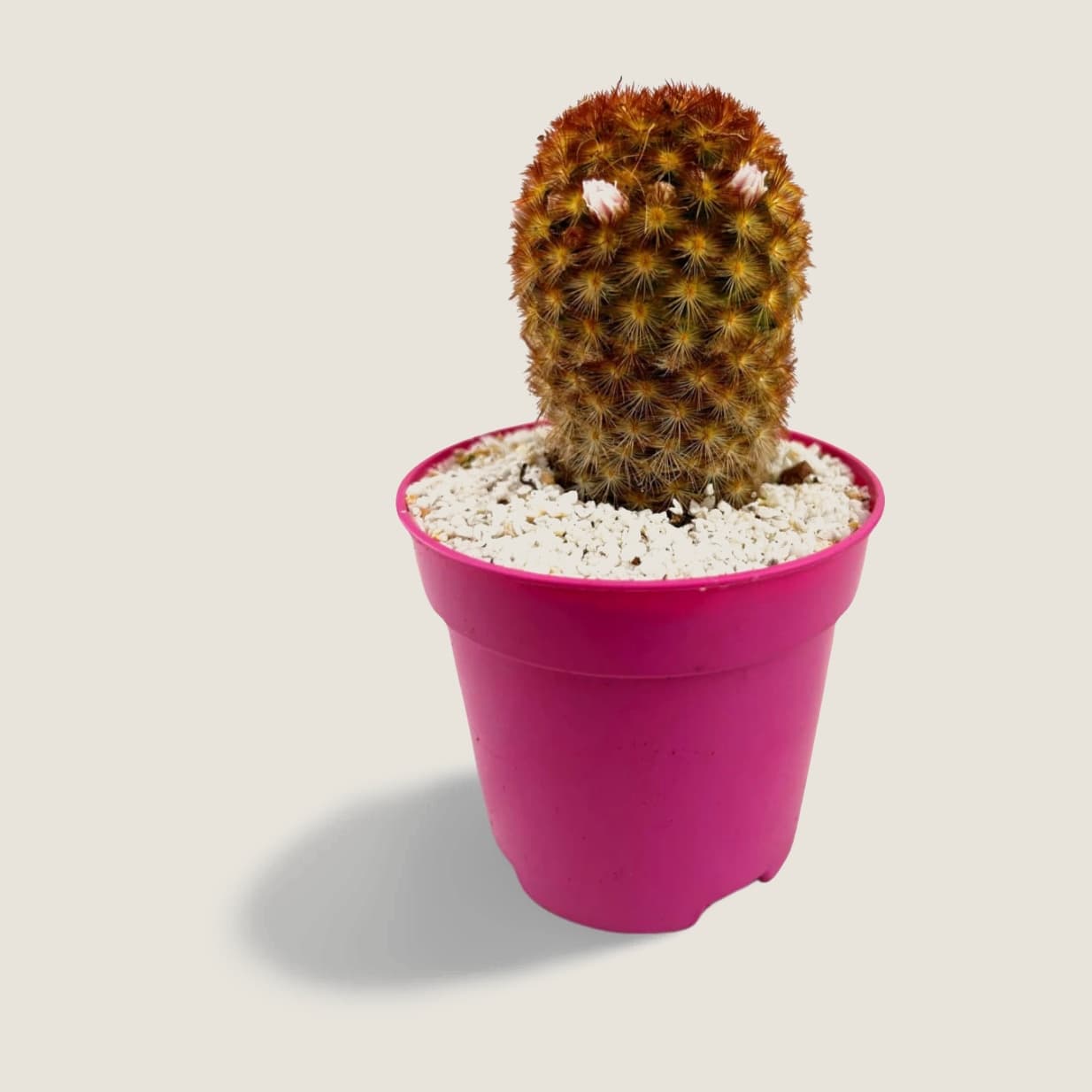
- Mammillaria carmenae var. rubrispina: endemic to Tamaulipas, discovered in the 1950s and now extremely rare in habitat although widespread in cultivation. A globular body covered in very fine, numerous radial spines arranged like a comb, reddish or orange in this variety rather than white. Cream-white flowers with a pink midstripe. It clusters densely with age.
- Mammillaria gracilis, now treated as M. vetula subsp. gracilis: the thimble cactus. Small cylindrical stems covered in white spines, which detach at the slightest touch and root wherever they land, so it forms colonies quickly. Yellowish-white flowers. One of the best cacti to start with.
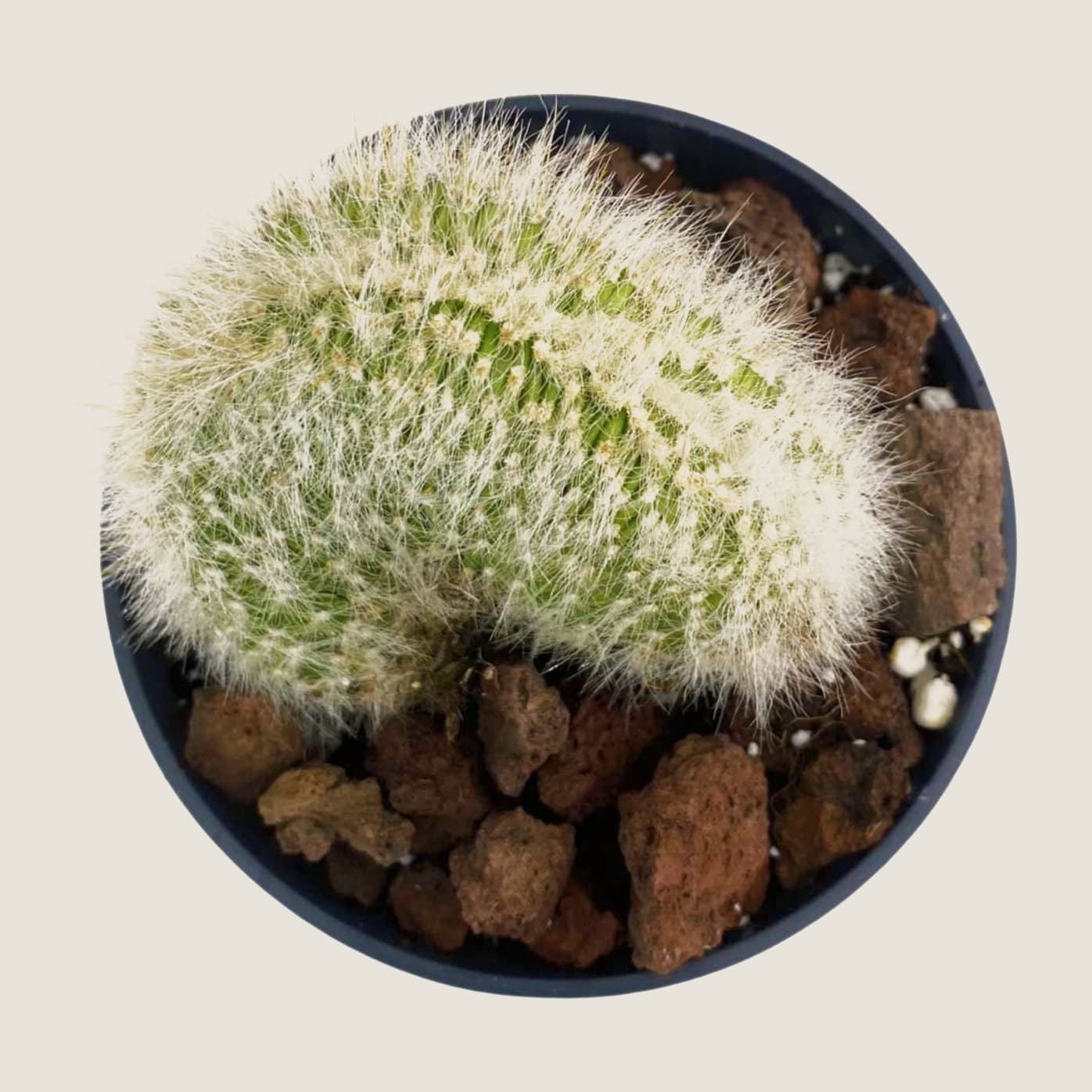
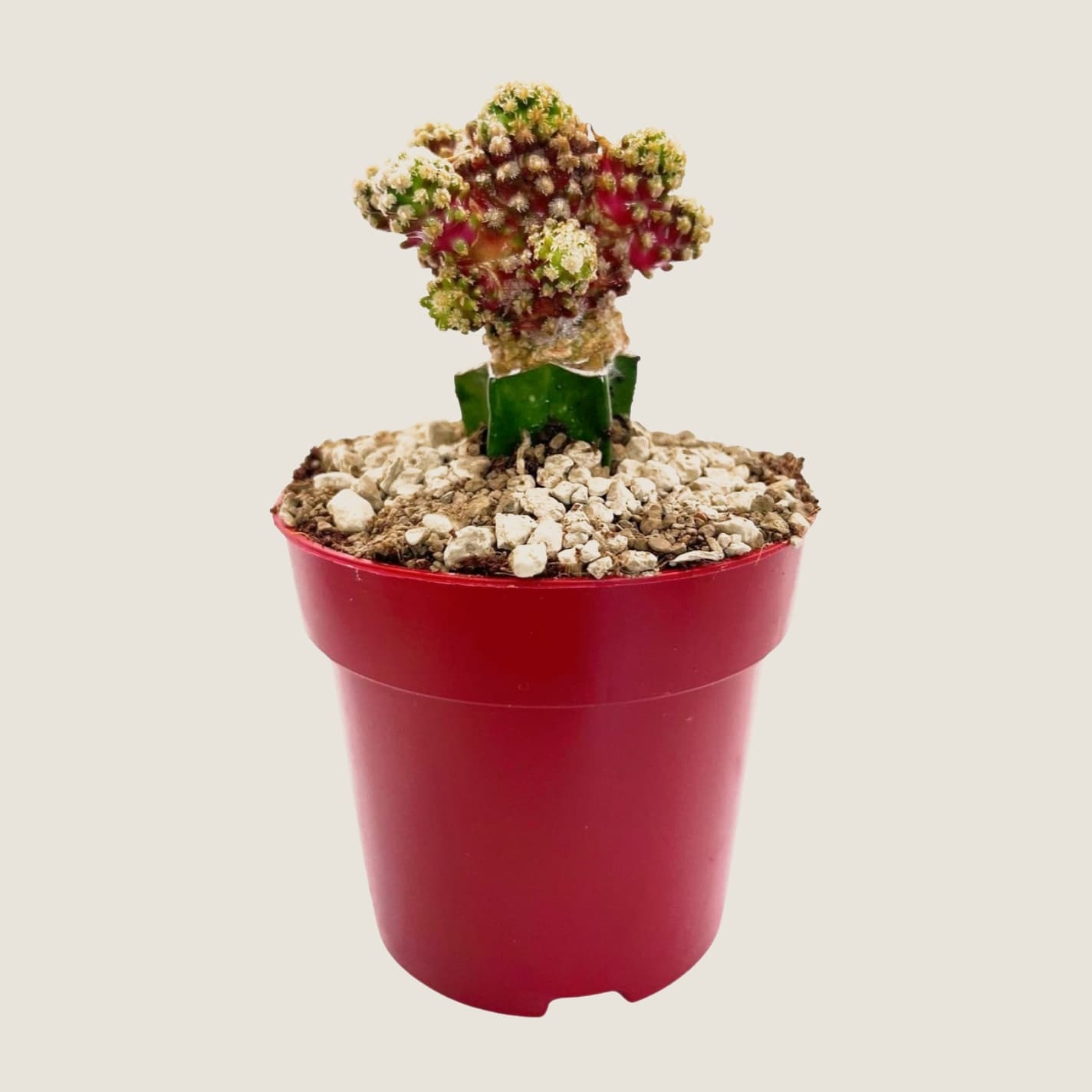
- Mammillaria geminispina crestada: the crested form of a central Mexican species named for its paired white central spines (geminispina, twin-spined), on a body clothed in white wool. The crest results from fasciation of the apical meristem: instead of growing from a point, the plant grows along a line and forms undulating fans. It is a stable abnormality propagated by cutting or grafting, never from seed, so every crested plant has a shape of its own.
Care
Light. Full sun, always with gradual acclimatisation if the plant has been indoors. Heavily spined or woolly species such as geminispina shade themselves; barer-bodied plants appreciate some midday filtering in high summer.
Water. Generous but well spaced from March to September: soak, then let the compost dry out completely before the next watering. From October, reduce; from November to February, stop altogether. That dry, cool rest at 5-10 °C is not optional — it is what triggers the spring flowering. A Mammillaria kept watered and warm all winter survives but does not flower, and winter watering is the commonest cause of basal rot.
Compost and pot. A very free-draining mineral mix in a pot matched to the plant; oversized pots hold moisture around roots that do not want it. Feed with a low-nitrogen, high-potassium fertiliser a couple of times between spring and summer.
Cold. Protect below 5 °C. Many species take 0 °C if the compost is bone dry — it is winter damp that kills them, not the temperature.
Common mistakes
- Watering in winter. The cactus goes soft at the base, and by the time you notice, the roots are gone.
- Wetting the wool when watering: it holds moisture, stains and invites fungus. Water the compost, not the plant.
- Insufficient light: growth stretches, the apex narrows and the body stays pale and permanently distorted.
- Not checking for mealybug, which hides between the tubercles and on the roots. It is the number one pest of the genus.
What we have in stock
We offer Mammillaria carmenae var. rubrispina, Mammillaria gracilis and a crested Mammillaria geminispina, each plant chosen individually and shipped from Almería across Europe in packaging that protects spines and roots in transit. They stay a manageable size, flower young and flower reliably, and they are probably the best genus to begin a collection with: forgiving, happy to be neglected, and crowned with flowers every spring provided you respect the dry winter.