Adenium
Buying an Adenium obesum — the desert rose — means taking home a plant with a bonsai trunk and trumpet flowers, grown in full sun at our nursery in Almería. We ship across Europe in protective packaging, and the specimen in the photo is the one you receive.
3 plants in Adenium
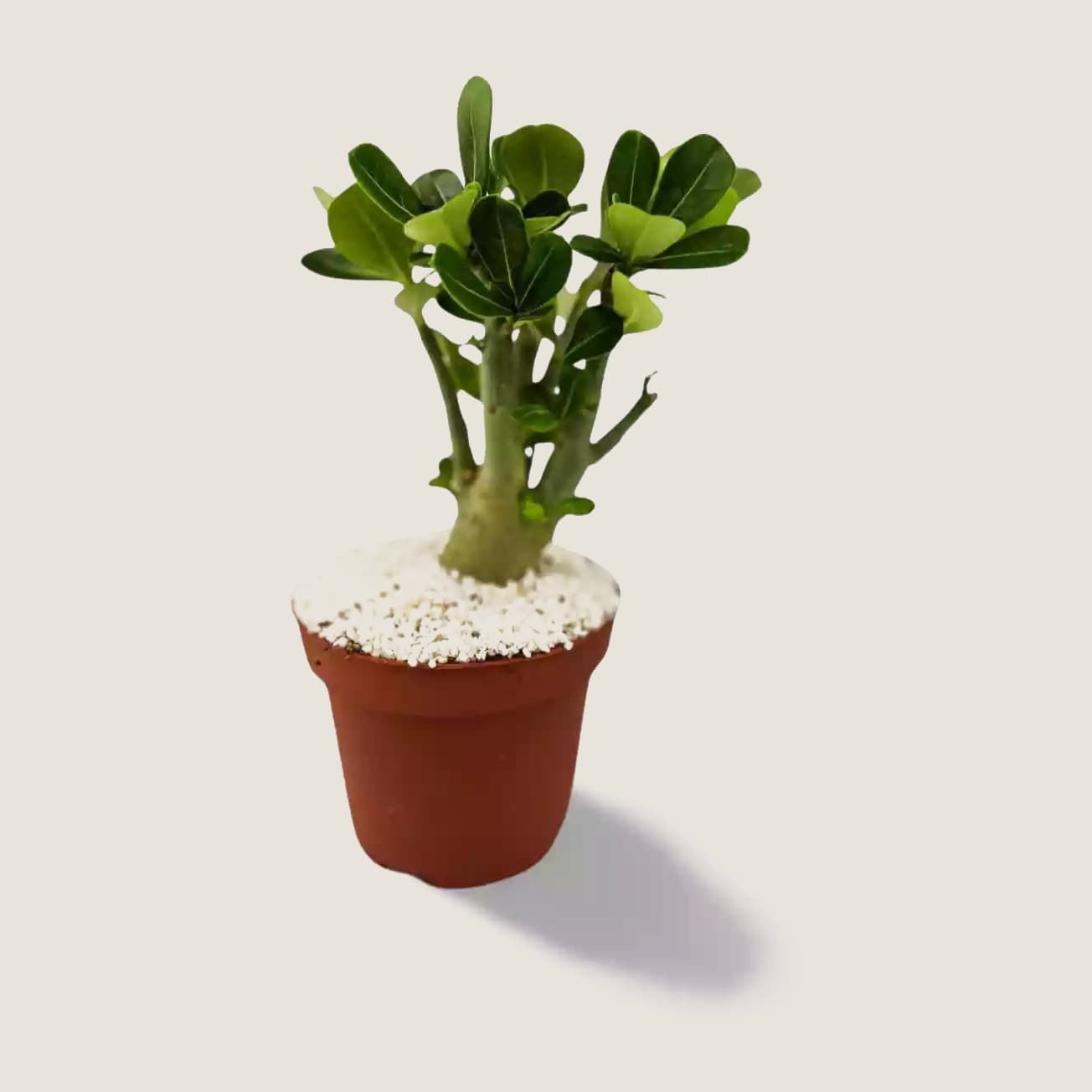
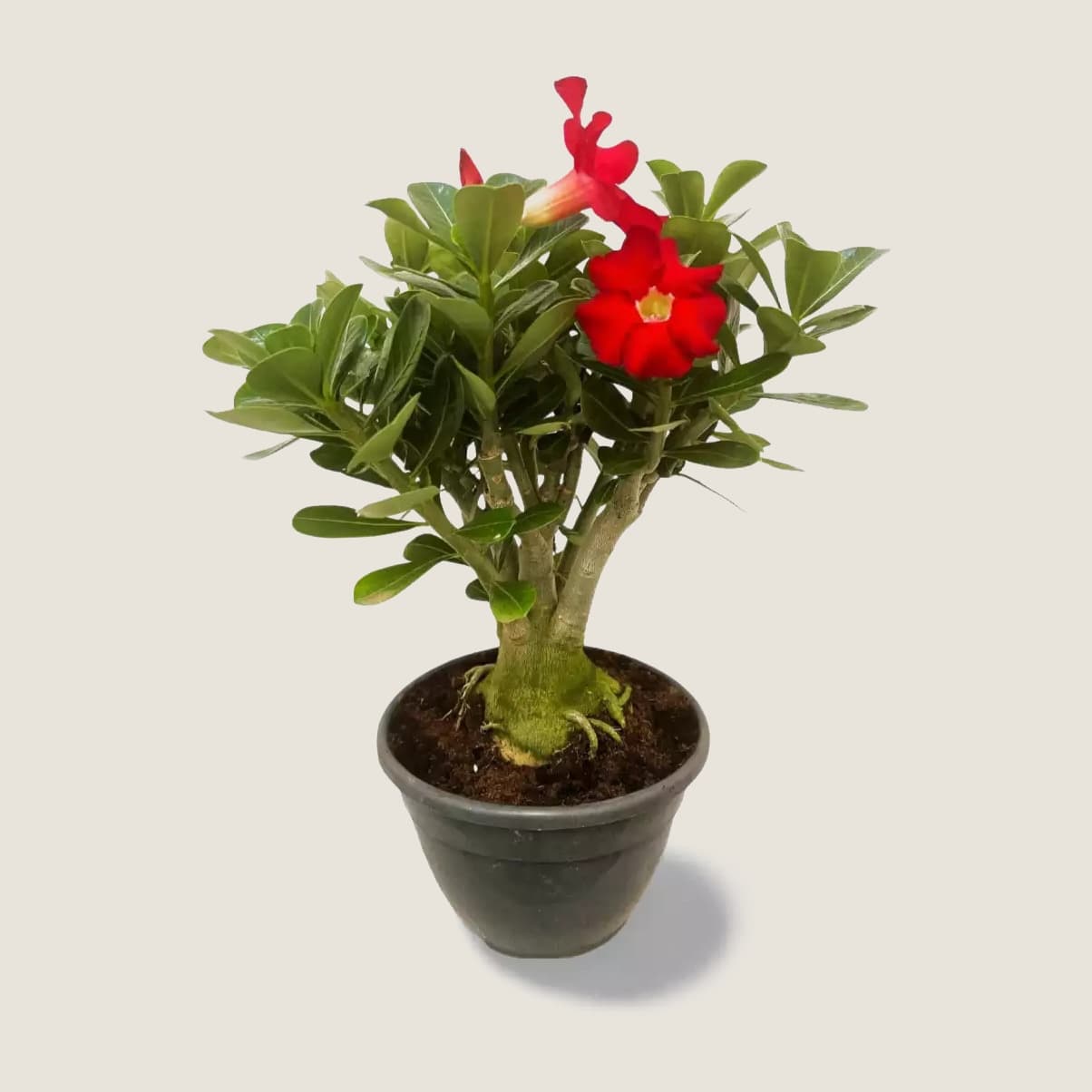
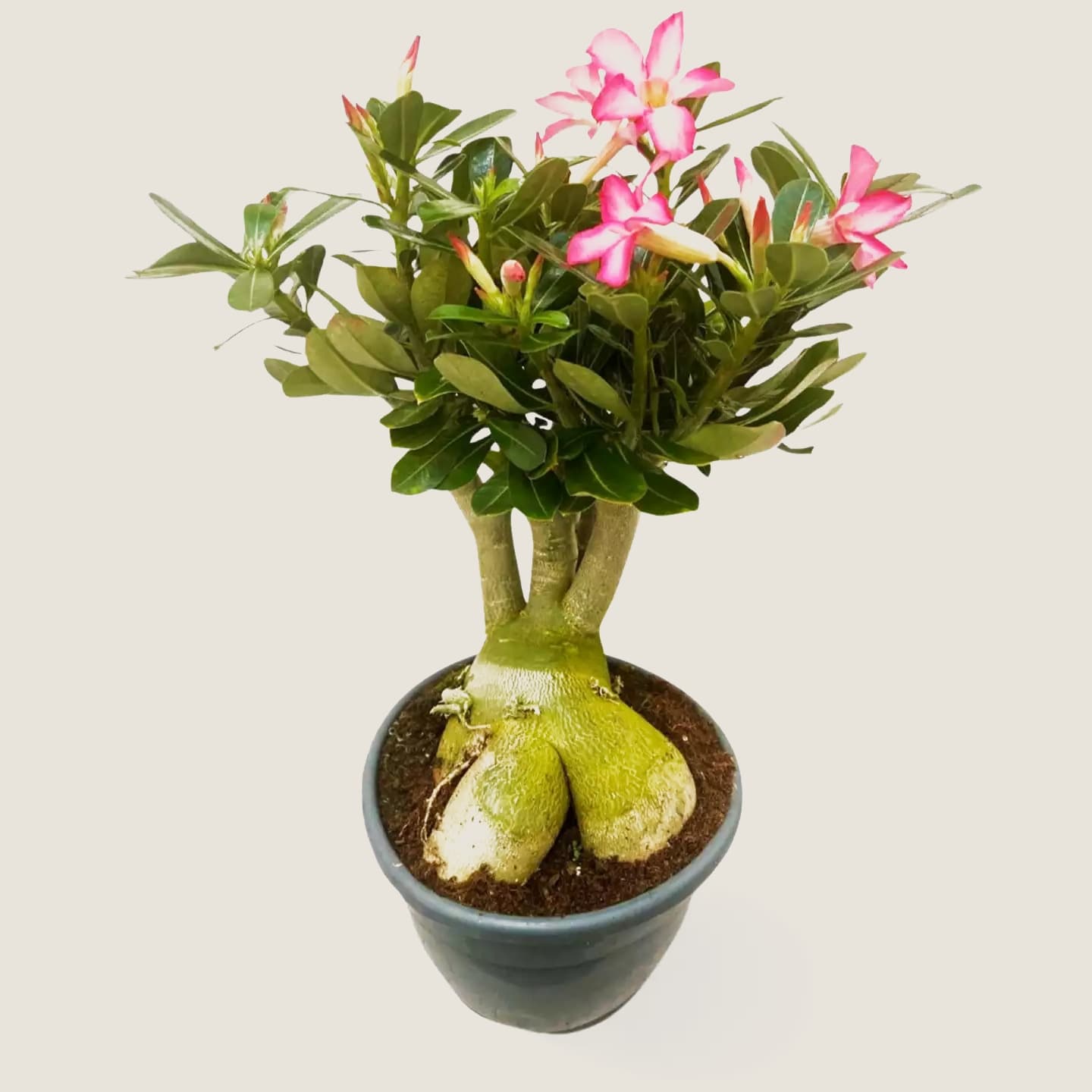
The caudex is what the plant is about
The first thing to look at on an adenium is not the flower, it is the base of the trunk. That woody, bottle-shaped swelling is called the caudex, and it is a water tank: it is what lets the plant spend half its life without rain in the savannah of East Africa and the Arabian Peninsula.
The caudex is not pruned into shape, it forms on its own over years. A specimen with a thick base has a long time behind it, and that is where the difference in price comes from. It grows outwards, so it prefers a wide, shallow pot to a deep one.
It drops its leaves in winter and it is not dead
As temperatures fall, the adenium sheds every leaf and stands as a bare trunk until the following spring. That is its normal rest, exactly like a deciduous tree, and it means nothing is wrong.
It is also when most people kill it: the bare plant reads as thirst, it gets watered, and the caudex — full of water and dormant — rots from the inside. No leaves, no water. Full stop.
Cold is what kills it, not drought
It belongs to the oleander family, not to the cacti, and it comes from a dry tropical climate. Below 12 °C it needs to come under cover, and below 10 °C it starts taking damage you will not see until the following spring. It handles weeks of drought without blinking; one frosty night, it does not.
On the Mediterranean coast it can winter outside in a sheltered spot, kept dry. Inland, bring it indoors next to the brightest window you have.
In the heat it drinks more than you think
This is where it differs from almost everything else in the shop. An adenium in full leaf and in heat wants real water: water generously once the substrate is dry, which at the height of summer can be twice a week. Treating it like a cactus in June leaves it stunted and flowerless.
The rest is the usual: sharply draining substrate, a pot with a hole, and no water left in the saucer. The whole rule is easy to remember — in leaf, generous; bare, nothing.
It is genuinely toxic, and worth knowing about
Its latex contains cardiac glycosides, of the same kind found in foxglove, and in the Sahel it has been used for centuries to poison arrow tips. This is not label boilerplate: it is a plant to handle with sense.
In practice it is enough to wash your hands after pruning, keep your fingers away from your eyes and keep it out of reach of children and pets. Neither contact with unbroken skin nor simply having it in the house poses any problem.
Seed or cutting: why it matters
An adenium grown from seed develops a caudex; one grown from a cutting never will, however long it lives. It roots well and it flowers, but it keeps the straight shrubby stem and will never have the swollen base, which is exactly what people want from this plant.
It is the first question to ask when buying one, and the reason specimens with a good caudex cost what they cost.
The mistakes that kill the most adeniums
- Watering it in winter, while it is bare. By a wide margin the number one cause.
- Leaving it out in a frost. A single night can be enough.
- Treating it like a cactus in summer. In growth it asks for considerably more water.
- A deep pot. The caudex grows outwards and the bottom stays wet.
- Buying a cutting and expecting a caudex. It is not going to happen.
See also the succulents and cacti in the catalogue, each with its own growing guide.