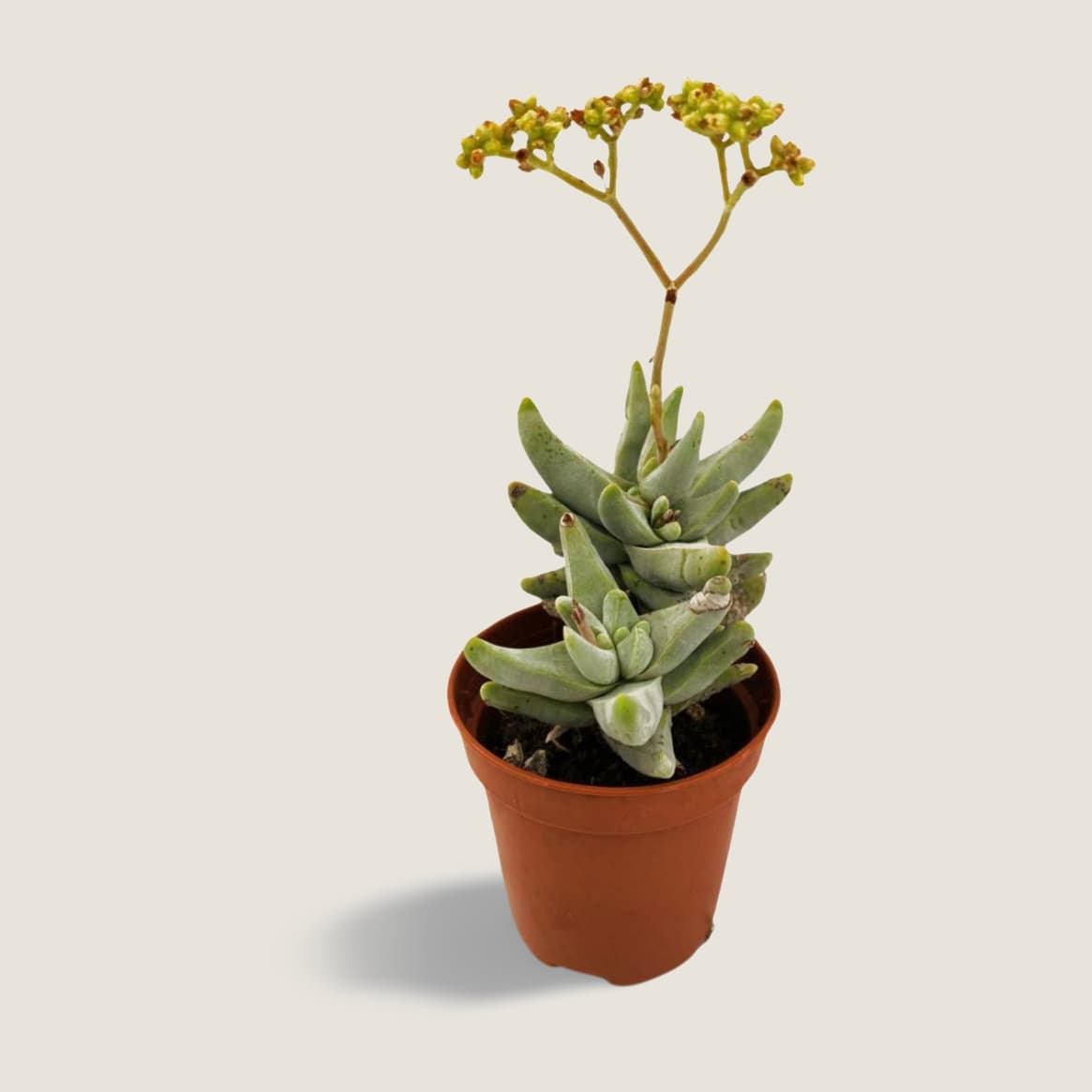
Crassula Cornuta
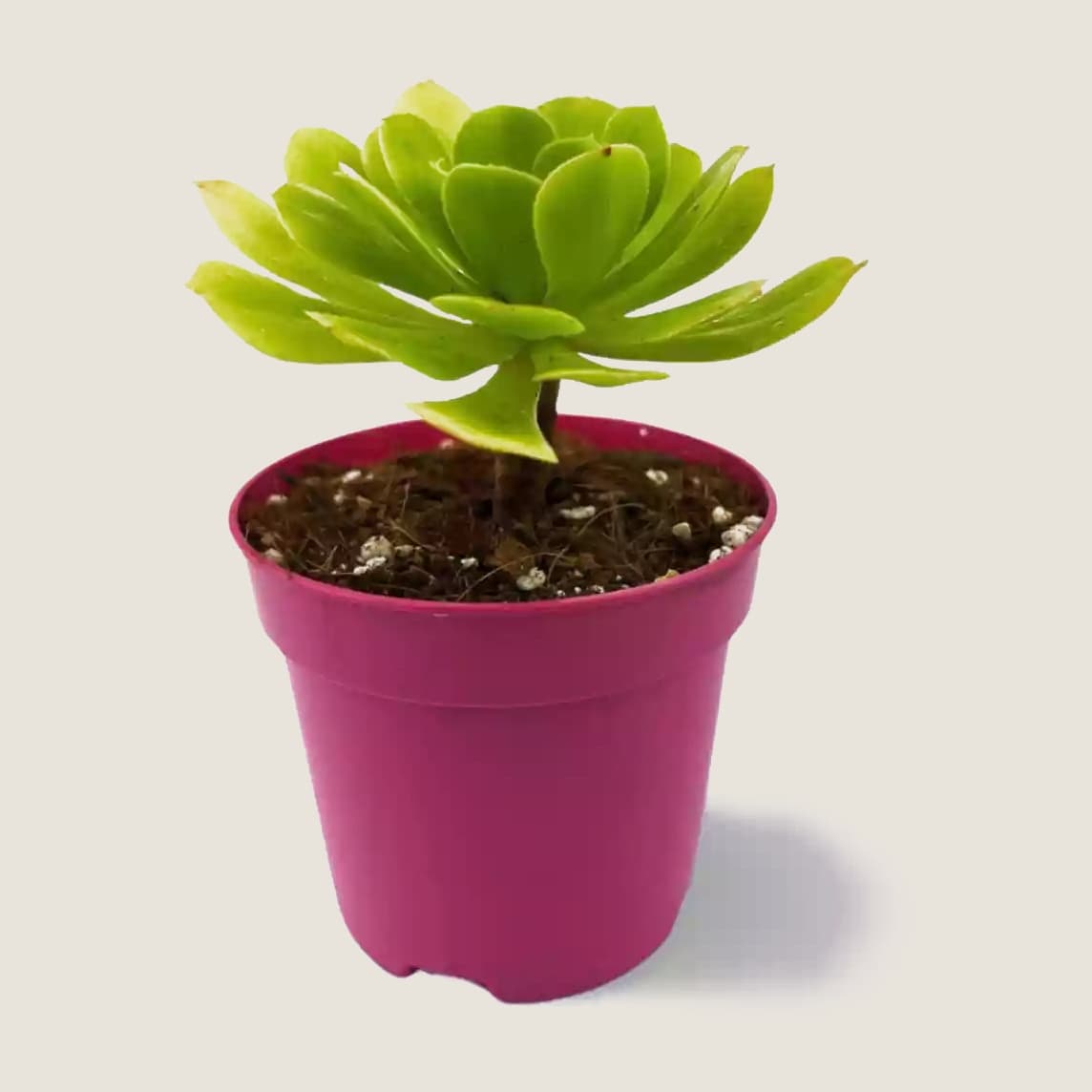
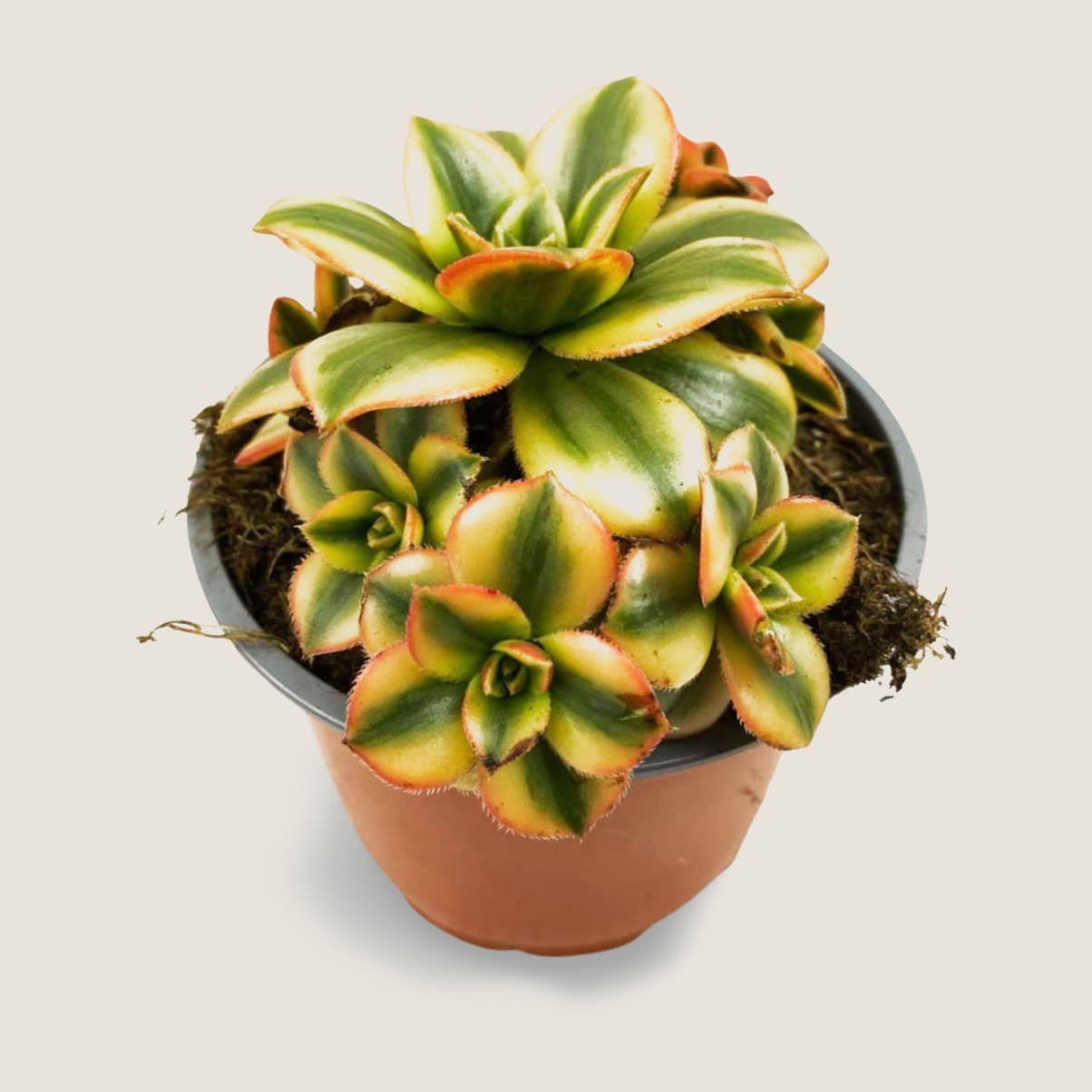
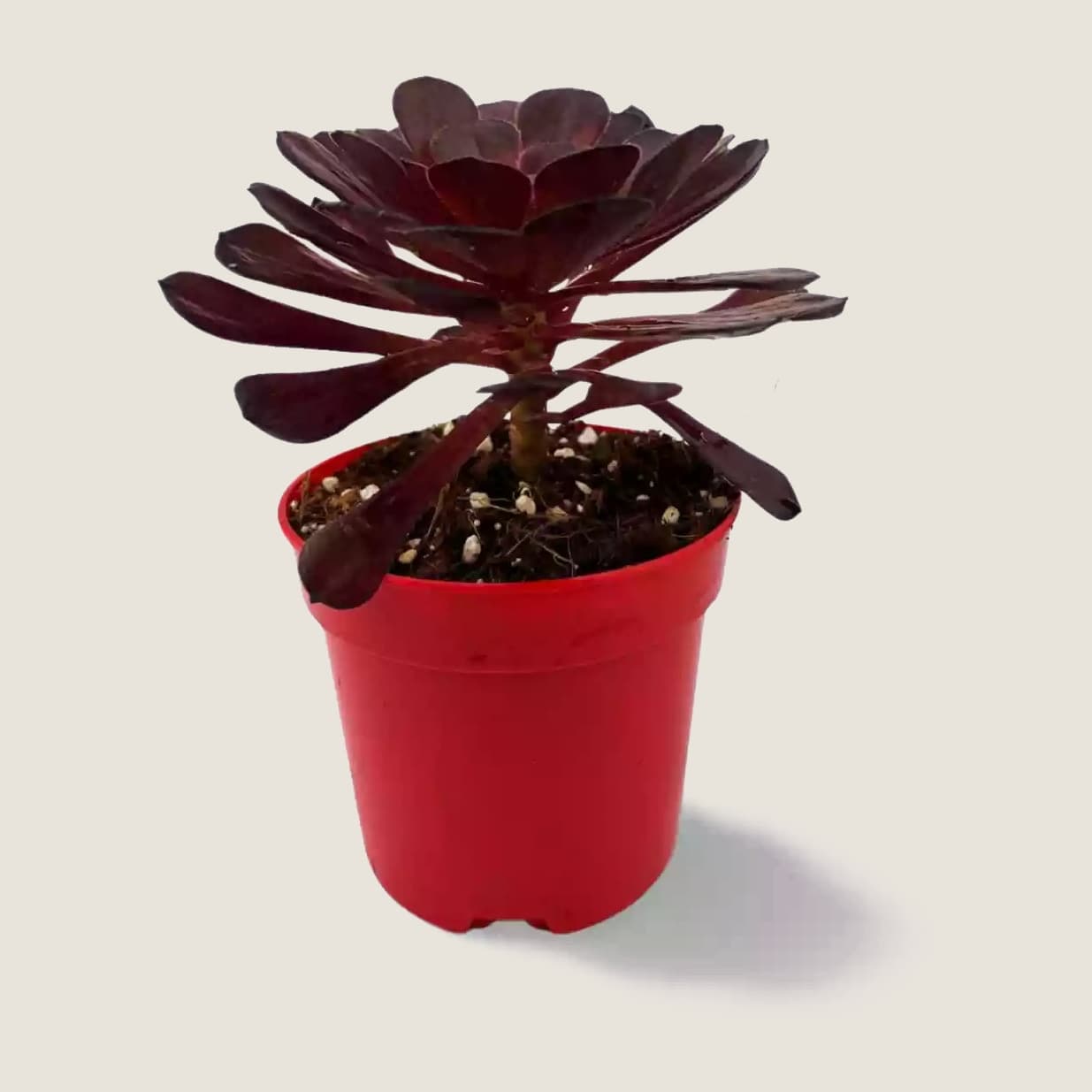
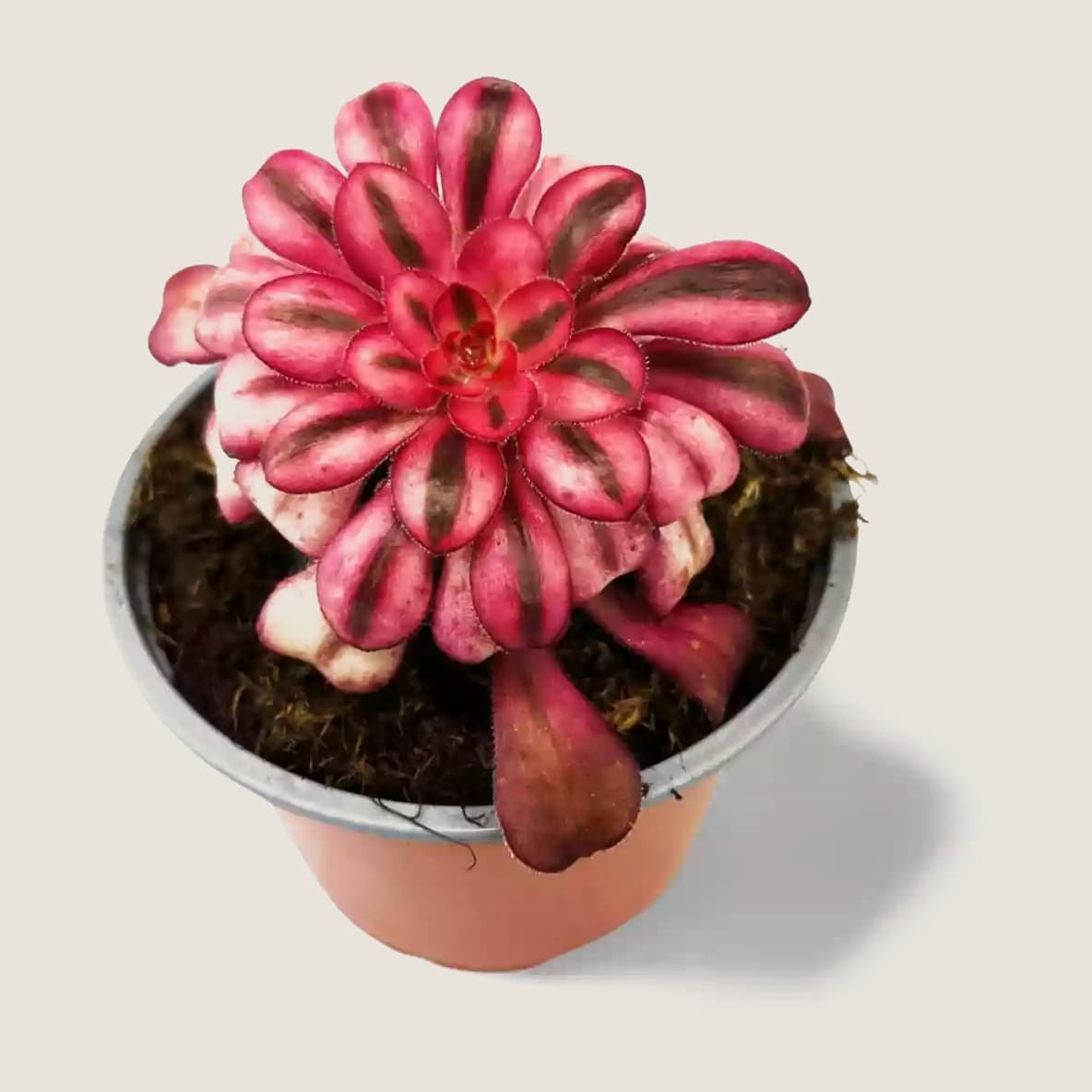
CrassulaceaeCrassula Cornuta · a succulent from the Crassulaceae family, with fleshy, opposite leaves forming geometric patterns. Grown in our nursery in the Almería desert in full sun, with minimal watering and 100% mineral soil—the plant in the photo is the one you will receive.
About Crassula Cornuta
Coming from mainly South Africa, also Madagascar, Crassula Cornuta is a succulent of the Crassulaceae family appreciated by collectors and enthusiasts. Its most distinctive feature is opposite fleshy leaves in columns or rosettes, a trait that makes it unmistakable even among advanced collectors.
Every specimen of Crassula Cornuta from Succulentae is grown outdoors in our Almería nursery, exposed to desert sun and controlled mineral watering. This produces stronger specimens, with intense coloration and compact form, ready to join your collection.
Botanical fact sheet
| Scientific name | Crassula Cornuta | |
| Family | Crassulaceae | |
| Origin | mainly South Africa, also Madagascar | |
| Natural habitat | arid and semi-arid zones | |
| Adult size | 5 cm to 3 m depending on species | |
| Flowering | small star-shaped white or pink flowers | |
| Propagation | leaf or stem cutting, very easy | |
| Toxicity | toxic if ingested |
Did you know?
Crassula ovata is known as the "Money Tree" or "Jade Tree" in Asian culture and is considered a symbol of prosperity and good luck.
Luz
Direct sun or very bright light
Riego
Moderate in spring-summer, sparse in winter; let it dry out between waterings
Sustrato
Very free-draining mineral substrate, specific for cacti and succulents
Temperatura
Protect below 5 °C