Crassula
Crassula is the genus that gives the whole Crassulaceae family its name. It contains around 200 species, the vast majority from southern Africa, with a strong centre in the Cape region and Namaqualand and a handful scattered across Madagascar and East Africa. It is probably the most morphologically varied succulent genus of all: it stretches from the jade plant everyone has seen on a windowsill to tiny stacked columns that look more engineered than grown. Like most succulents they run on CAM metabolism, opening their stomata at night to lose as little water as possible.
12 plants in Crassula
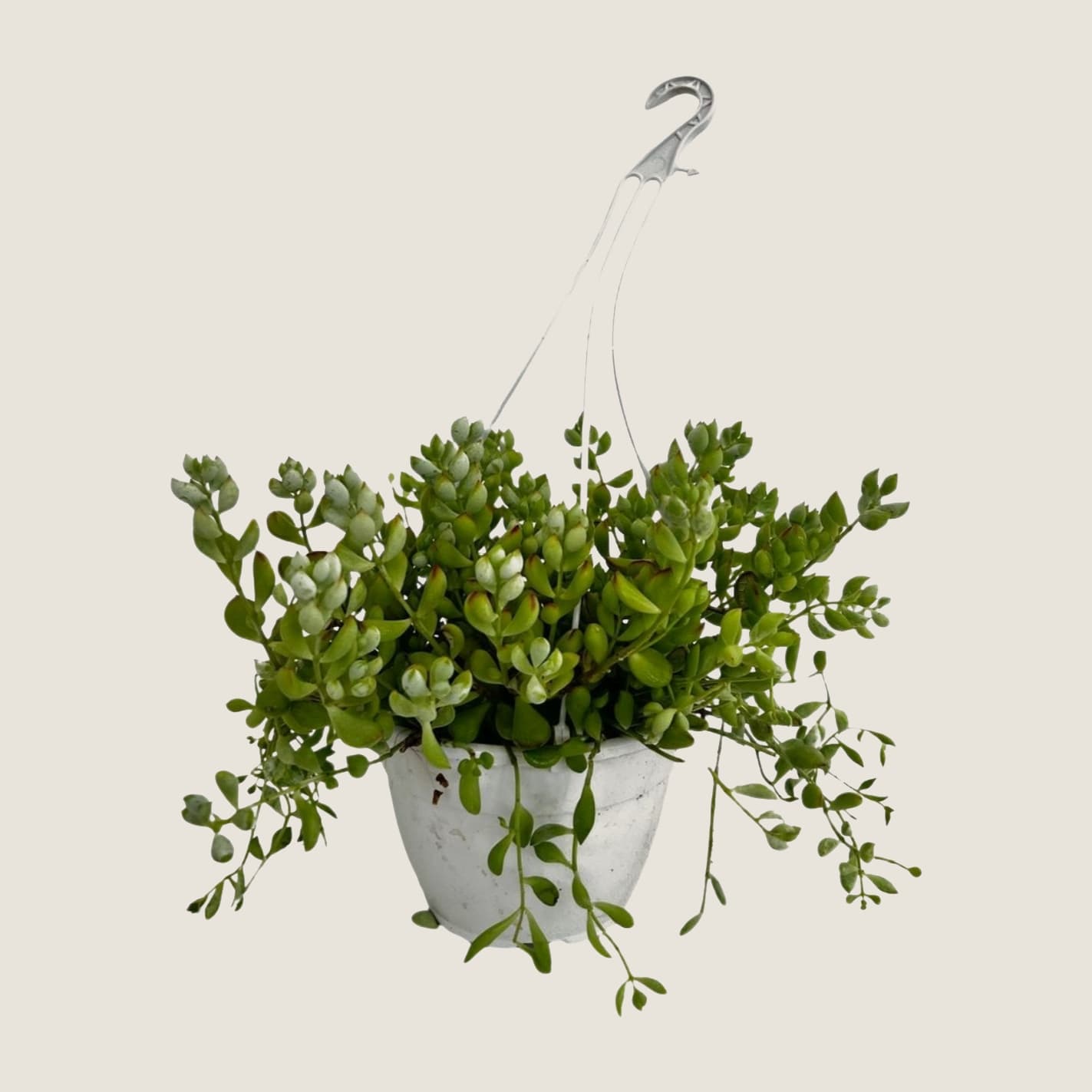
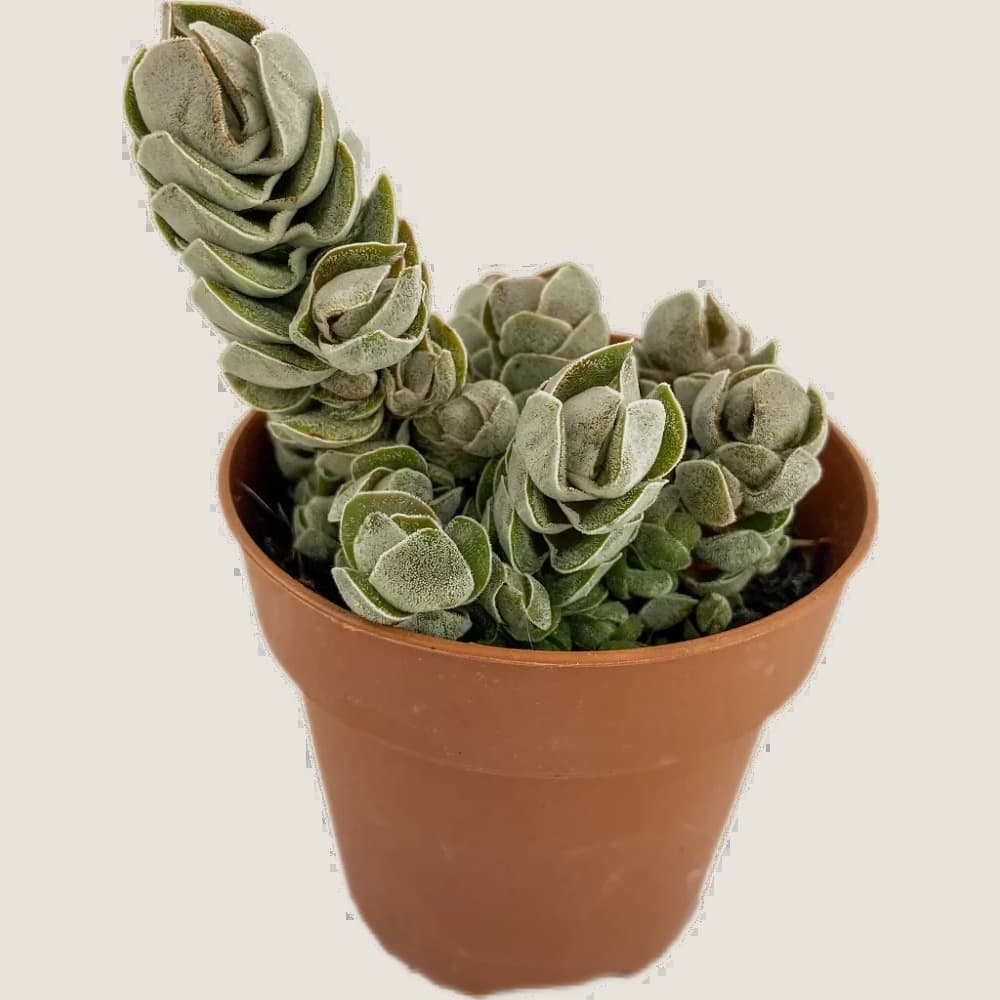
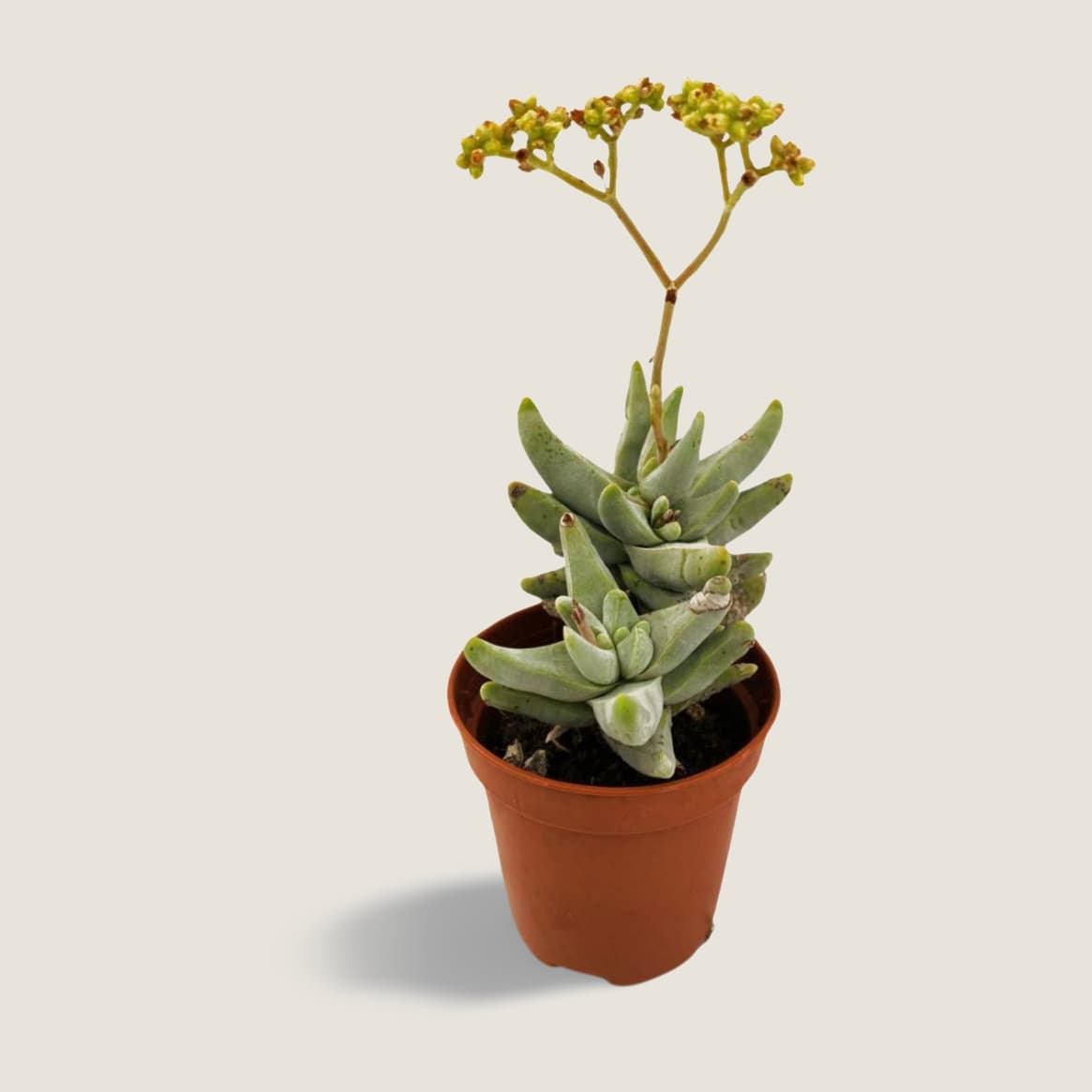
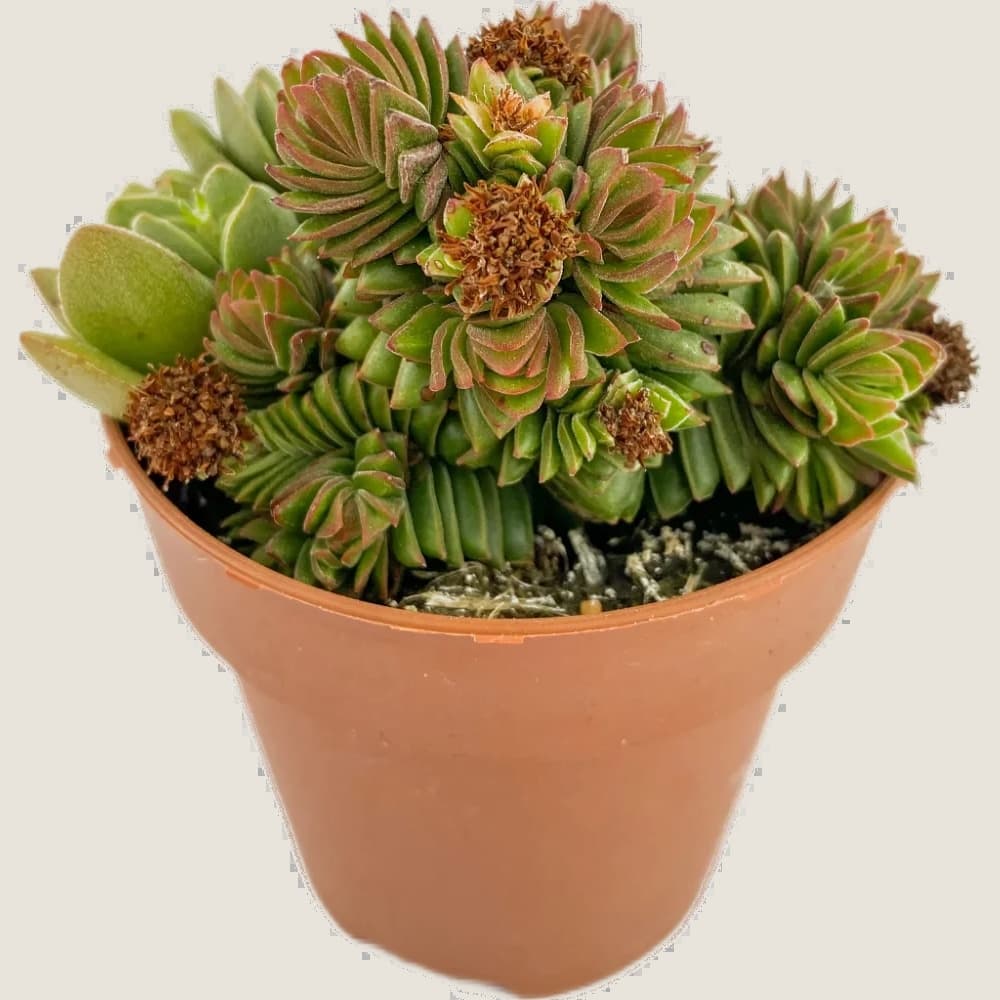
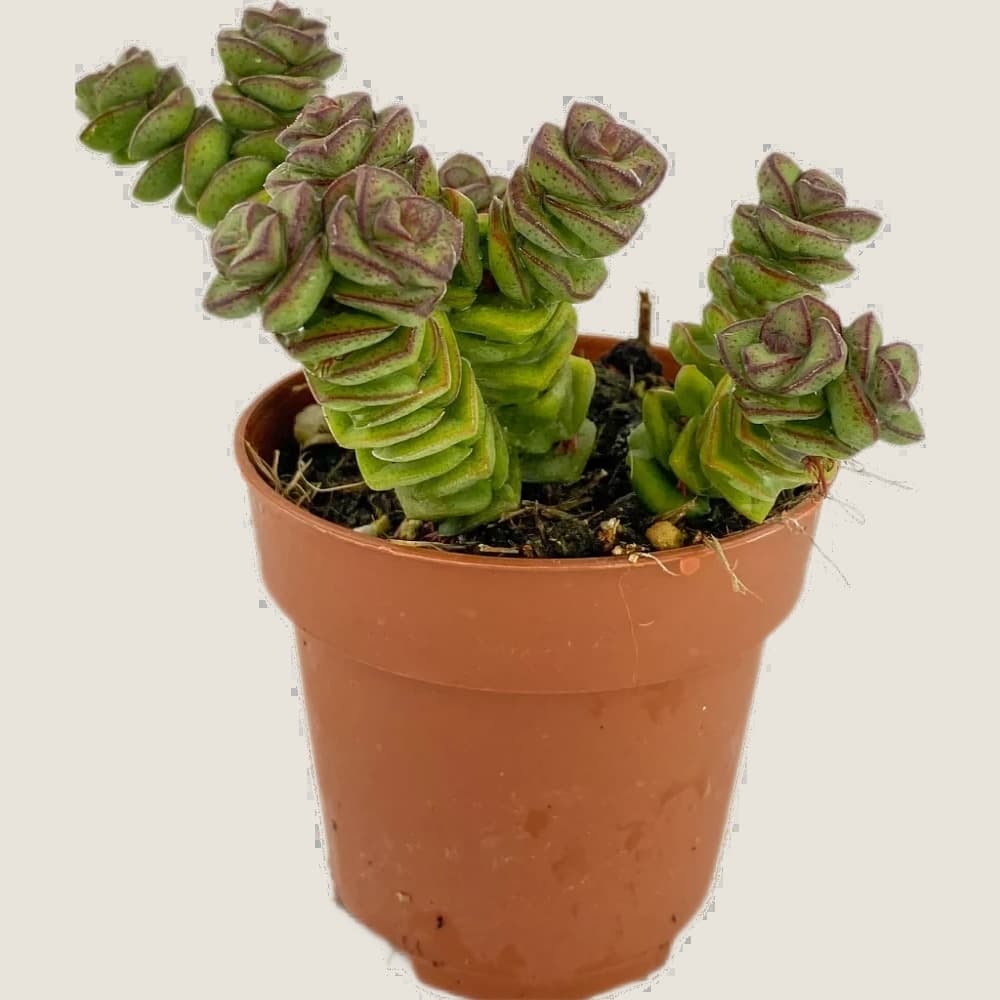
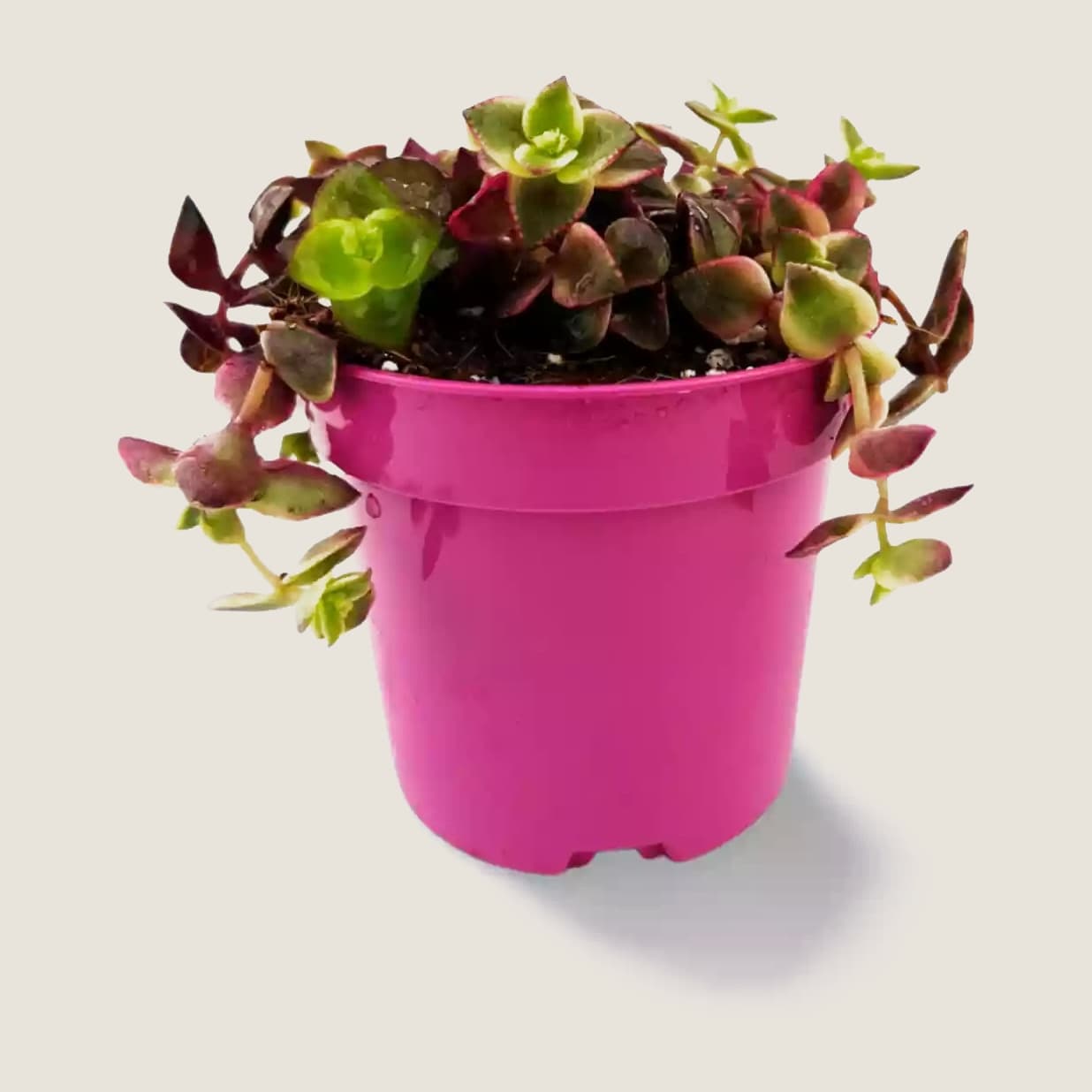
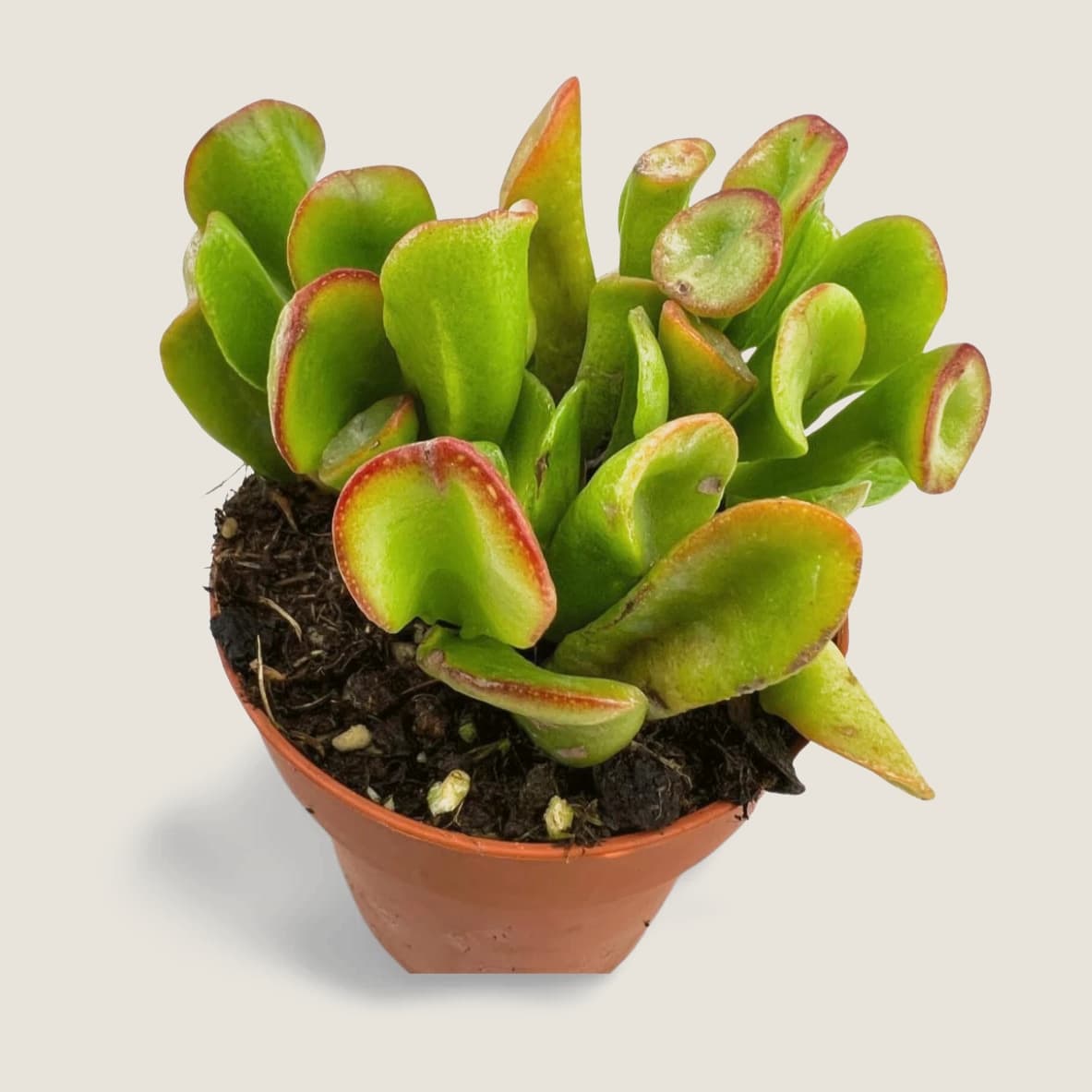
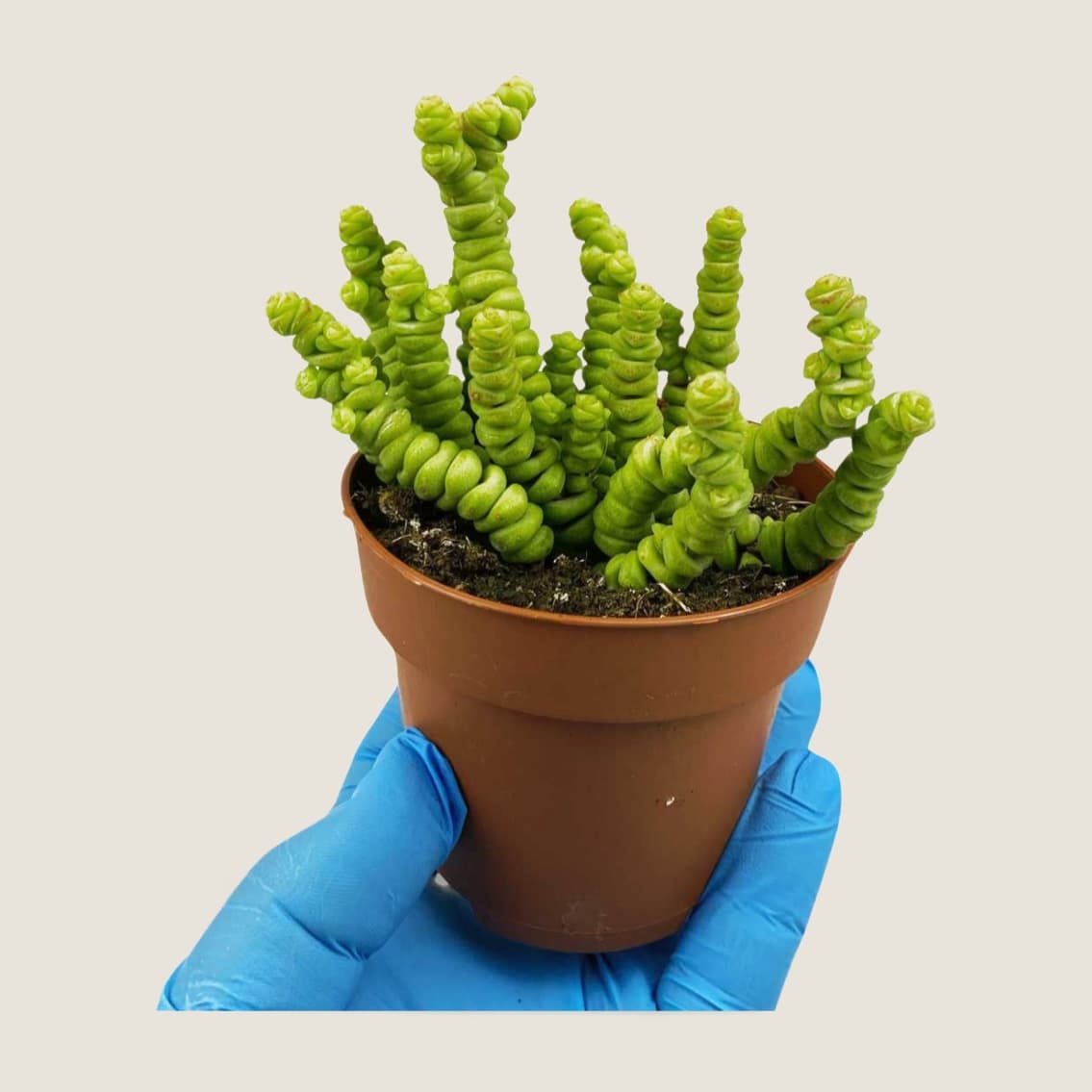
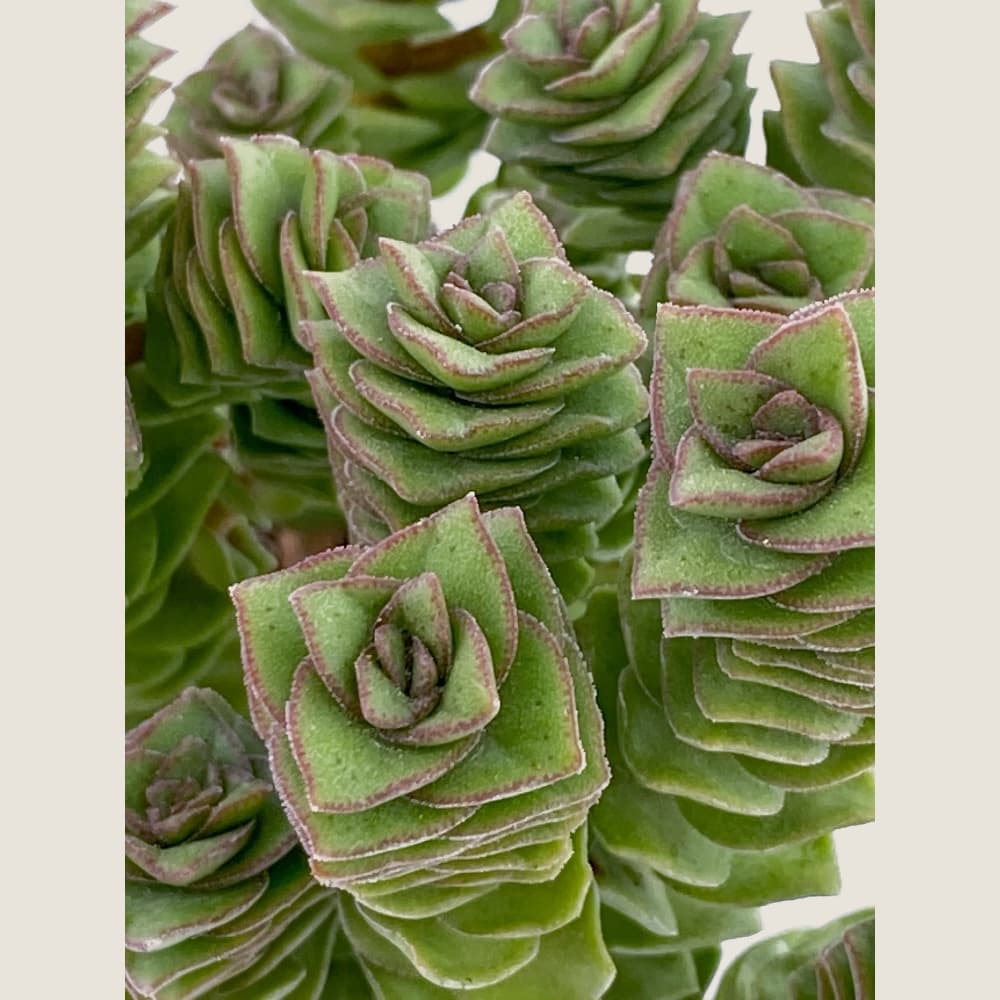
Telling our species apart. It helps to group them by habit, because care varies slightly. The jade-type shrubs include Crassula ovata ‘Gollum’, a mutation of the classic jade whose leaves roll into tubes ending in a concave suction cup; it is slow, long-lived and eventually builds a woody trunk. The stacked types carry their leaves in crossed pairs threaded along the stem: Crassula perforata is the best known, with triangular leaves that look pierced by the stem, and Crassula ‘Jade Necklace’ repeats the pattern in a fatter, more compact form. Crassula marginalis is grown as a hanging basket plant, with small heart-shaped leaves on fine trailing stems.
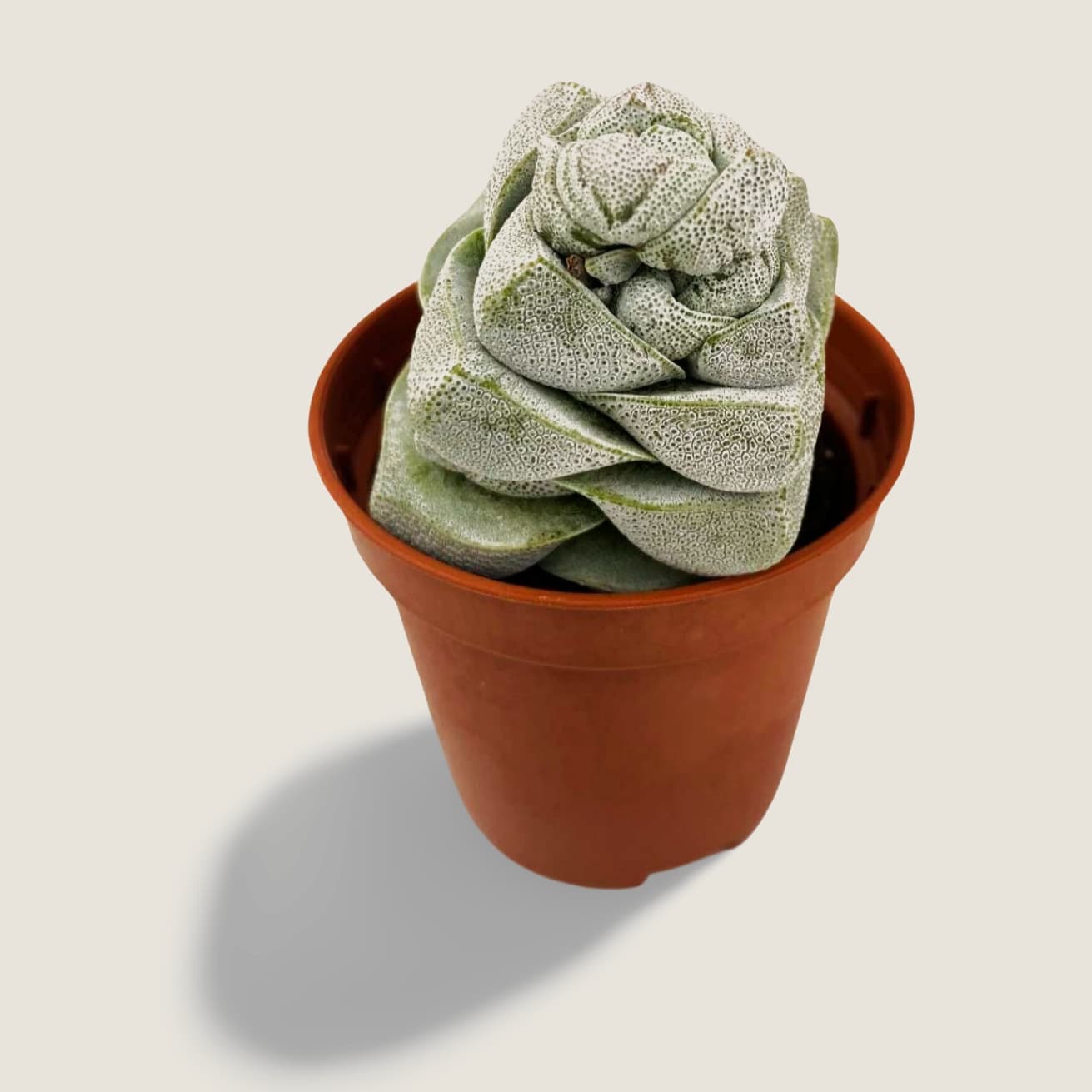
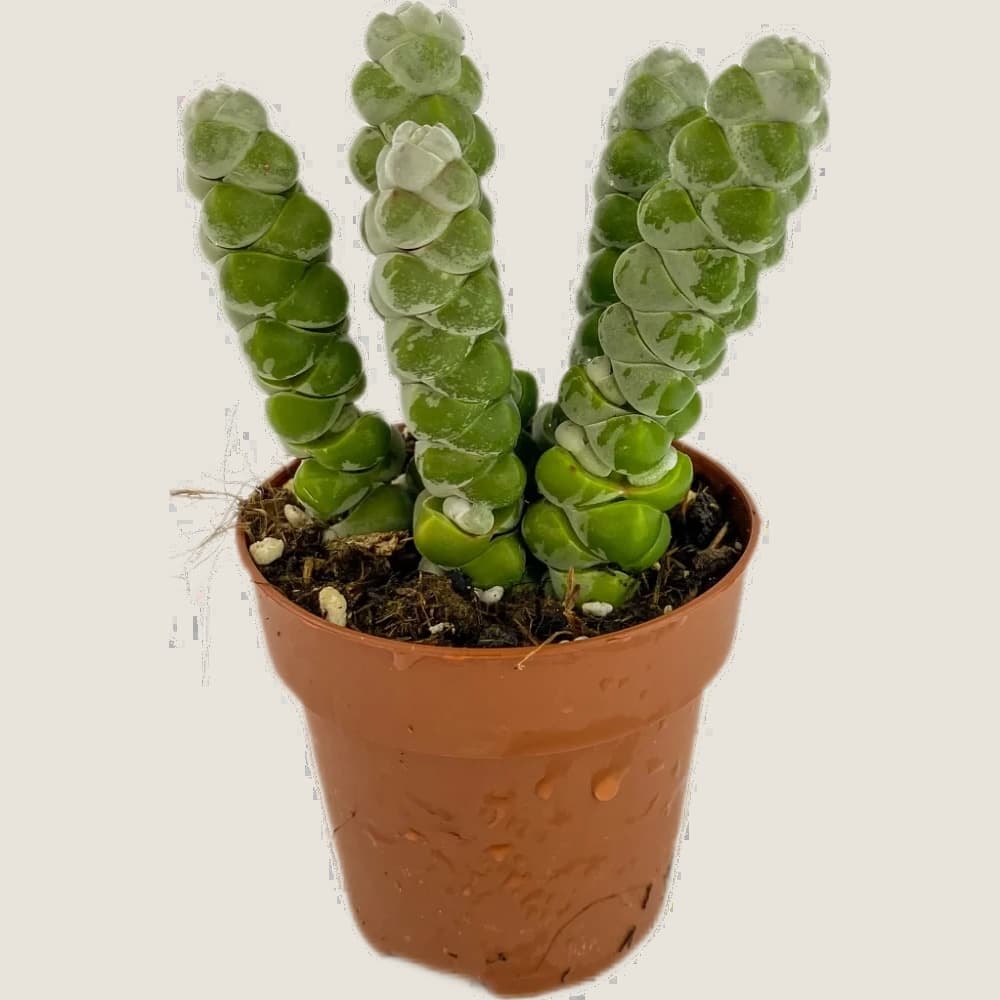
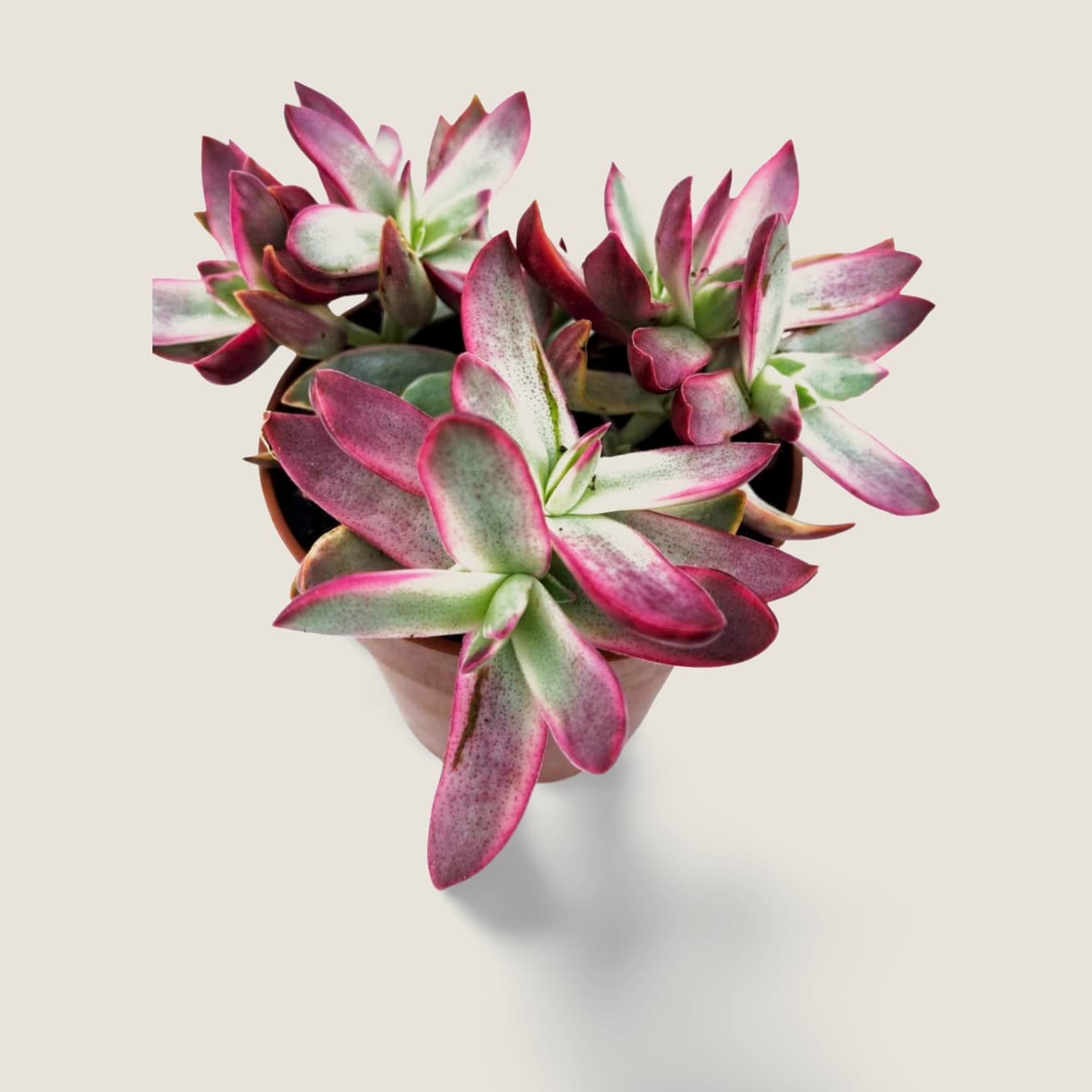
The most striking group is the compact columnar one. Crassula ‘Buddha’s Temple’ is a hybrid raised from C. perfoliata var. minor and C. pyramidalis, its leaves stacked so tightly that they form a square-sectioned column like a pagoda. Crassula deceptor, from Namaqualand, has leaves coated in a chalky white layer that gives it an almost mineral appearance, and Crassula ‘Moonglow’ is a hybrid along the same lines, velvety and very pale. Crassula cornuta plays with curved grey leaves. For colour, look to Crassula capitella ‘Campfire’, which turns from light green to blazing red with enough sun, Crassula rubricaulis ‘Candy Cane’ with its red-edged leaves, and Crassula ‘Estagnol’.
How to care for crassula. Light: direct sun or the brightest spot you have. Without enough of it the stems stretch, the leaves space out and the reds and whites disappear entirely; with sun, the same plants stay tight and colour up. Water moderately in spring and summer, sparingly in winter, always letting the mix dry out in between. One detail that is rarely mentioned: crassulas have fine, shallow roots, so they prefer wide, shallow pots to deep ones where the bottom of the compost stays wet for weeks. Use a gritty mineral mix. Keep them above 5 °C, and above all keep them dry when it is cold. In Britain and northern Europe that means a bright windowsill from October to April rather than an unheated porch.
Beginner mistakes. Watering a jade plant now and then through the winter, which is precisely when it should be left alone. Wetting the leaves of the farinose or velvety species such as deceptor and ‘Moonglow’: water leaves permanent marks and encourages fungal problems, so water at the base. Powdery mildew, that white dust on Crassula ovata when air circulation is poor and humidity high. Panicking when the plant drops leaves, which is its normal stress response, and in any case every fallen leaf will root by itself on dry compost, making these the easiest succulents of all to propagate. Finally, it is worth knowing that Crassula ovata is mildly toxic to cats and dogs if chewed.
Every crassula is selected individually and shipped from Almería, in southern Spain, well packed and ready to pot on.