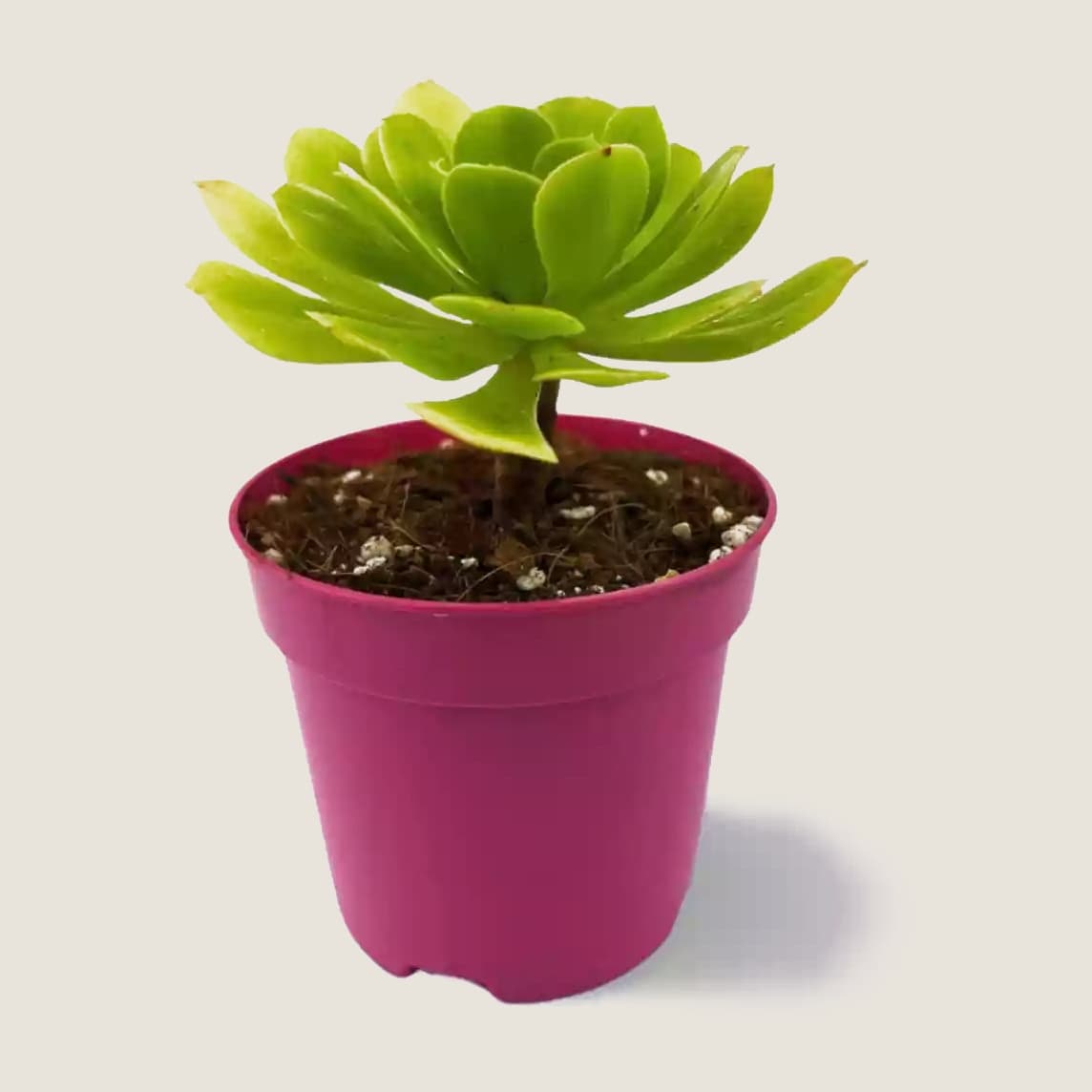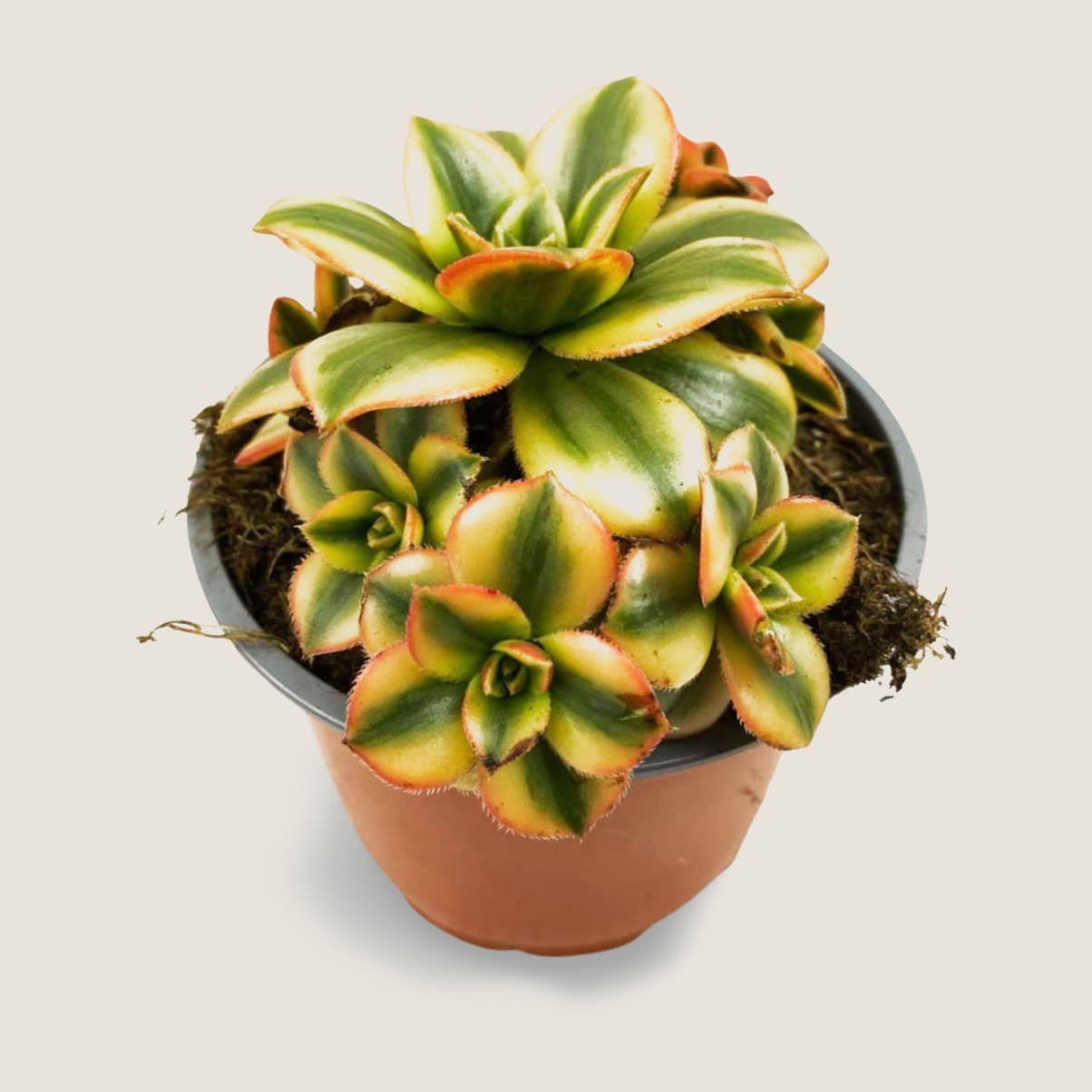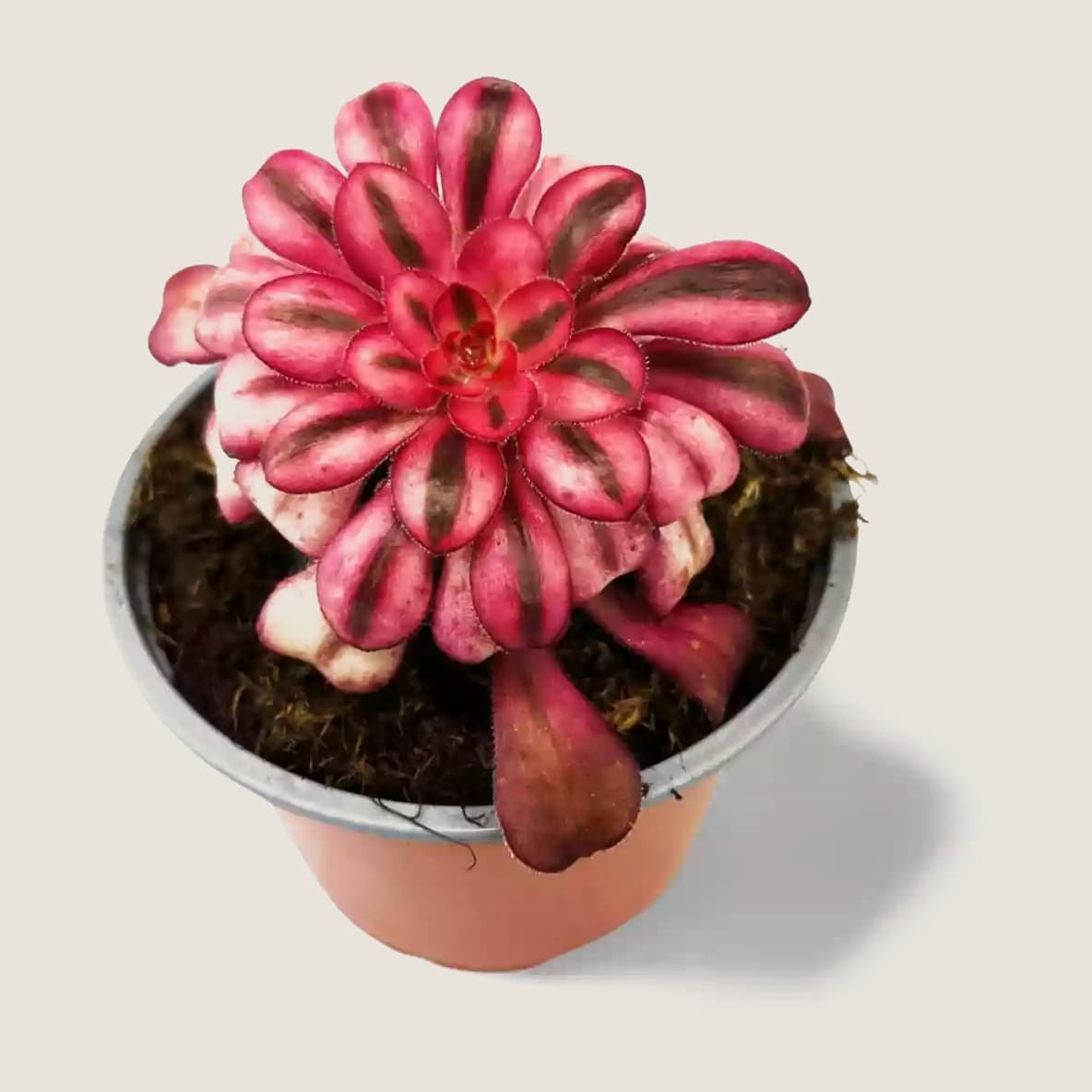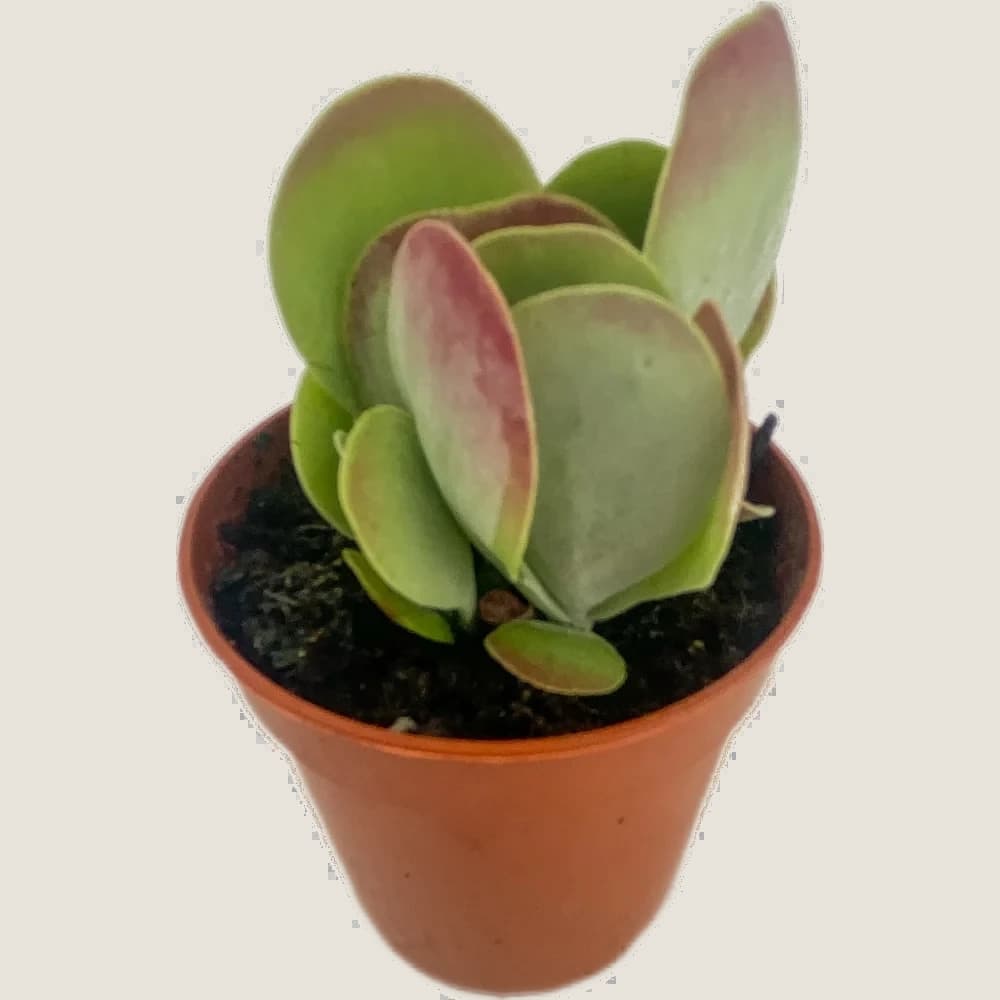
Kalanchoe luciae
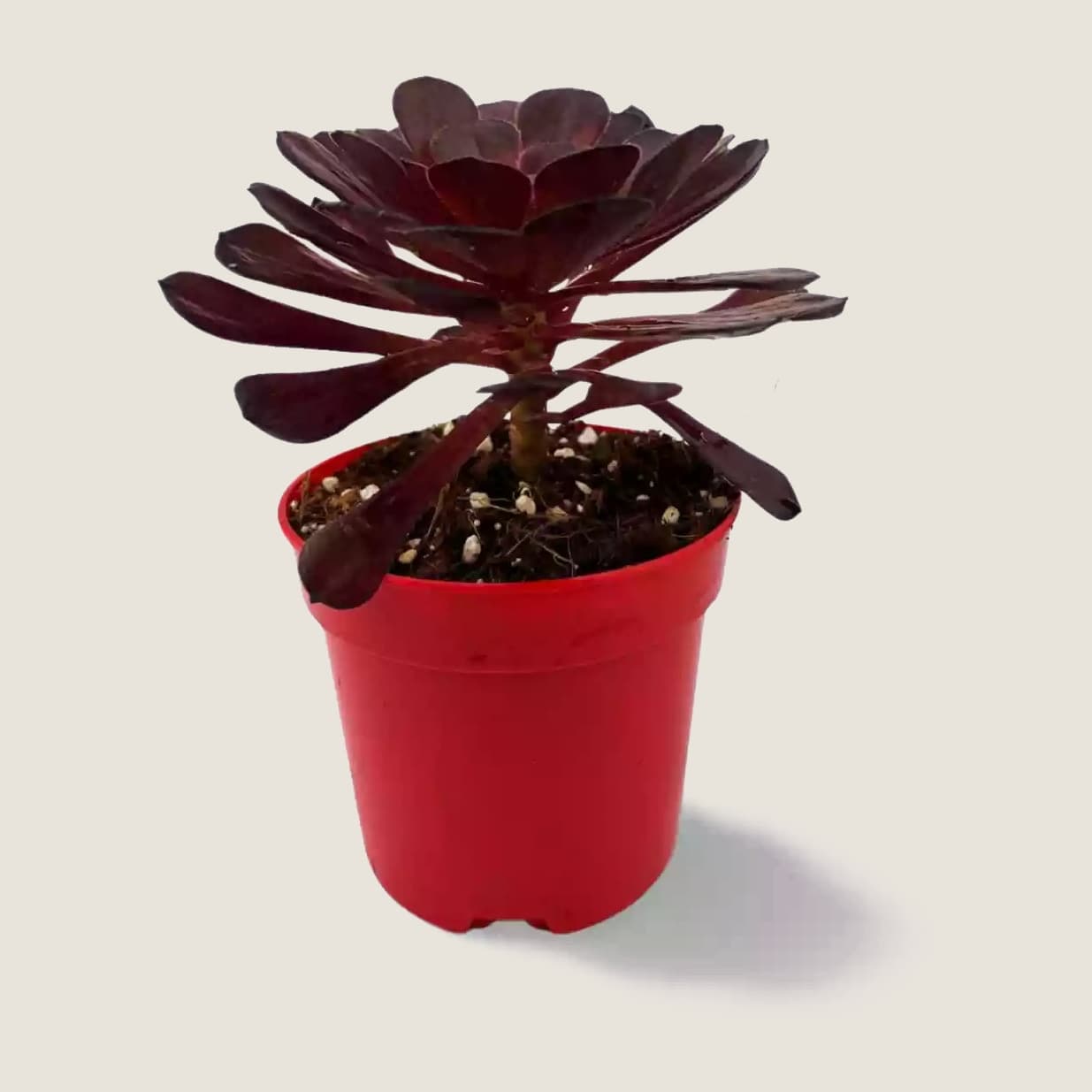
CrassulaceaeKalanchoe luciae · the «paddle plant»: flat, round leaves stacked like plates that flush deep red along the edge with sun and cold. Grown outdoors in Almería.
About Kalanchoe luciae
Large, flat, almost circular leaves stacked one on another like a pile of plates — hence paddle plant and flapjack in English. Green it is already eye-catching, but that is not its interesting state.
With direct sun and cold nights, the edges flush a deep red that can spread over the whole leaf. It is a stress response, not a variety: the same plant in shade and indoors stays green and will not colour again until it goes back outside.
It is constantly confused with Kalanchoe thyrsiflora, which looks very like it. The practical difference: luciae genuinely reddens and its flower is tubular and pale; thyrsiflora has leaves more heavily coated in white bloom and bears strongly scented yellow flowers. Almost everything sold as thyrsiflora is in fact luciae.
Botanical fact sheet
| Scientific name | Kalanchoe luciae | |
| Family | Crassulaceae | |
| Origin | South Africa, Botswana, Mozambique and Zimbabwe | |
| Natural habitat | rocky slopes and dry grassland | |
| Adult size | rosette 20-30 cm; flower stalk up to 1.5 m | |
| Flowering | tall spike of pale tubular flowers; the rosette dies afterwards | |
| Propagation | offsets from the base (it produces them when it flowers) | |
| Toxicity | toxic if eaten — it contains bufadienolides; careful with dogs and cats |
Care
It is monocarpic: it flowers once and that rosette dies. You did not kill it. Before going it throws up a spike over a metre tall and produces offsets around the base; those offsets are the next plant. If you would rather keep the large rosette, cut the flower spike as soon as it appears.
Direct sun all day and sparing watering, letting the substrate dry out completely. Always water at the base, never over the leaves: water sits in the joint between leaf and stem and rots them. In winter, almost none.
Did you know?
The red on the edge is anthocyanin, the same pigment that colours autumn leaves and red grapes. The plant makes it as a sunscreen when it takes in more light than it can use. Put another way: your plant turns red because it is having a slightly hard time, and that is exactly what makes it beautiful.
Luz
Very bright light with some direct sun
Riego
Sparse; sensitive to overwatering
Sustrato
Very free-draining mineral substrate, specific for cacti and succulents
Temperatura
Protect below 10 °C (cold-sensitive)