Kalanchoe
The genus Kalanchoe covers around 120 species in the Crassulaceae family, spread across Madagascar, eastern and southern Africa and parts of tropical Asia. Nearly all of them come from warm places with a long dry season, which tells you most of what you need to know: they shrug off drought, but they resent the cold, damp winters of northern Europe. The leaf is what defines them — thick, often coated in a waxy bloom or a fine felt, with scalloped edges. In several species those edges produce complete plantlets, roots and all, that drop off and root by themselves.
7 plants in Kalanchoe
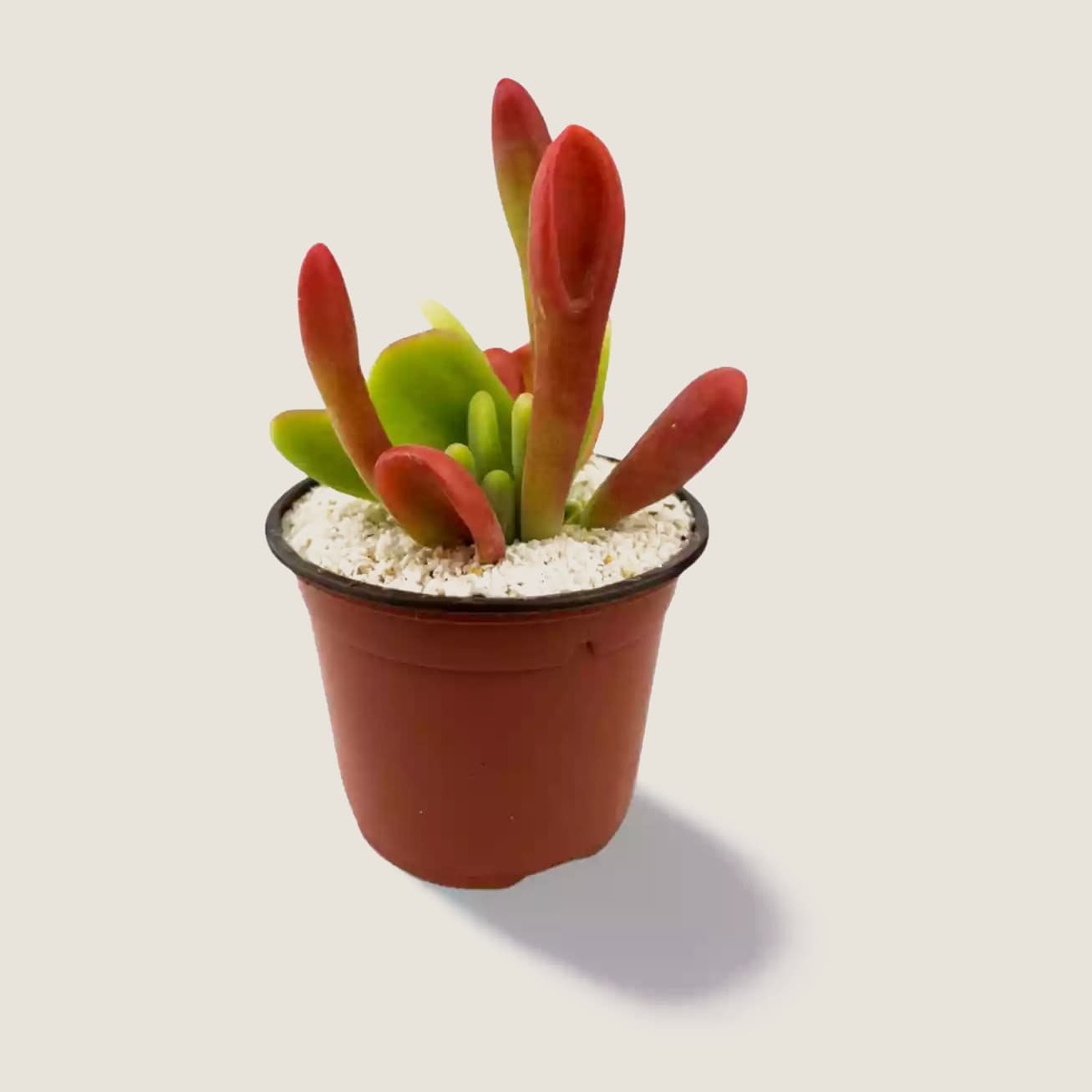
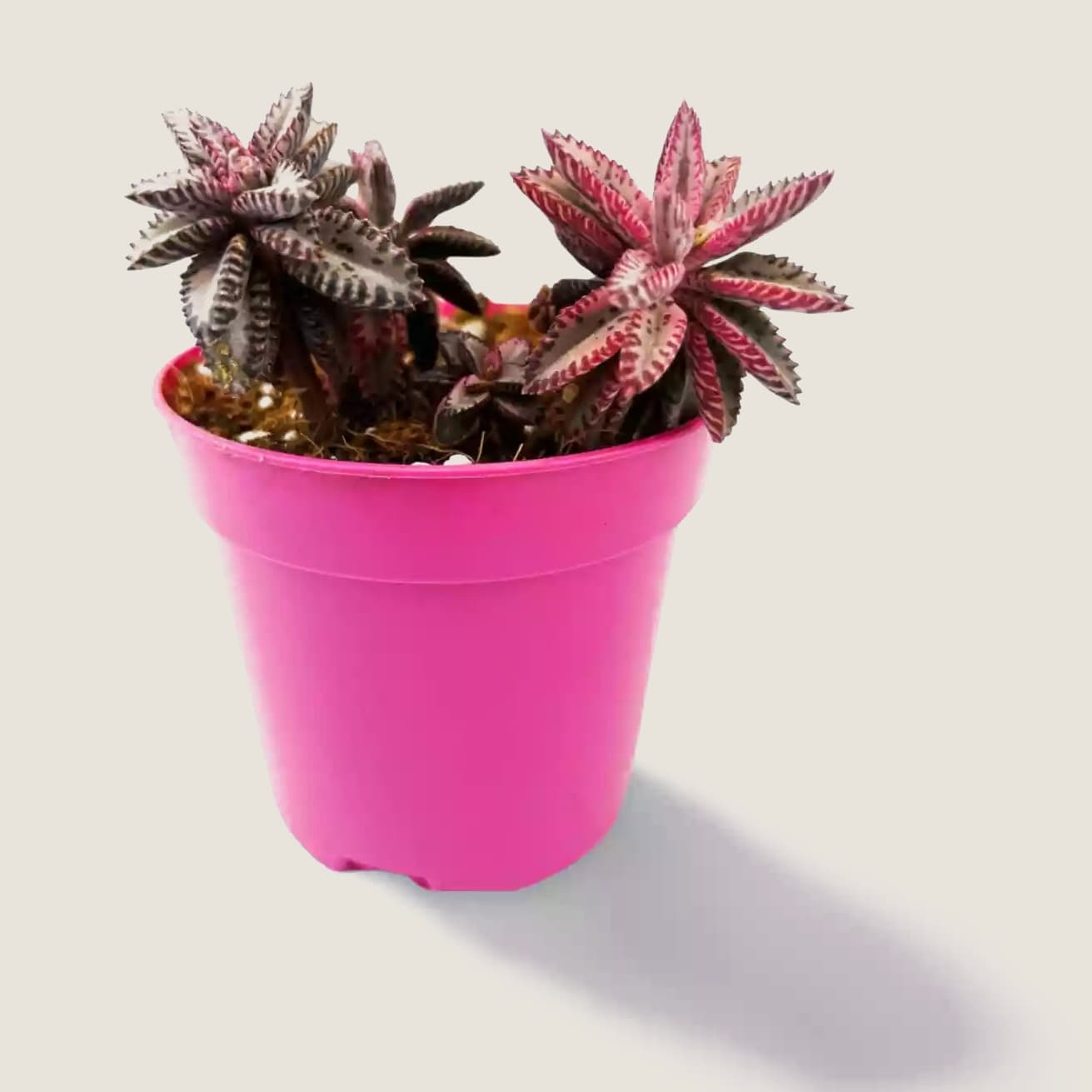
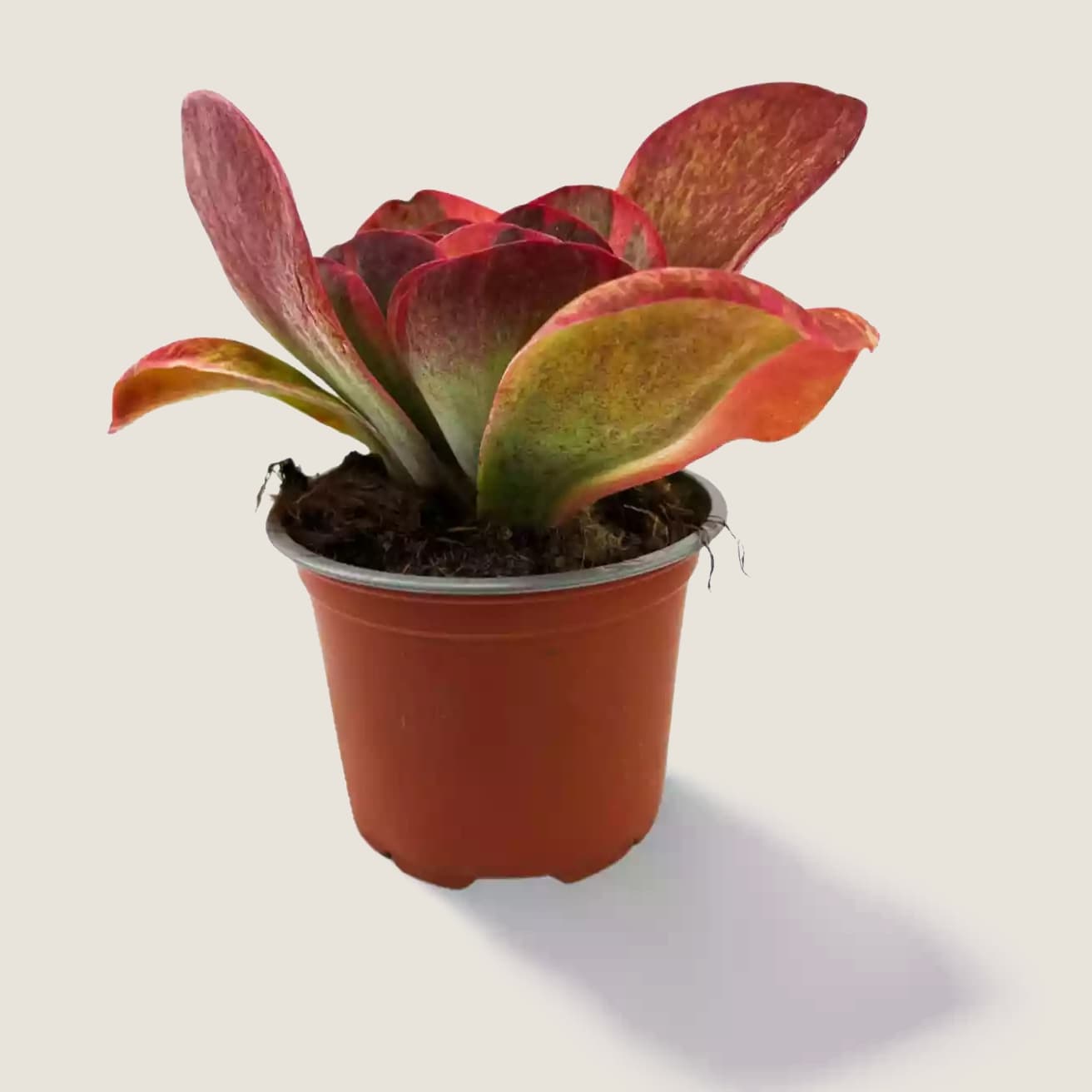
Telling the species apart
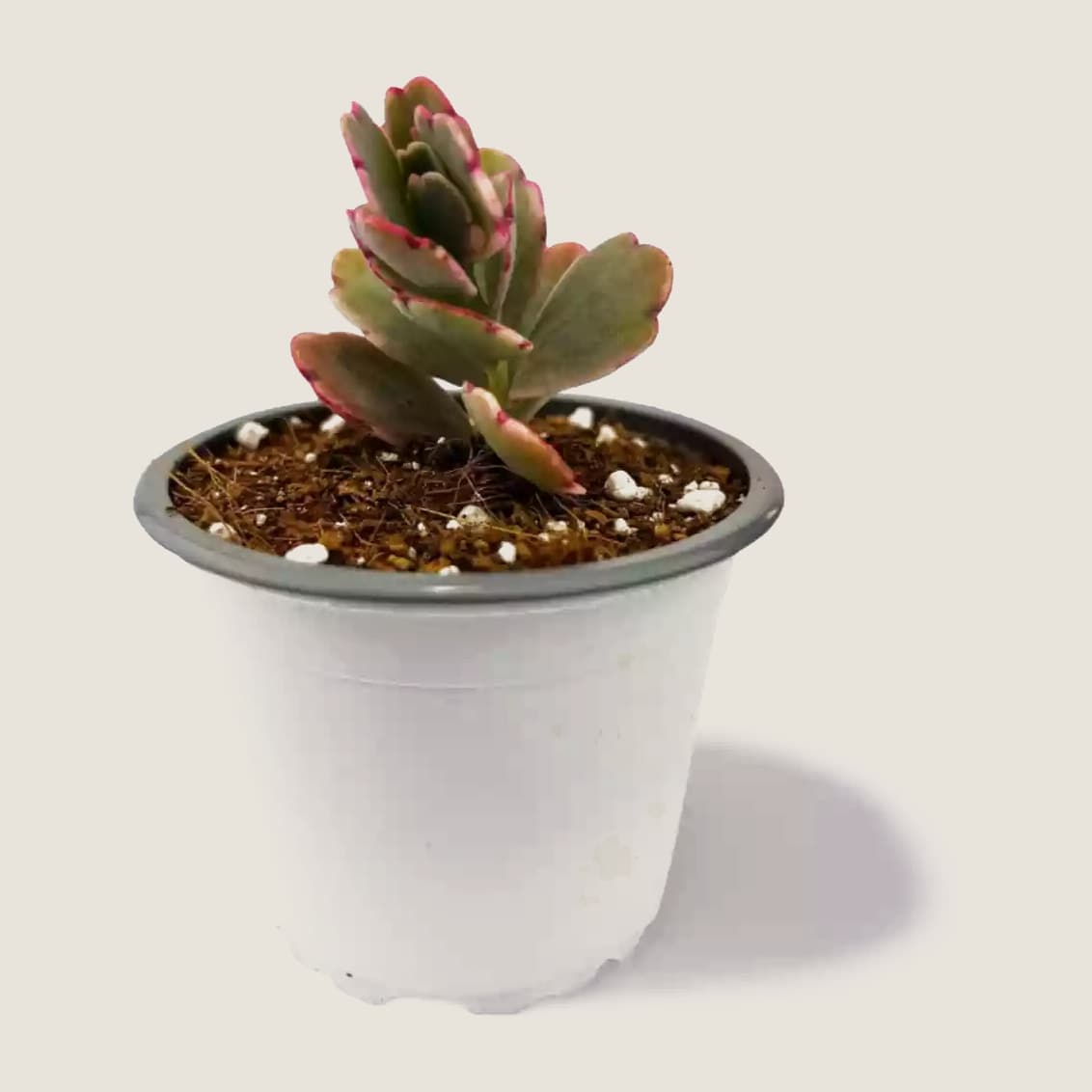
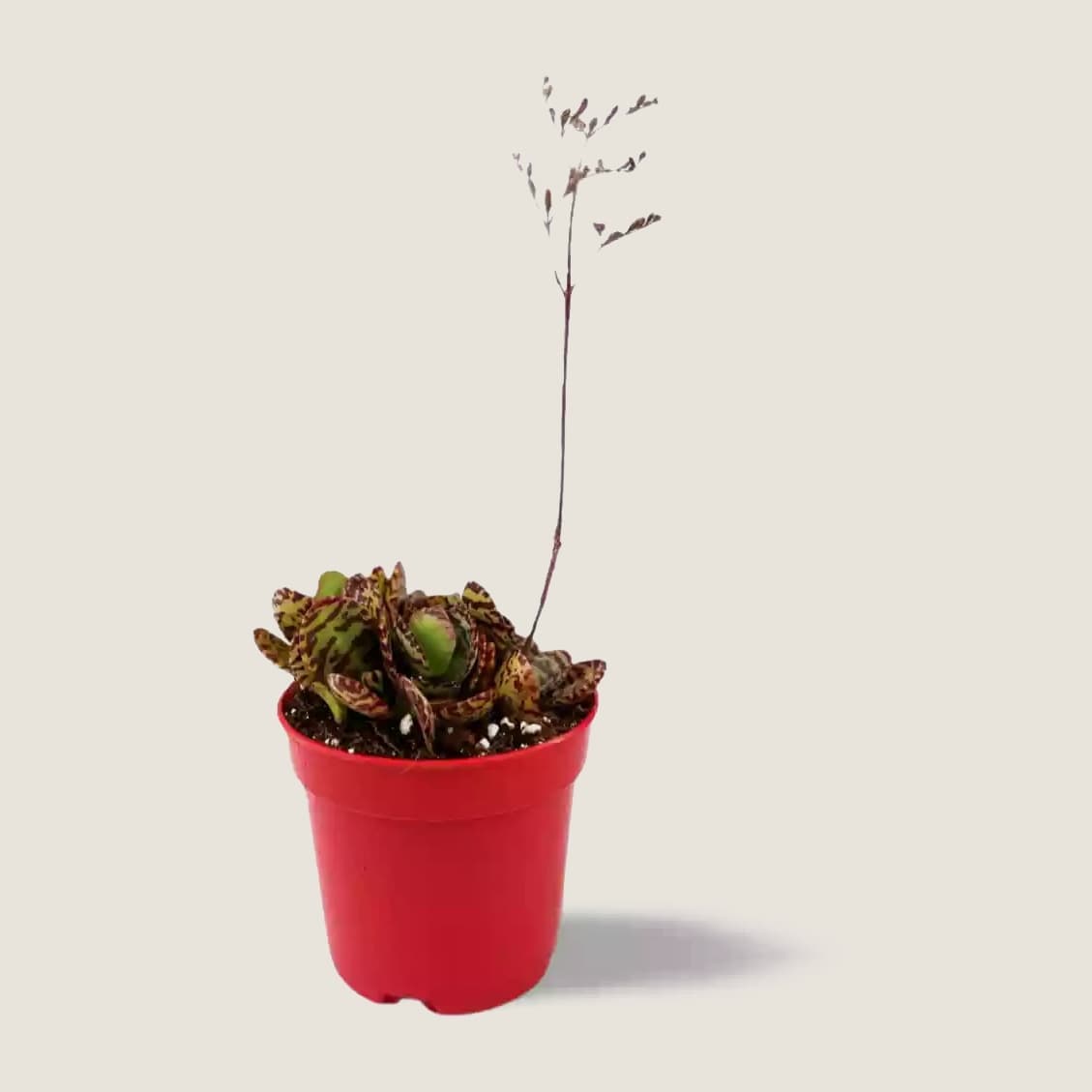
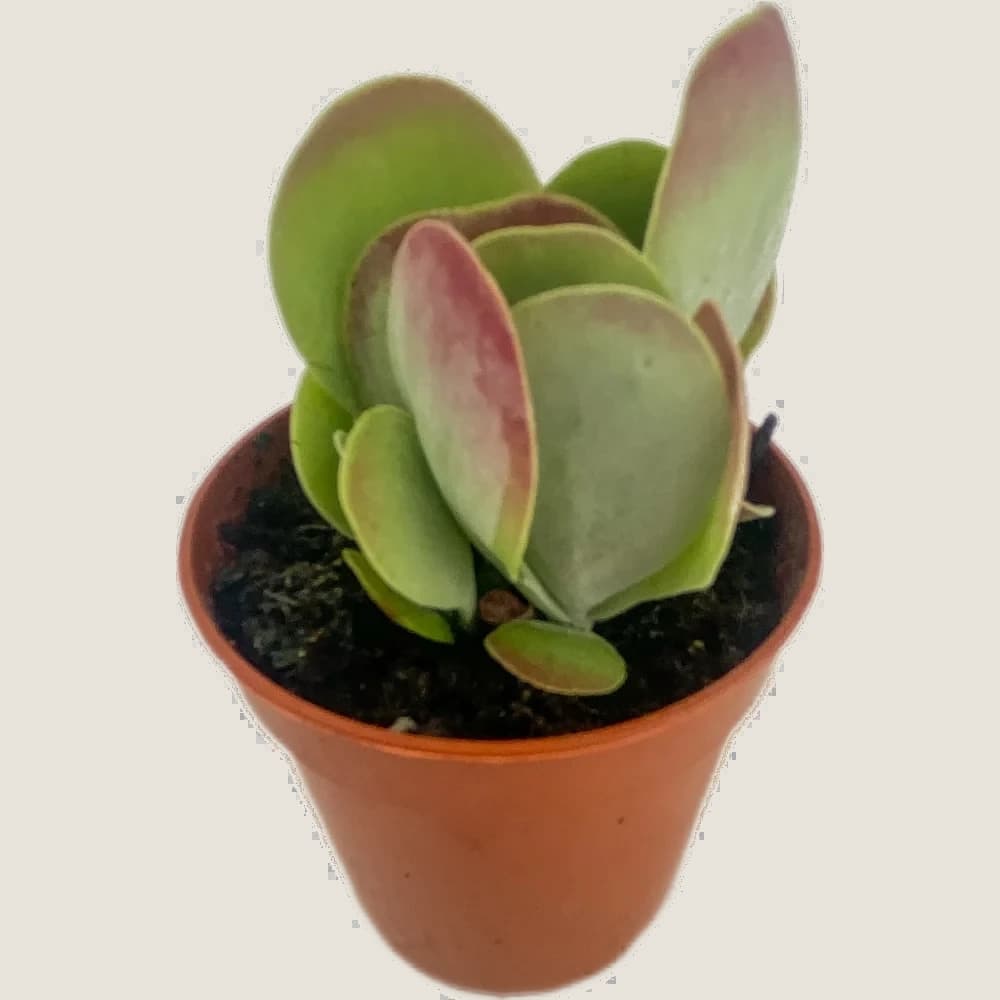
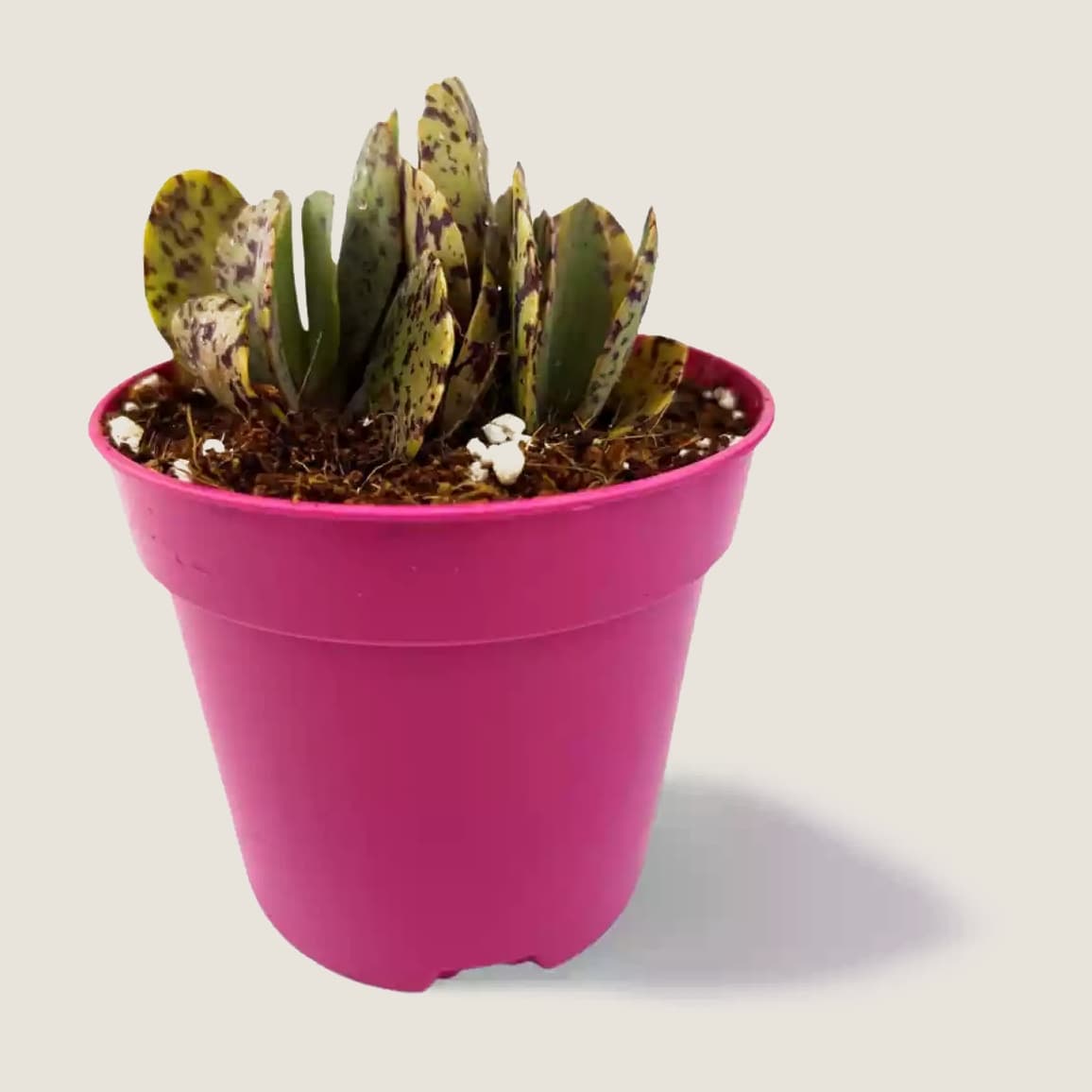
The useful first split is between flat-rosette kalanchoes and upright, stem-forming ones. Kalanchoe luciae and Kalanchoe thyrsiflora both stack rounded leaves like a pile of plates dusted in white bloom, and they are mislabelled everywhere: in K. luciae the leaf margin flushes deep red in full sun, while K. thyrsiflora leans yellow-green and carries a scented tubular flower spike. Both are monocarpic — the rosette that flowers dies afterwards, leaving offsets behind. Kalanchoe marmorata is unmistakable, with broad grey-green leaves splashed in brown-purple blotches, and Kalanchoe humilis repeats that marbling on a much smaller, tidier plant. Kalanchoe tetraphylla makes thick paired leaves on a short stem. Separate again are the narrow, scalloped leaves of the Kalanchoe fedtschenkoi group, whose variegated form edges cream and pink.
Growing them
- Light: as bright as you can manage, with a few hours of direct sun. A south or west windowsill, a conservatory or a summer spot outdoors. In poor light they stretch, fade and space out their leaves.
- Water: sparingly, and only once the compost has dried right through. Water at the pot edge rather than into the rosette. From November to March, almost nothing.
- Compost: a gritty, free-draining cactus and succulent mix, in a pot with drainage holes. Peat-based house-plant compost holds far too much water.
- Cold: the weak point of the genus. Keep them above 10 °C; they are not frost hardy anywhere in the UK or northern Europe, so they come indoors well before the first frost.
Common beginner mistakes
The first is confusion with the florist kalanchoe, Kalanchoe blossfeldiana — the small pot of forced flowers sold in supermarkets, day-length manipulated to bloom on demand. The plants on this page are collector species grown for foliage. The second is overwatering: they forgive neglect but not soggy compost, and rot almost always starts at the base of the stem. The third is handling the bloom — the white waxy coating on K. luciae and the variegated forms rubs off with a fingertip and never returns on that leaf. The fourth is standing pots in saucers of water over winter, which is the fastest way to lose one.
The kalanchoes we stock
- Kalanchoe luciae — the classic paddle-leaf rosette that turns red in sun.
- Kalanchoe tetraphylla — thick paired leaves, sturdy habit.
- Kalanchoe thyrsiflora Variegata — the variegated form, cream bands over blue-grey.
- Kalanchoe marmorata — broad leaves marbled in purple.
- Kalanchoe humilis — the same marbling in a compact plant, good for arrangements.
- Kalanchoe fedtschenkoi Variegata “Pink Butterfly” — narrow scalloped leaves edged cream and pink.
- Kalanchoe “Pink Butterfly” — the one that carries pink plantlets along the leaf margin.
- Kalanchoe “Oricula” — a cultivar related to K. beharensis, with rolled, cone-shaped leaves and a velvety surface.
Decide where the plant will spend the winter before you buy, and a kalanchoe is one of the easiest succulents there is. Every plant is picked by hand and ships from Almería, packed so the leaves arrive untouched.